
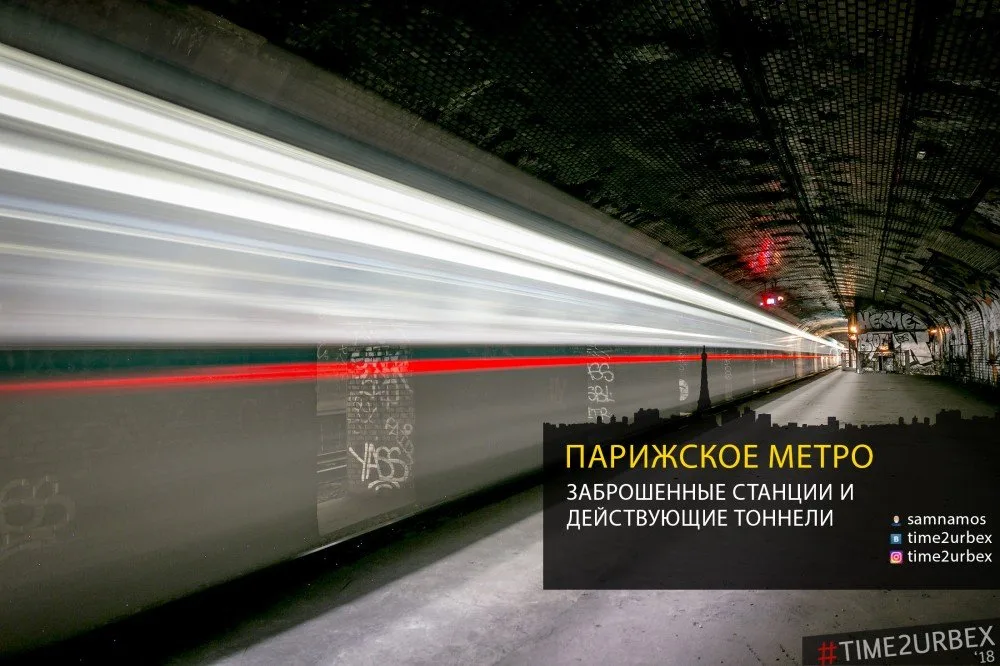
The Paris subway is one of the oldest in the world and truly unique. French subway builders, along with the English, were among the first pioneers, so its intricate network reveals a great many unusual design and engineering solutions. Over more than a century of history, a couple of hundred kilometers of tunnels and about 300 stations were built in Paris. Some of the stations eventually fell out of use and were later closed to passengers. Every day the trains pass these phantom stations without stopping, and their only visitors are street artists and urbex photographers. You can reach the abandoned stations in the intervals between trains, or during the night patrol by blending in with the workers. That is exactly what we did, together with our comrades. For convenience, I have divided all the stations into sections.
Subscribe to our Urbextour Telegram channel — we share our secrets there 😉
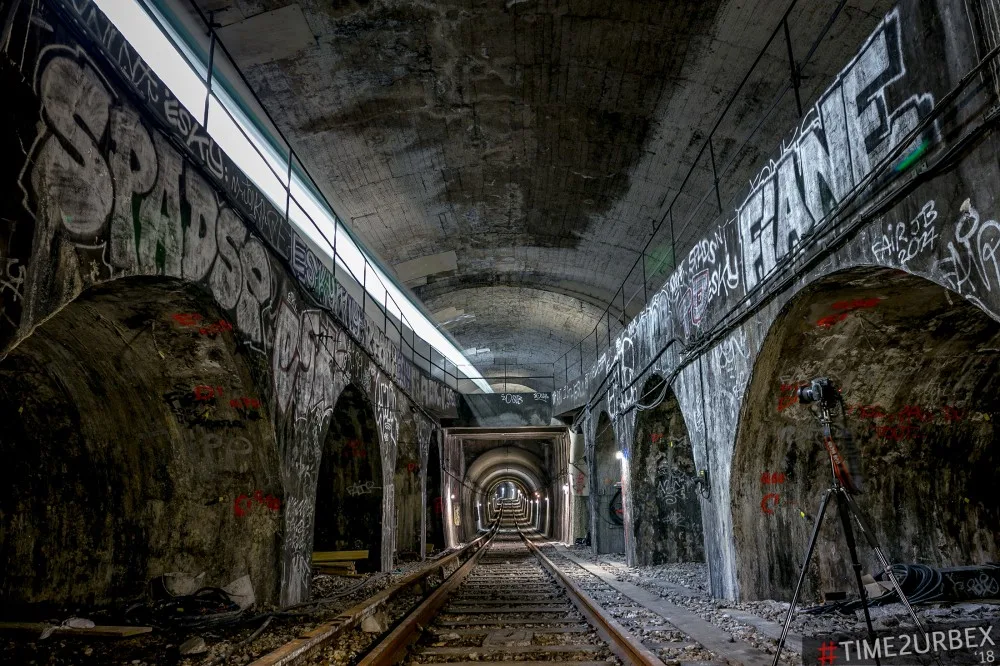
1. Croix-Rouge (Red Cross)
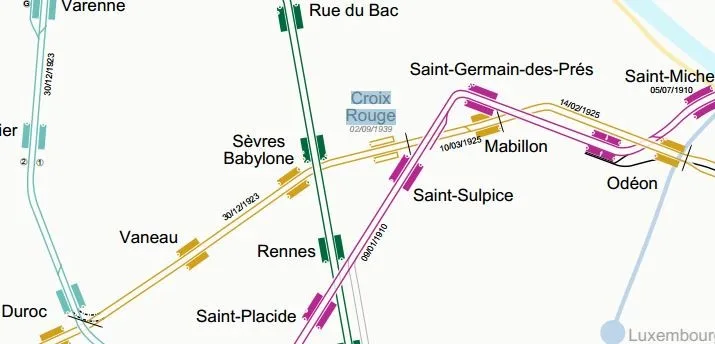
One of the most famous closed stations of the Paris subway. From 1923 to 1939, Croix-Rouge was the last station on Line 10. However, after the line was extended, the station proved unprofitable — its passenger traffic could be distributed between the two neighboring stations, which is exactly what the Paris authorities did. The station remains closed to this day.
The location of the station on the track map. The full version can be downloaded from trackmap.ru.
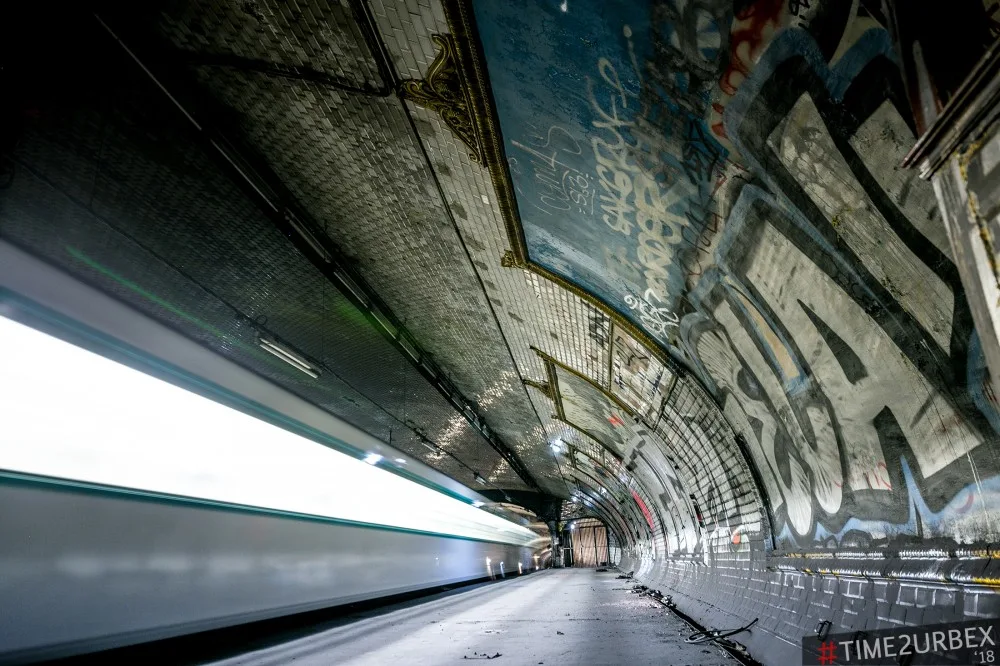
Ironically, the station’s name has nothing to do with the International Committee of the Red Cross; it comes from the name of the square Carrefour de Croix-Rouge, which appeared in the 18th century. In 2005 the square was renamed Michel Debreu Square.
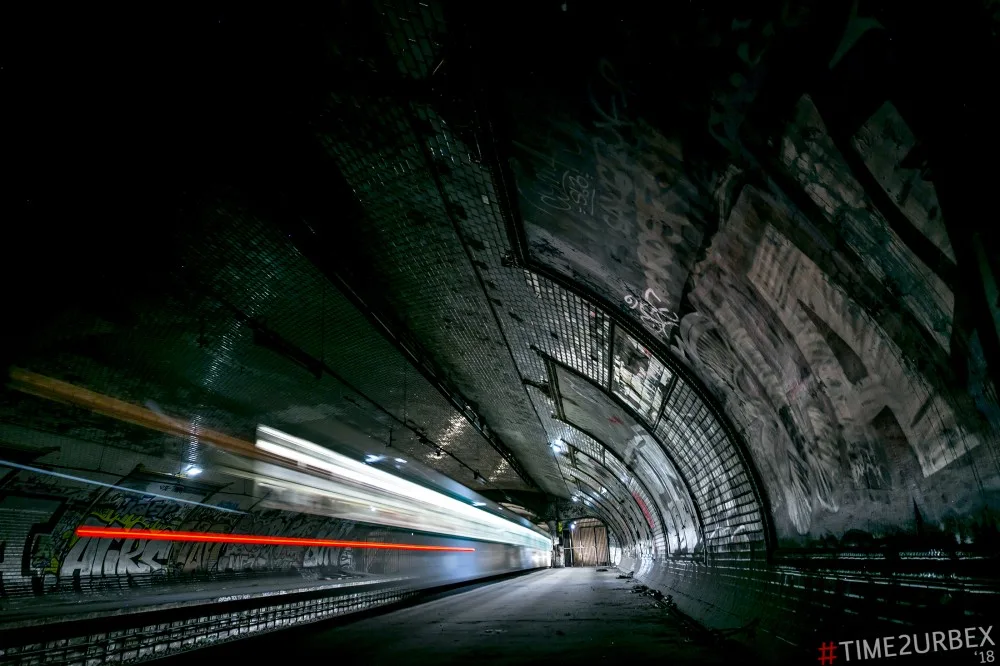
The walls are covered in colorful graffiti. Slipping unnoticed into the subway tunnel is not particularly difficult, which is exactly what street artists take advantage of.
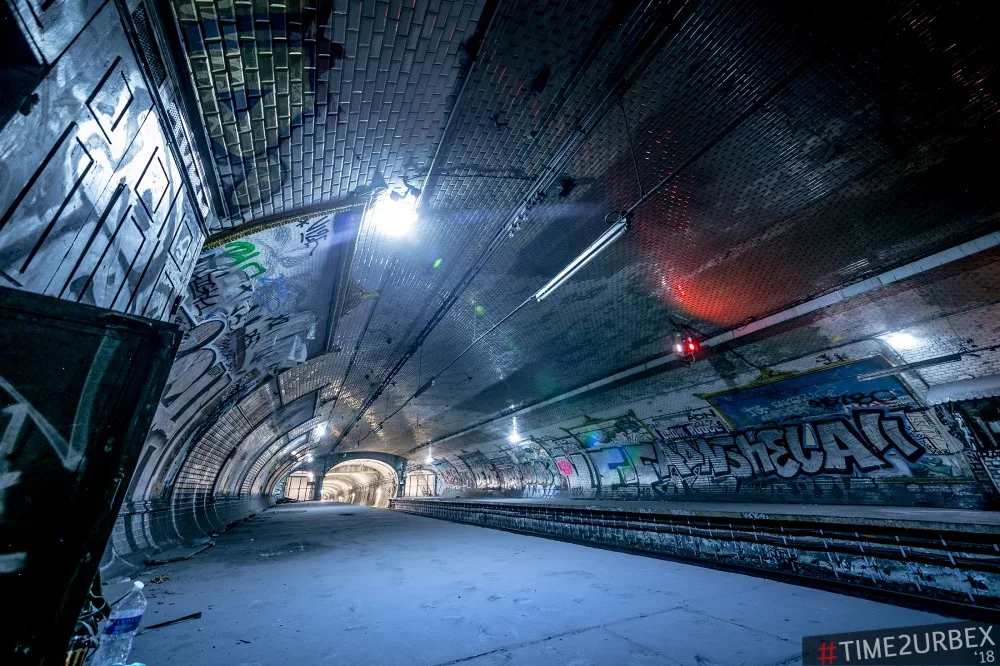
Some of the drawings are more than 30 years old…
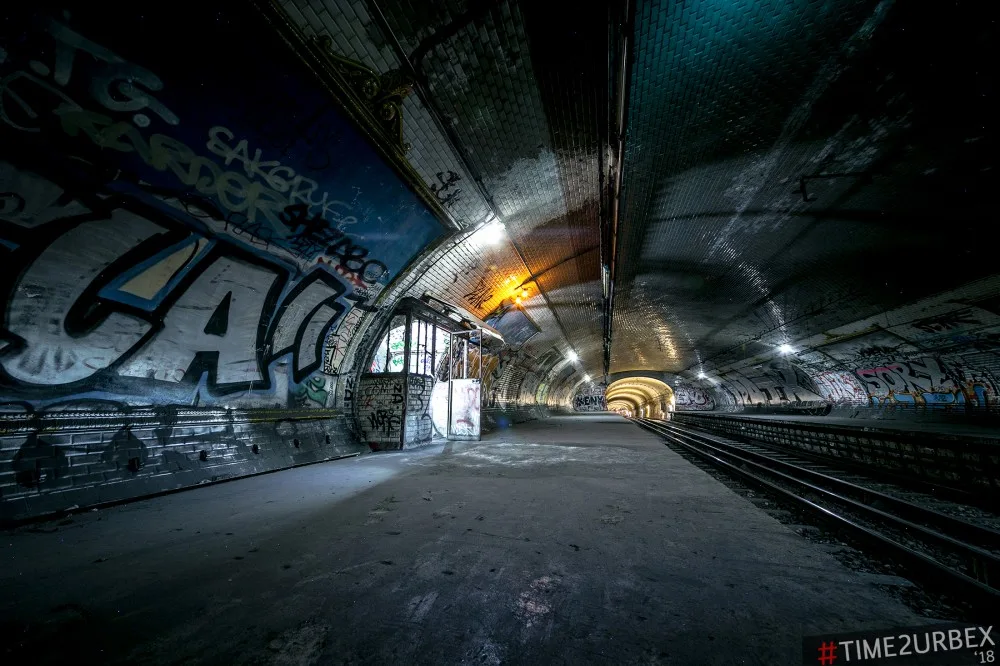
An empty box in the center of the station.
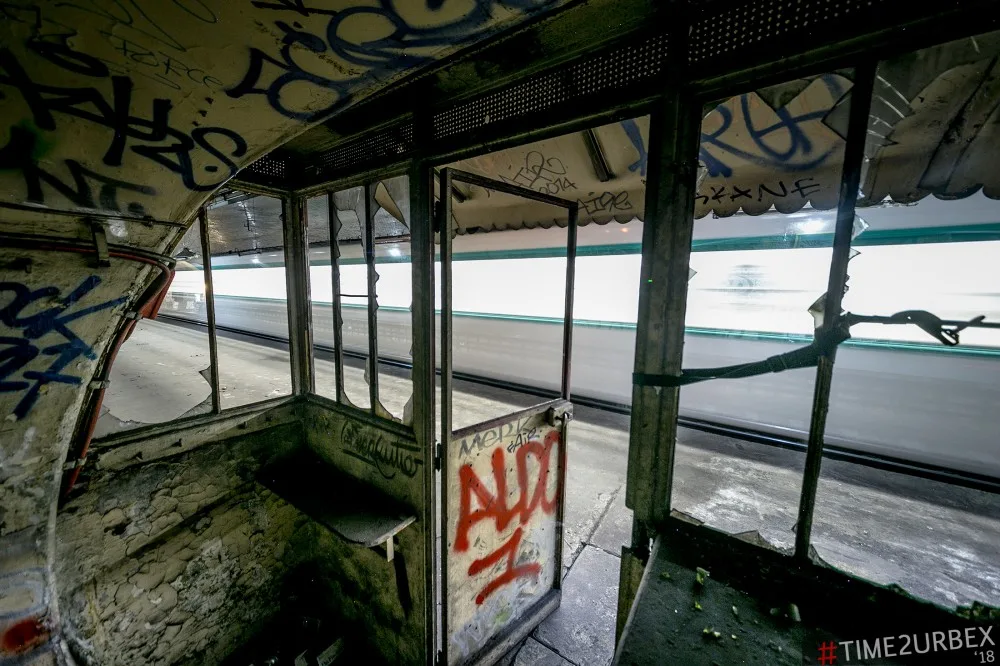
The portal.
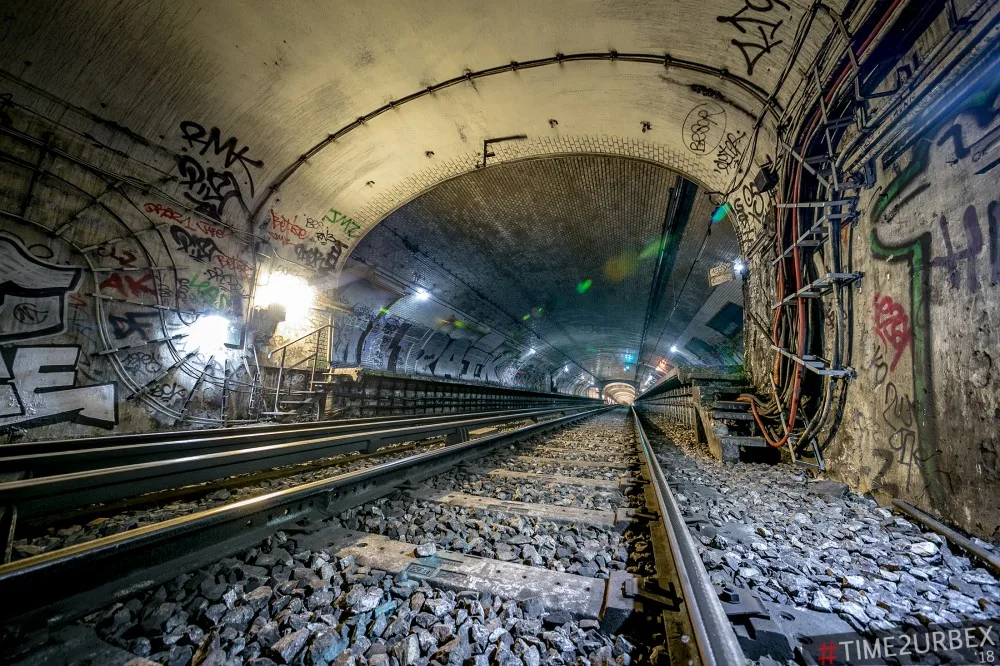
2. Saint-Martin No. 1
Saint-Martin station has four tracks at once and connects two lines with a cross-platform interchange. In effect, these are two independent stations separated by a wall. To get from one to the other, however, you have to follow the tunnel to the first junction on the other line — the pedestrian passages between the platforms are closed off by grilles. Saint-Martin was in service for only nine years (from 1931 to 1939) and, like Croix-Rouge, it was closed at the start of the war. Although passengers used the station heavily before the war, it was never reopened once the war ended. The reasons were traffic optimization and its proximity to the two neighboring stations, “Strasbourg – Saint-Denis” and “République” (the distance between their nearest exits was only 100 meters).
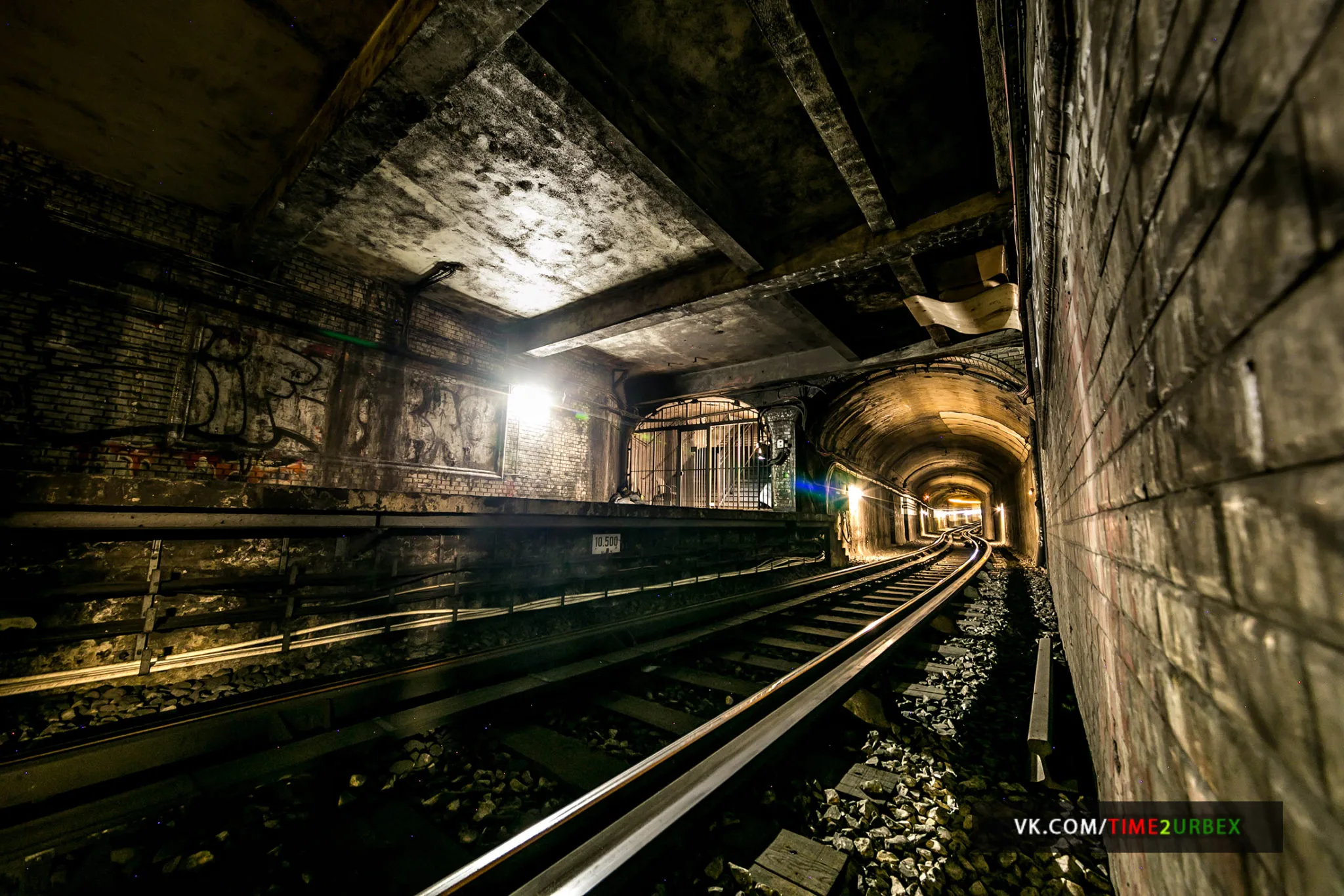
The location of the stations on the diagram.
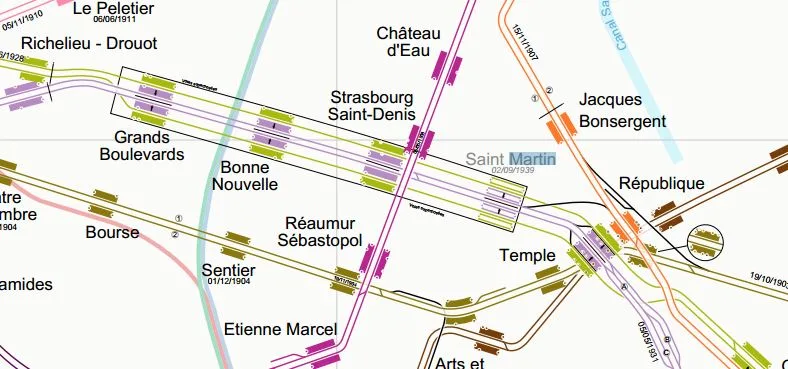
Arched openings run between the station’s two rail lines.
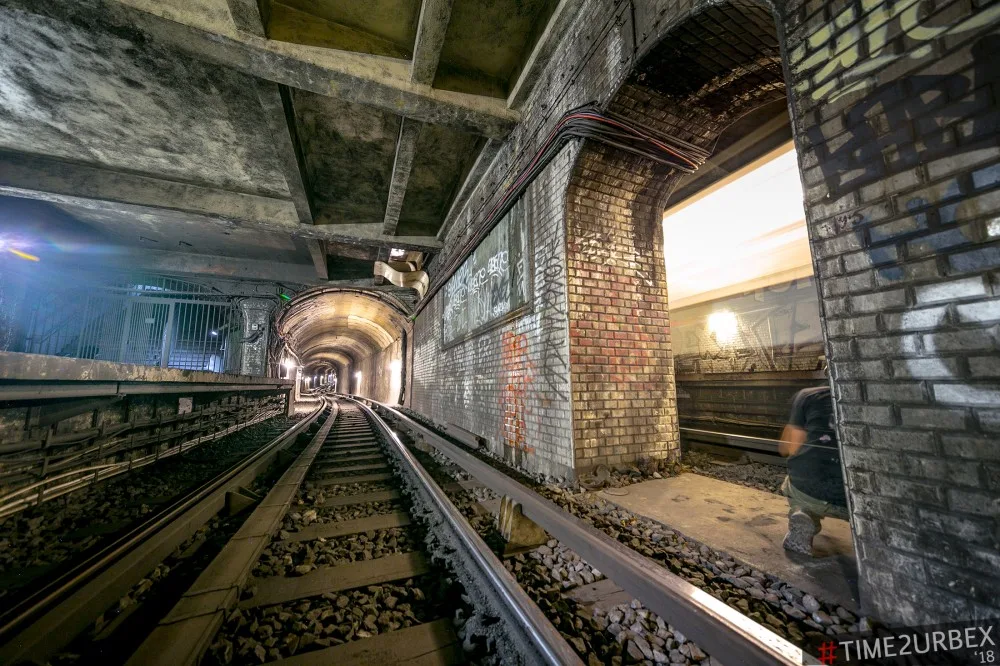
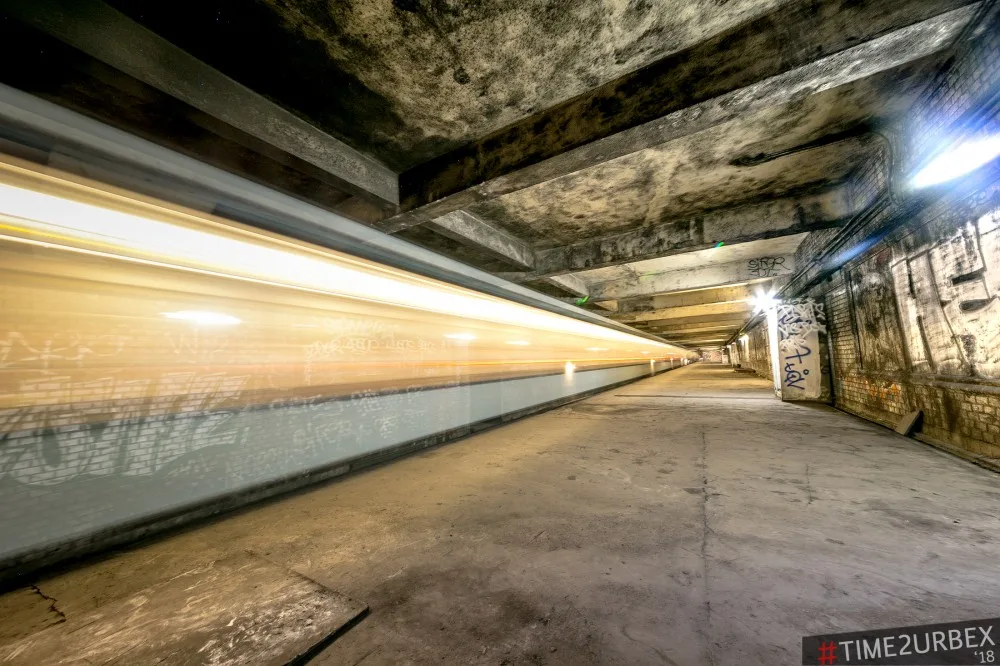
The closed transfer to the neighboring line.
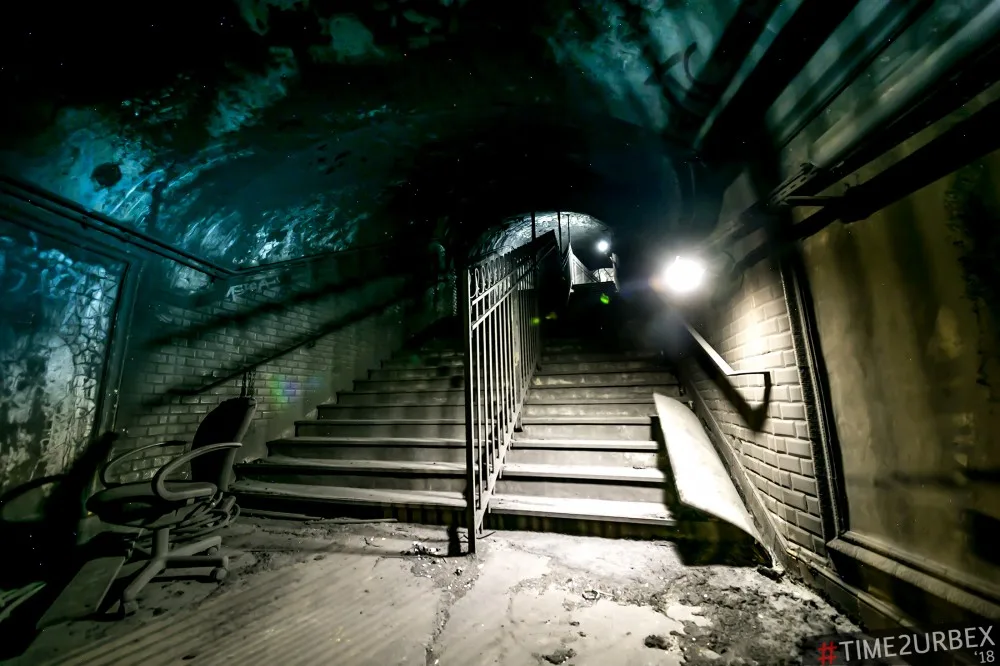
A deserted platform.
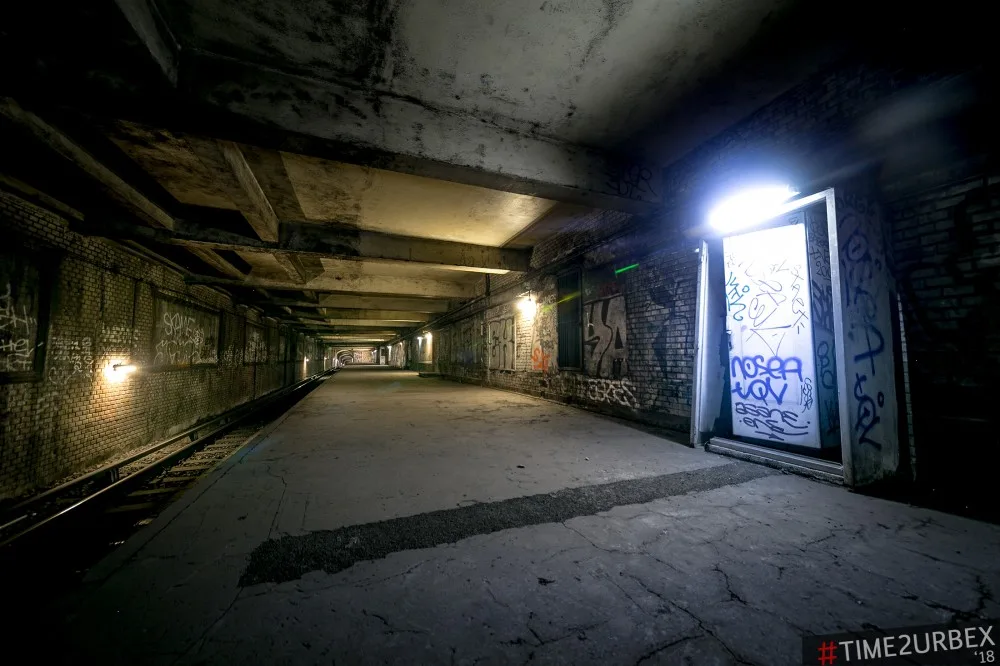
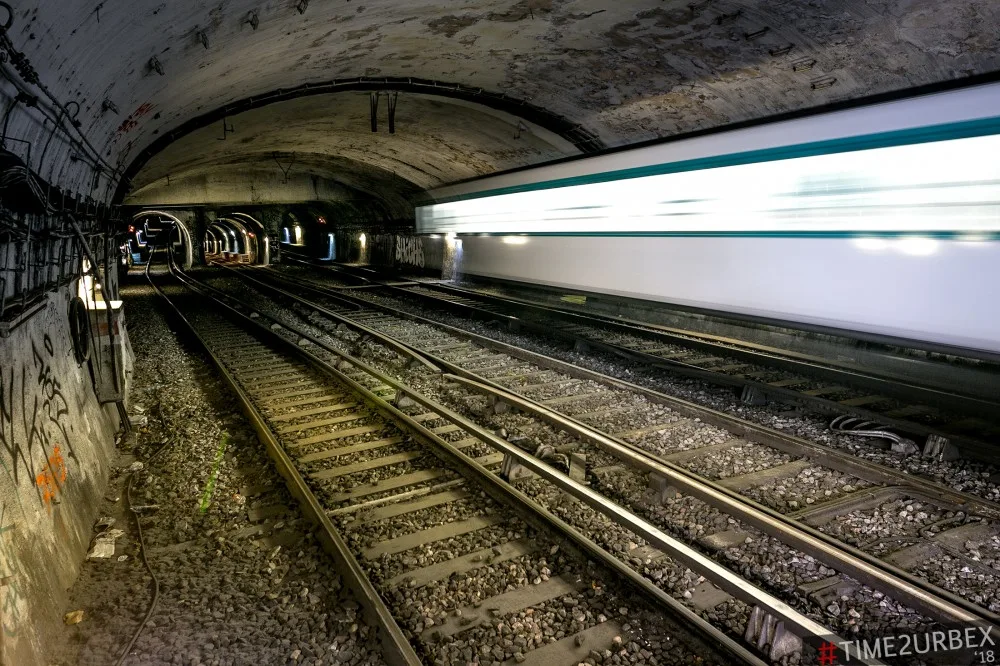
A train passing on the adjacent track.
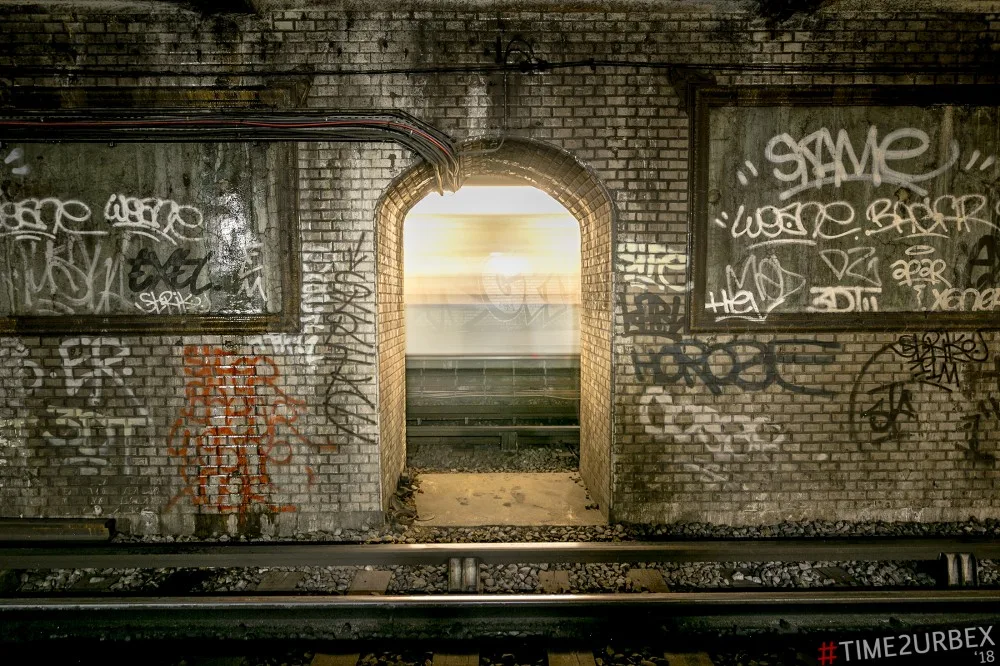
Now we head to the second station — Saint-Martin.
3. Saint-Martin No. 2
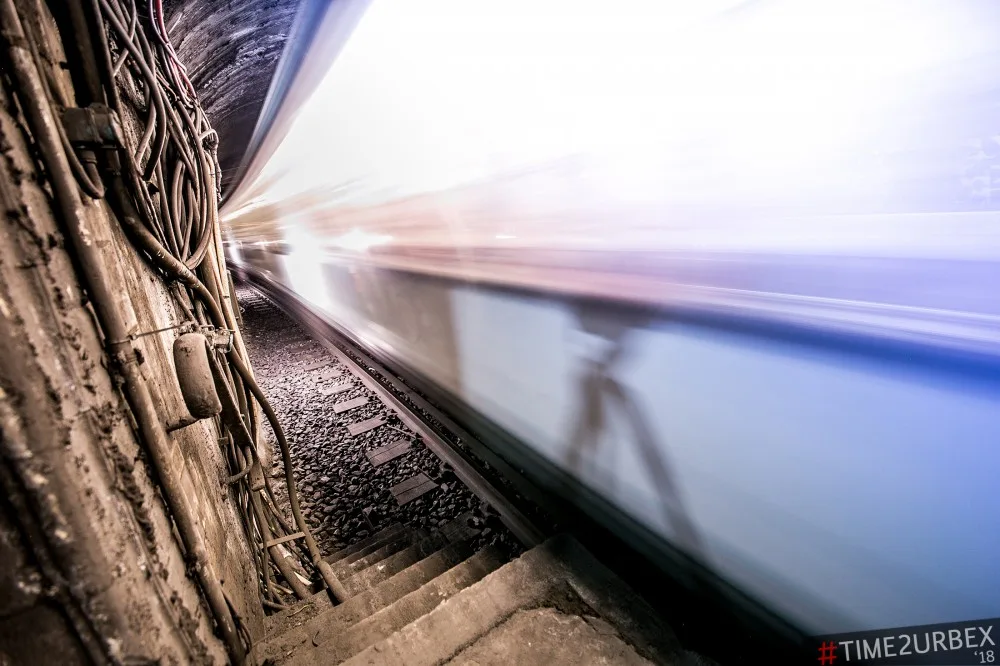
Moving a little way from the station, through a small breach in the tunnel wall, we enter a short connecting tunnel. Less than 100 meters, and we are on the other line…
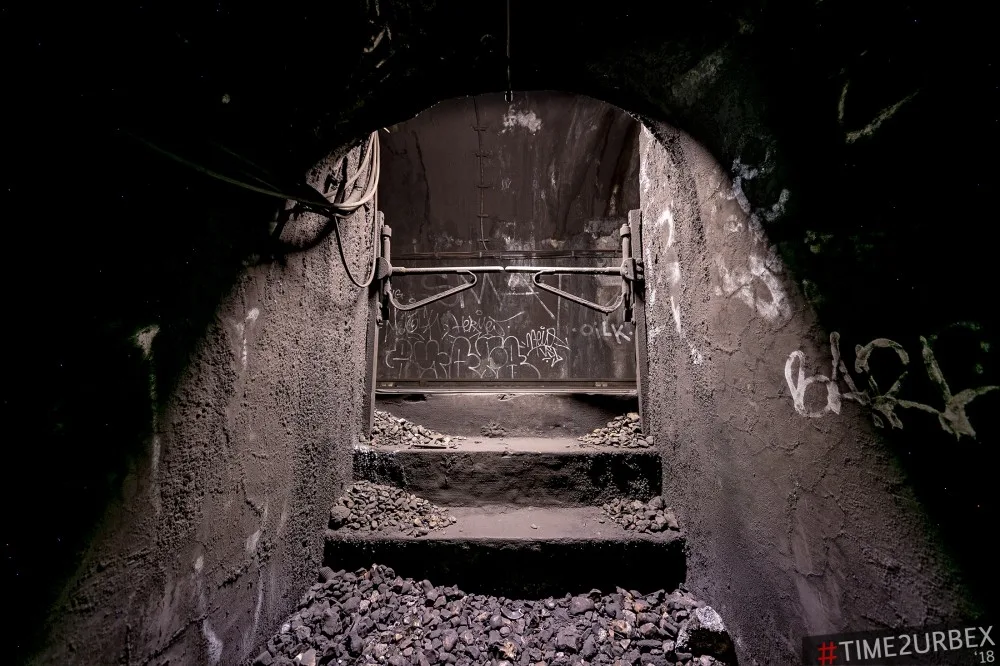
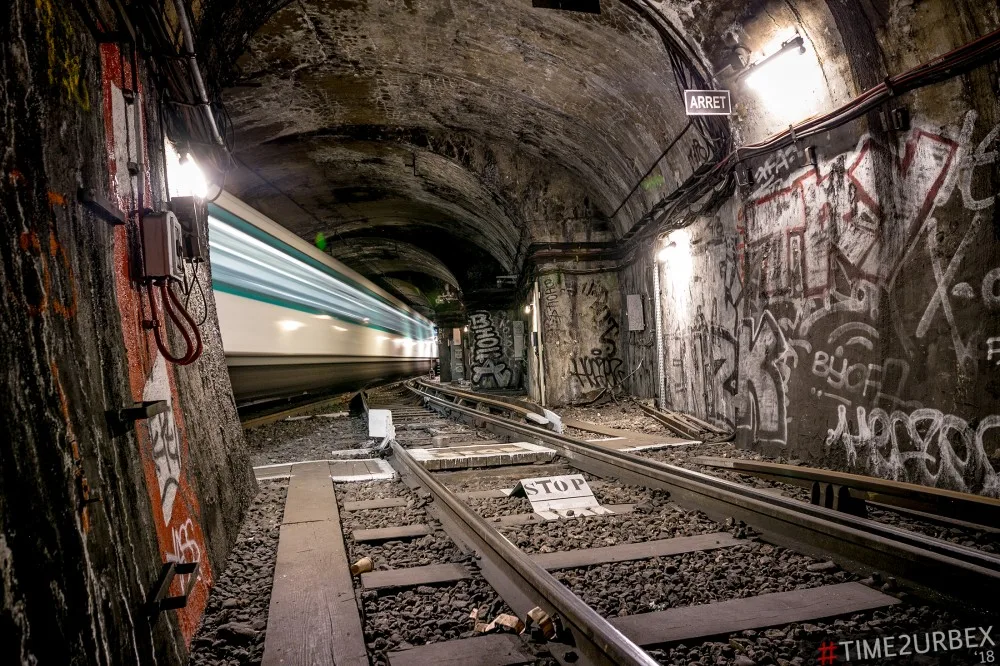
Note the contact rail (bottom right). It has no cover — and that is true throughout the entire Paris subway. So when moving through the active tunnels, you have to stay constantly alert, which adds a certain thrill.
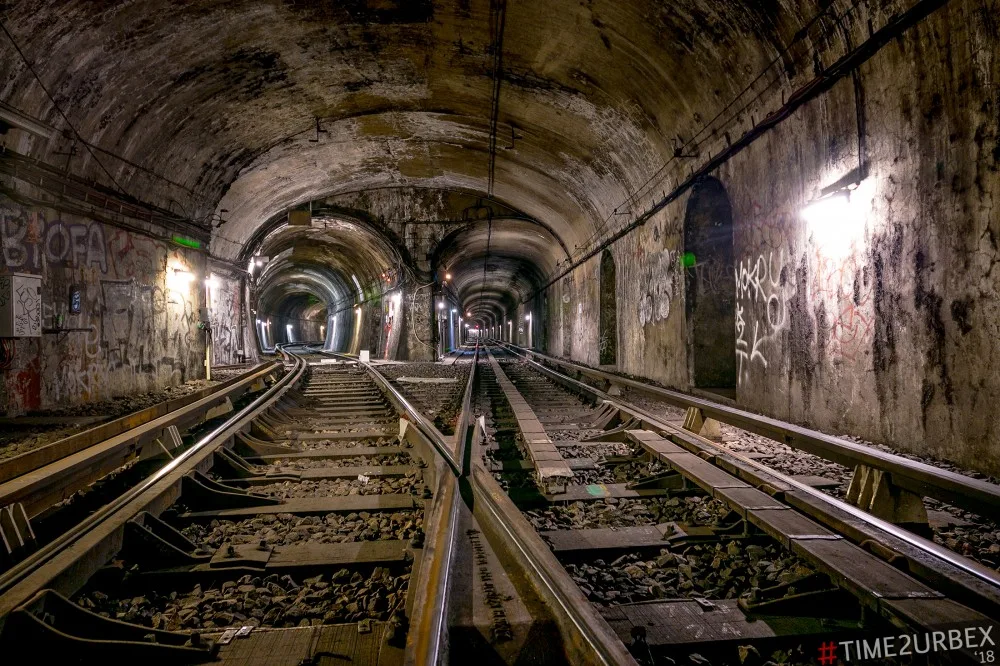
The Saint-Martin station on the adjacent line differs from its neighbor in its interior — here the tunnel walls flow smoothly into the ceiling.
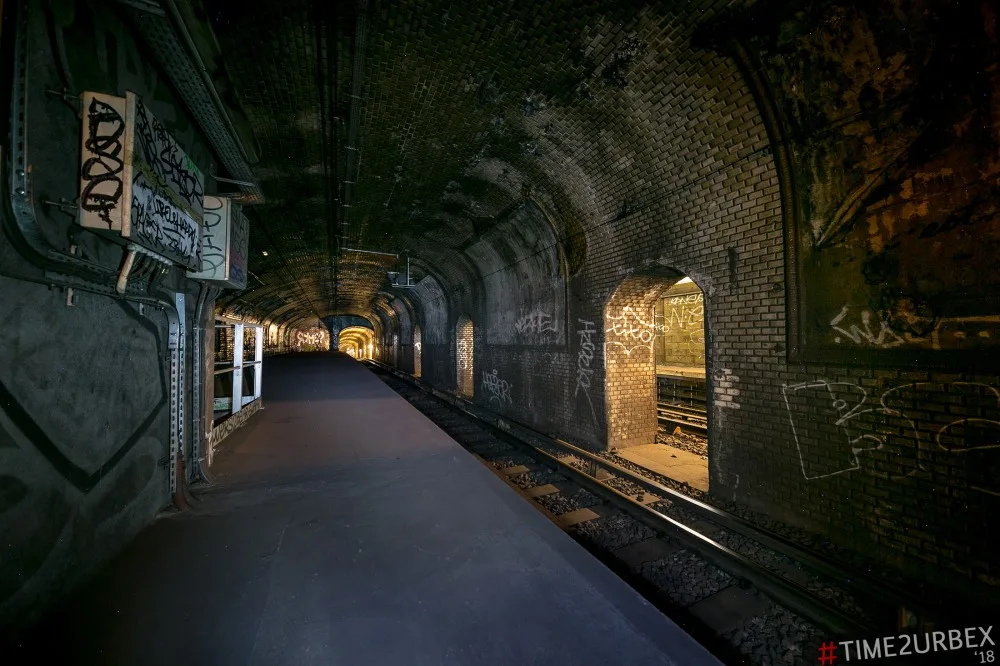
In 1990, the station was taken over by the Paris homeless. This prompted the RATP to officially designate it an Espace Solidarité Insertion in 1999 and hand it over to the Salvation Army for use.
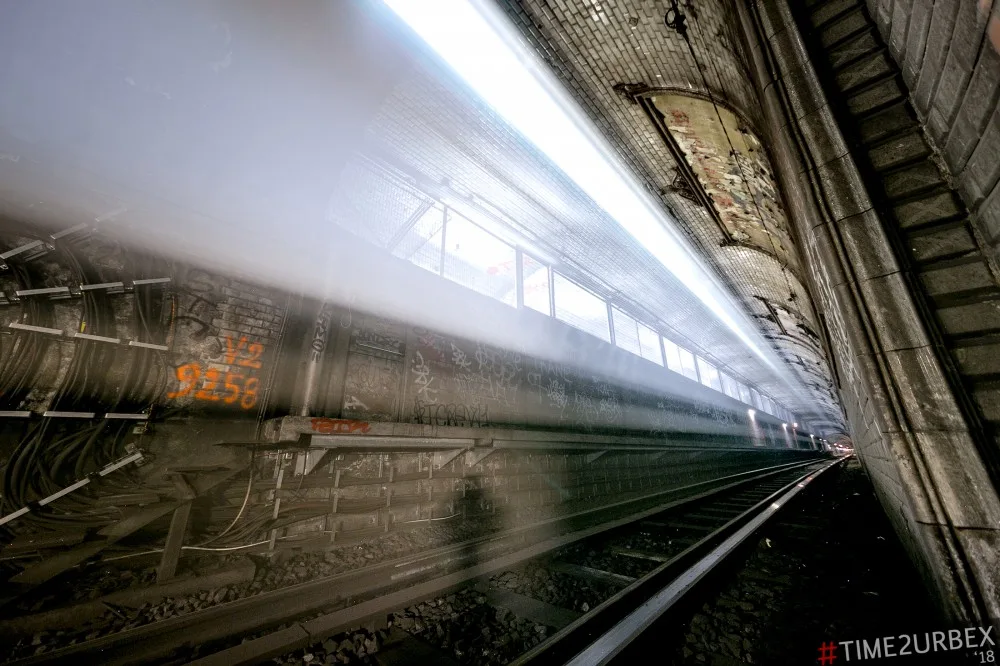
The closed part of the platform.
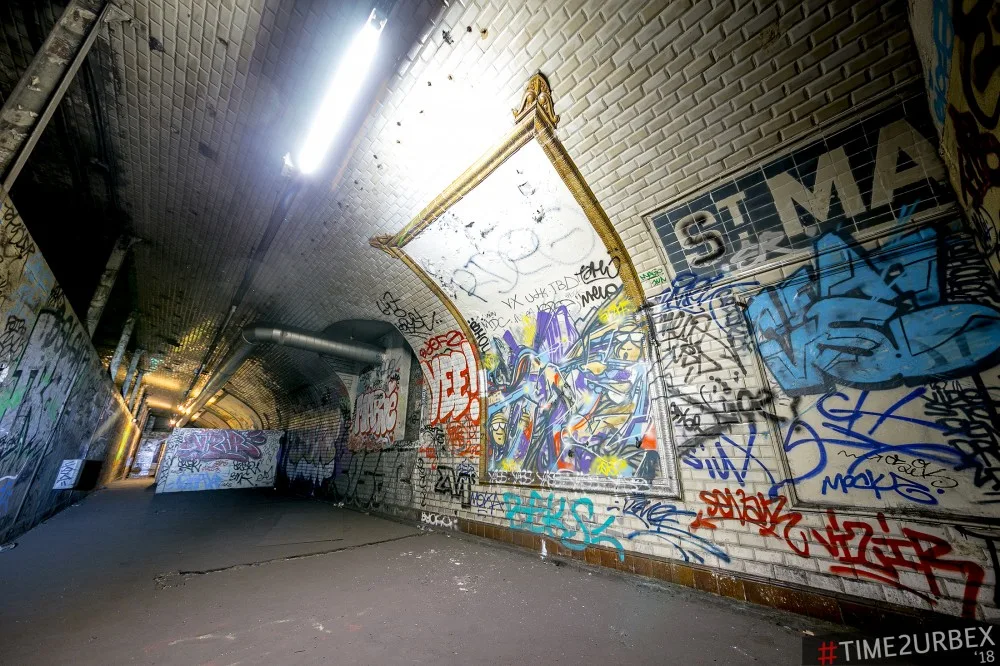
Advertisements from the 1930s have been preserved on the station walls.
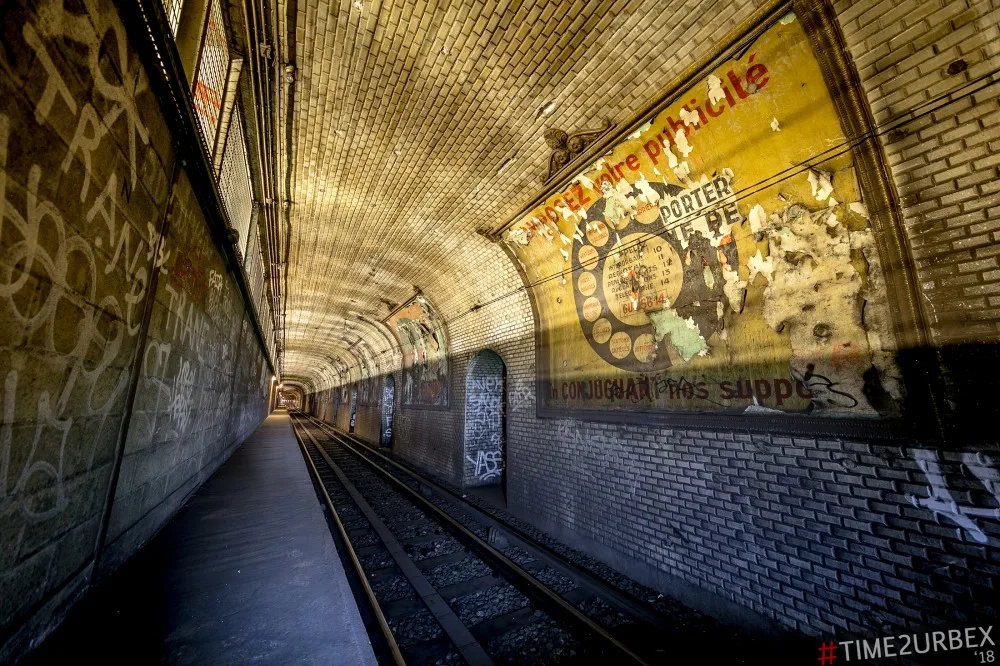
The neighboring platform is completely open.
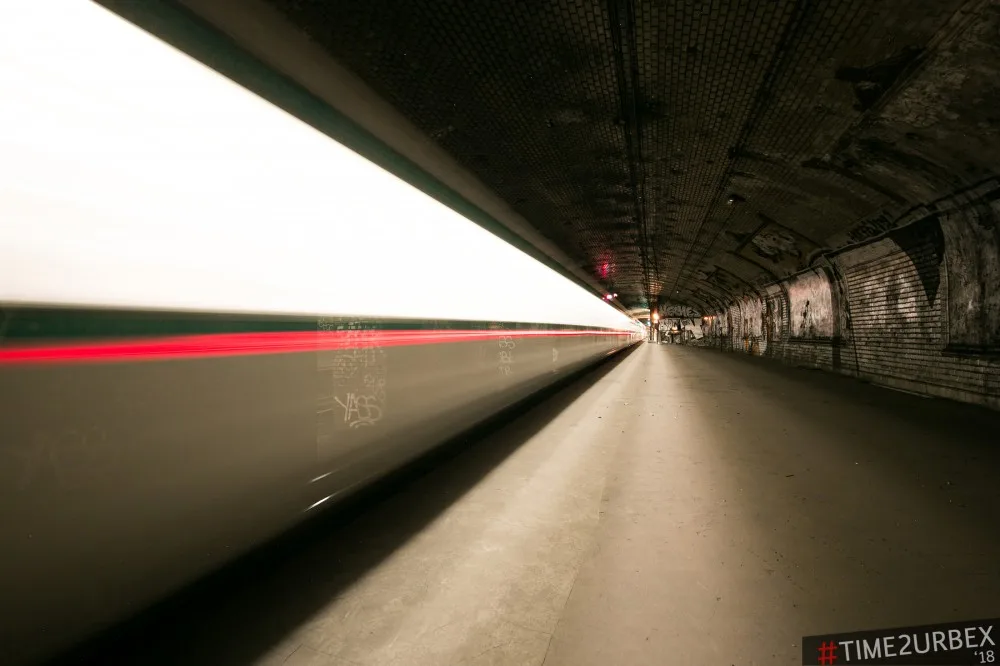
The portal into the tunnel.
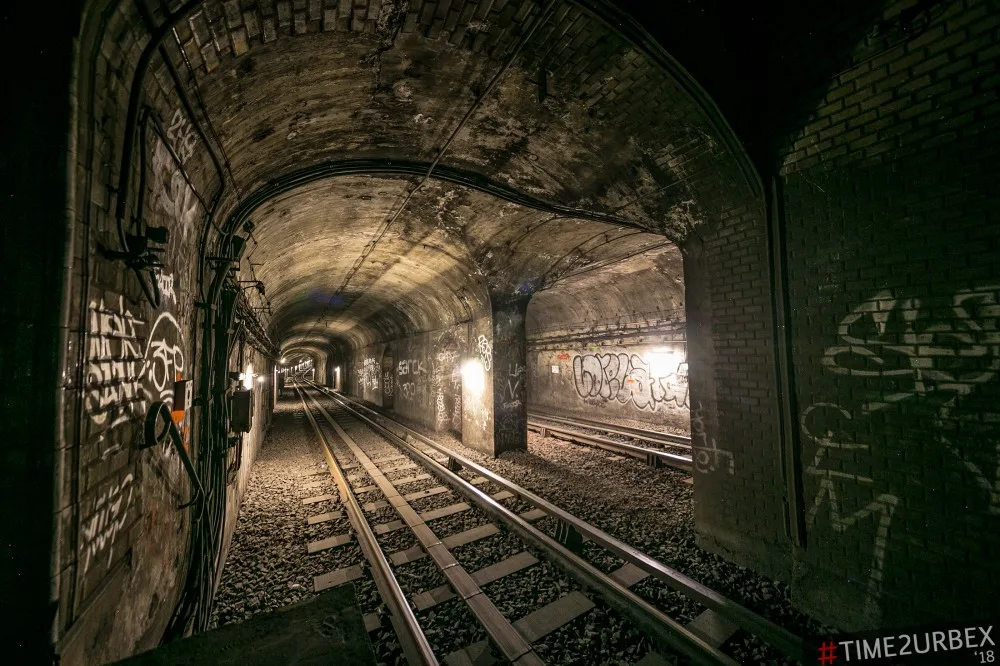
A view of both platforms from the tunnel.
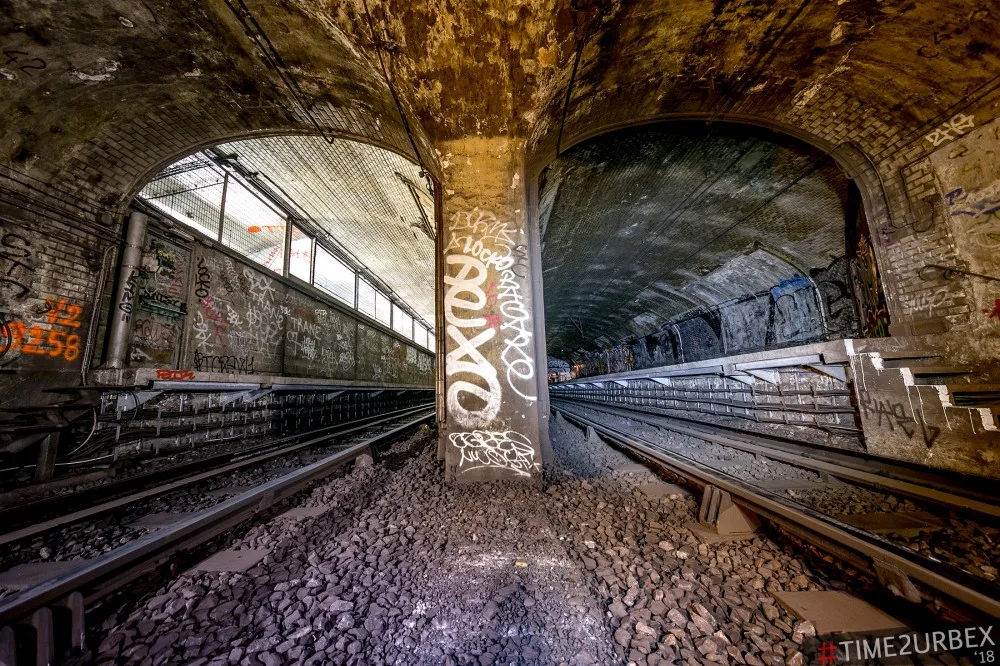
4. Arsenal
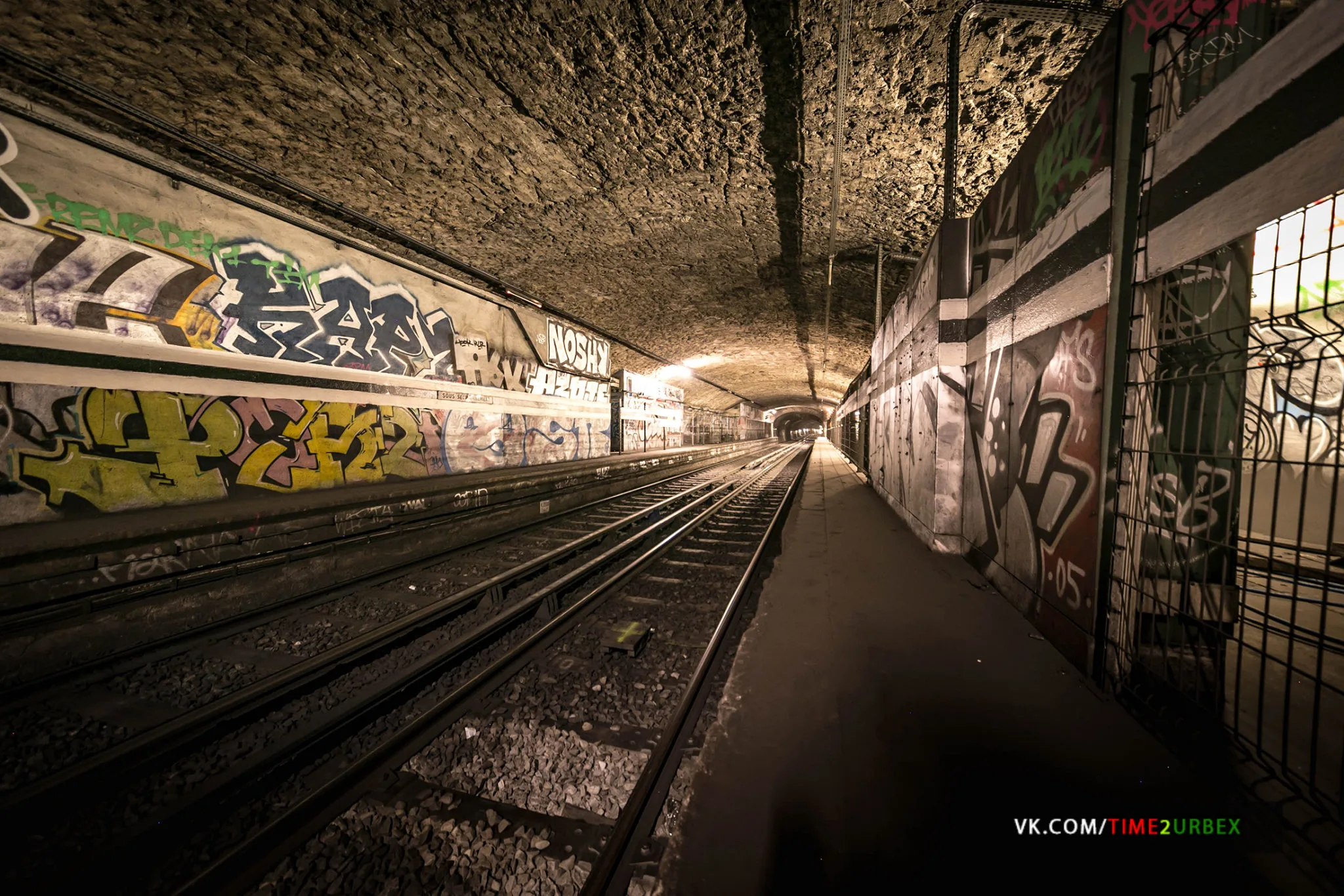
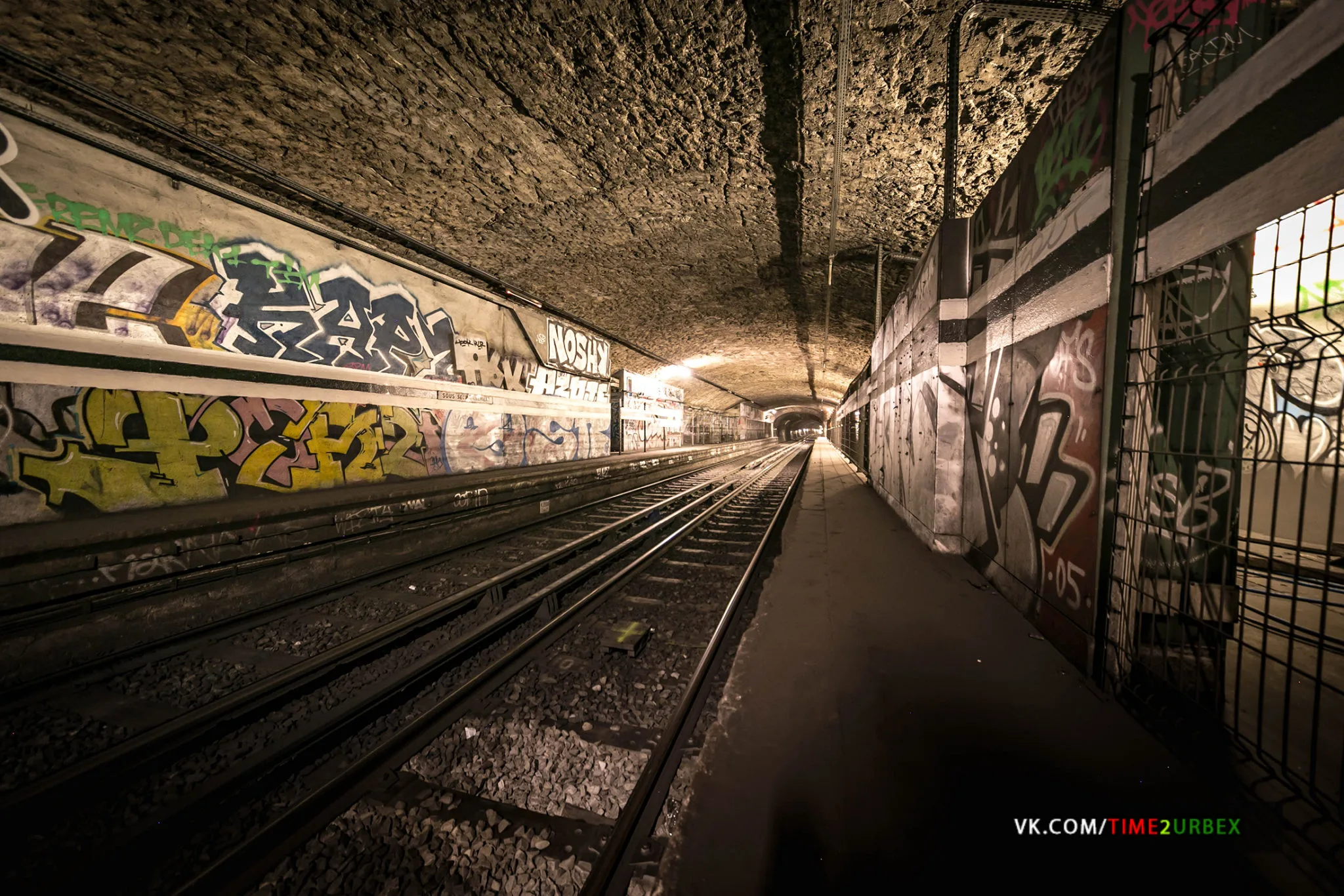
Arsenal station opened in 1906 and operated for 33 years. When France declared a general mobilization in 1939, Resistance members used the station as an ammunition depot. After the liberation of Paris, the mayor’s office decided not to reopen it because of the proximity of neighboring stations — even while it was in service, passenger traffic here had been light.
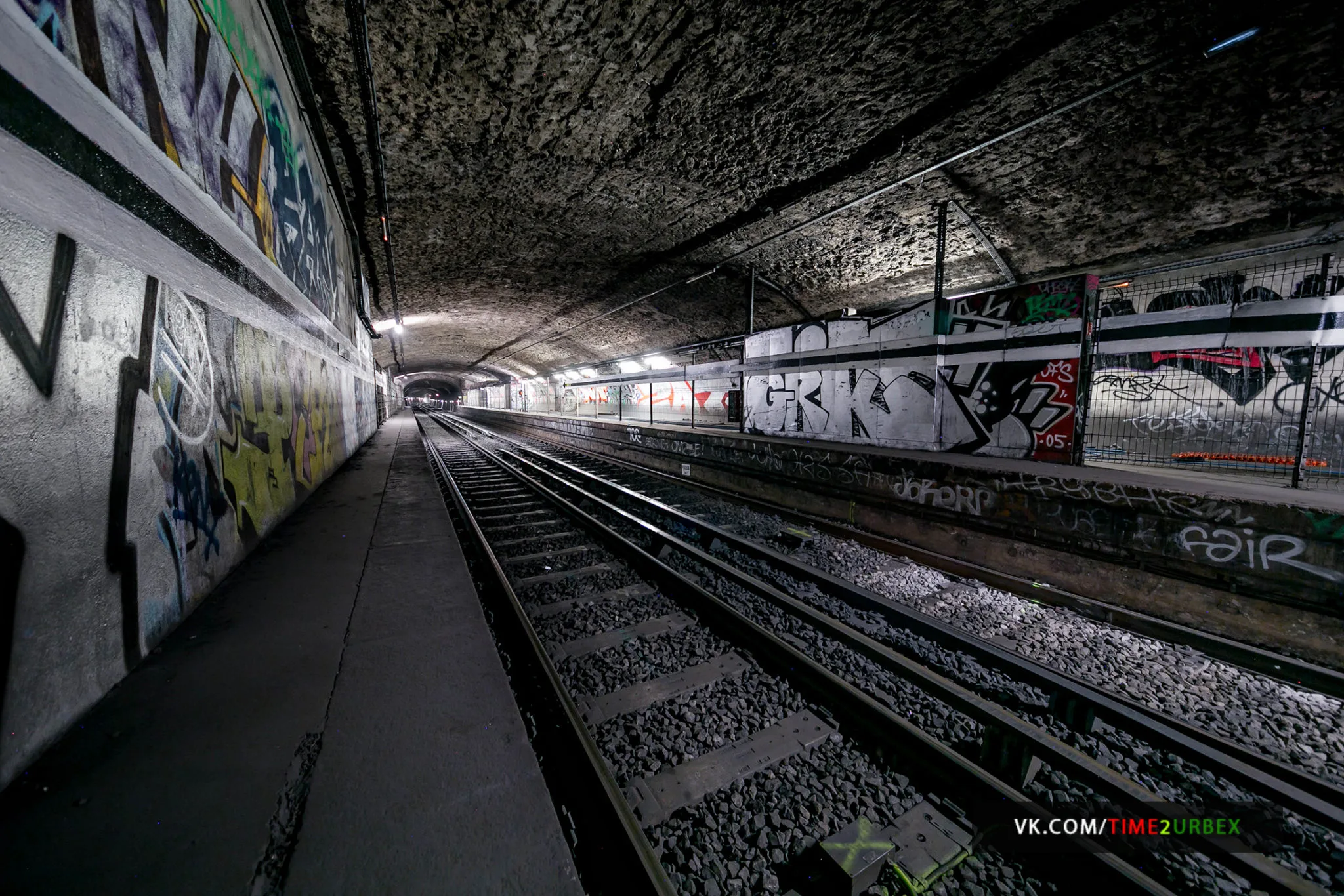
A significant part of the platform is fenced off from the tracks.
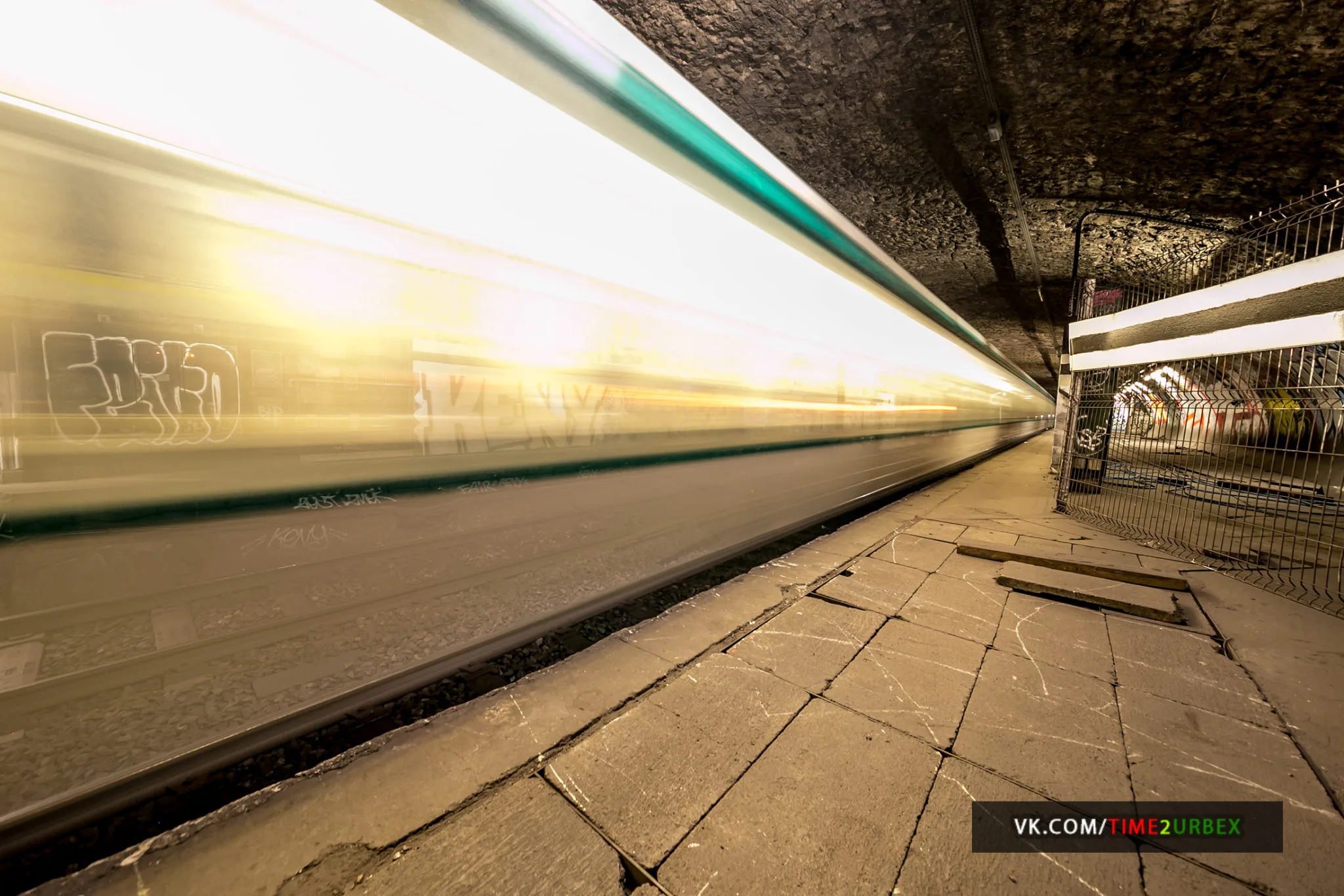
A passing train.
5. Champ de Mars (The Field of Mars)
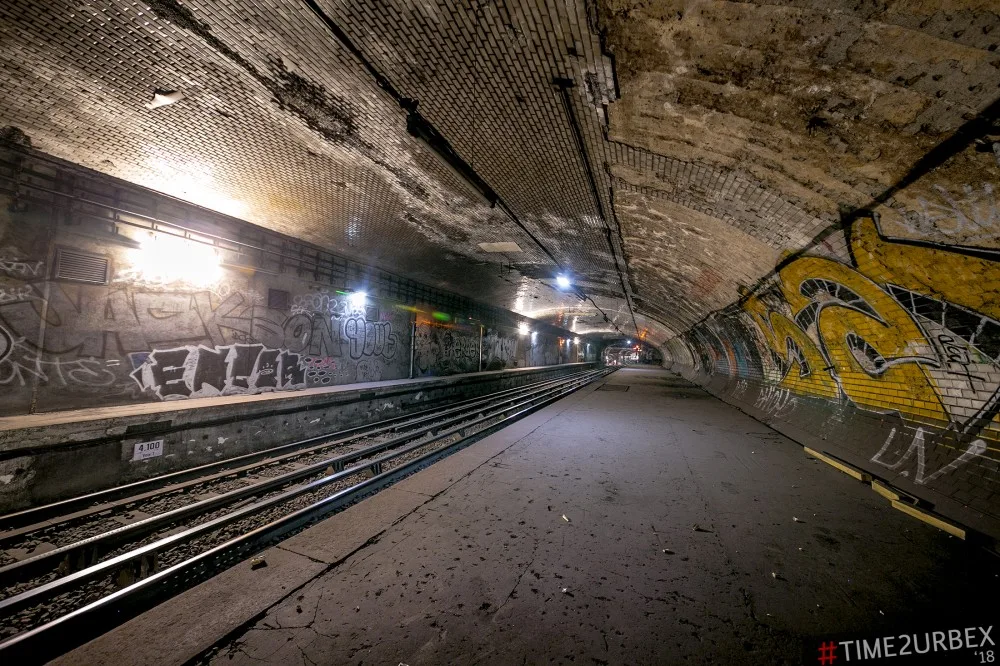
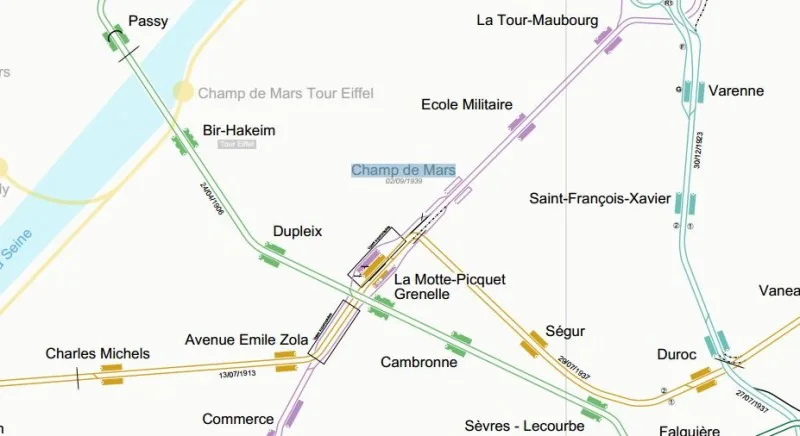
The station opened in 1913. At the start of World War II, the government carried out a plan to reduce service across the metropolitan area, and only 85 stations remained open to passengers. After the war ended, most of them reopened, but some, like Champ de Mars, proved unprofitable and remain abandoned to this day.
The location of the stations on the map.
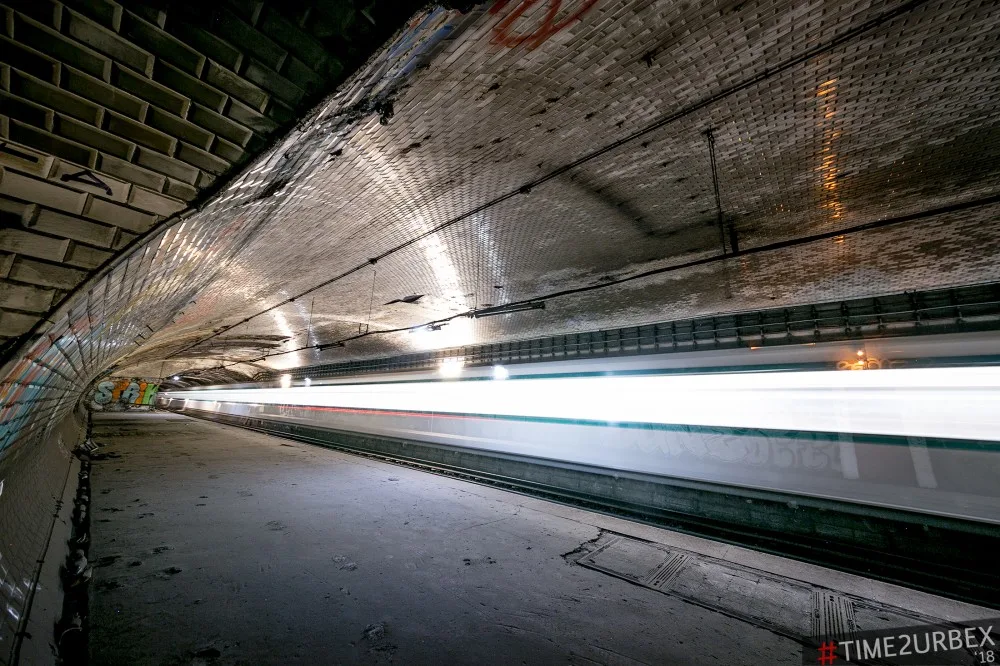
The typical design of two platforms beneath an arched vault.
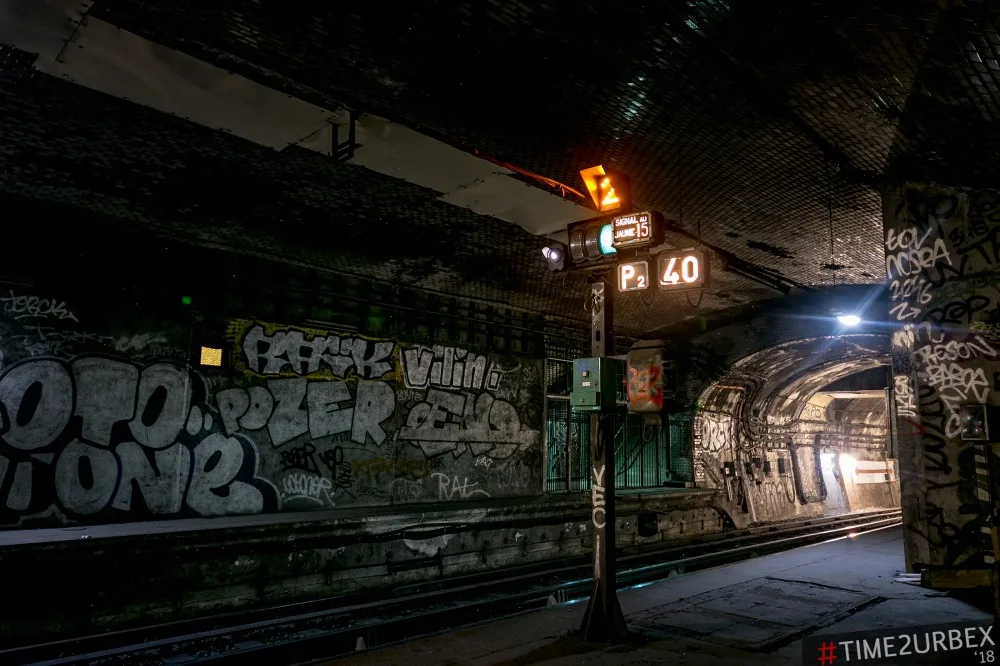
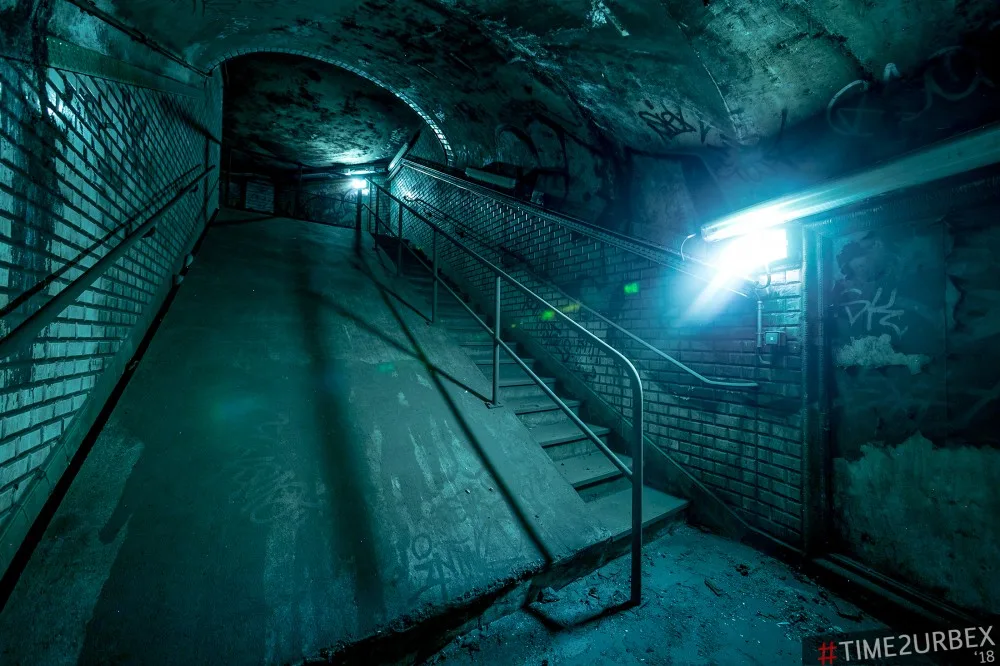
A closed exit from the station. Part of the staircase has been converted into a ramp for moving technical equipment.
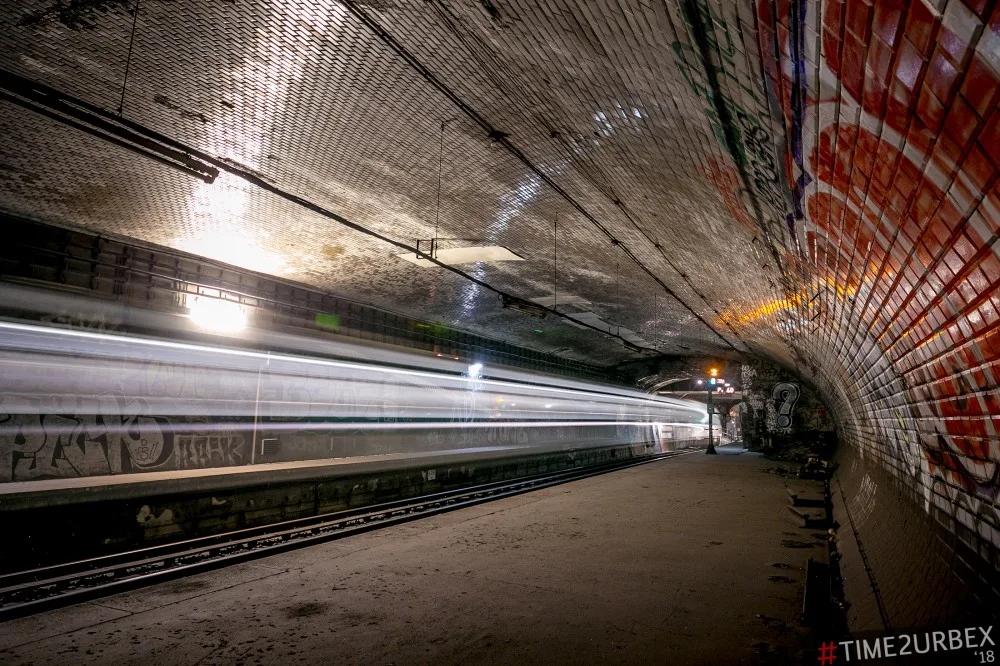
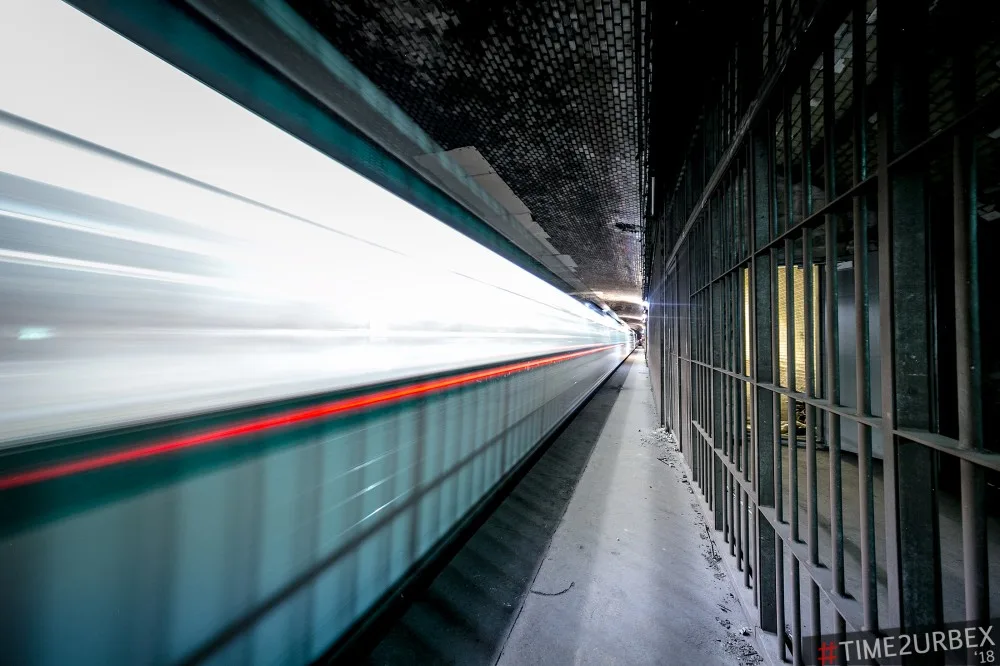
The opposite platform, unlike the first, is half-closed off by a grille. Behind it, ventilation equipment hums in the enclosed spaces.

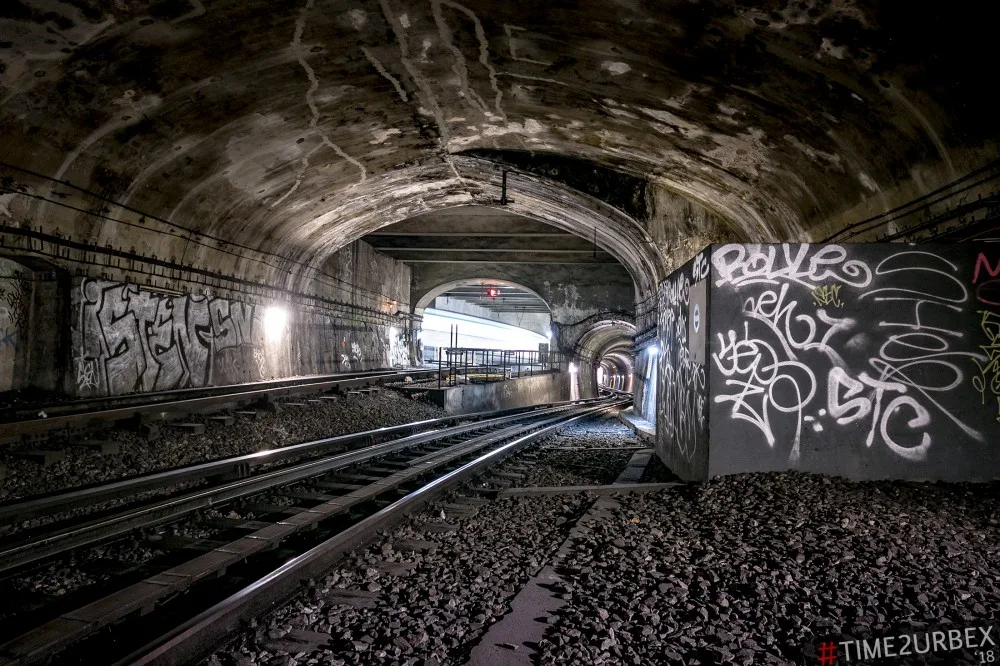
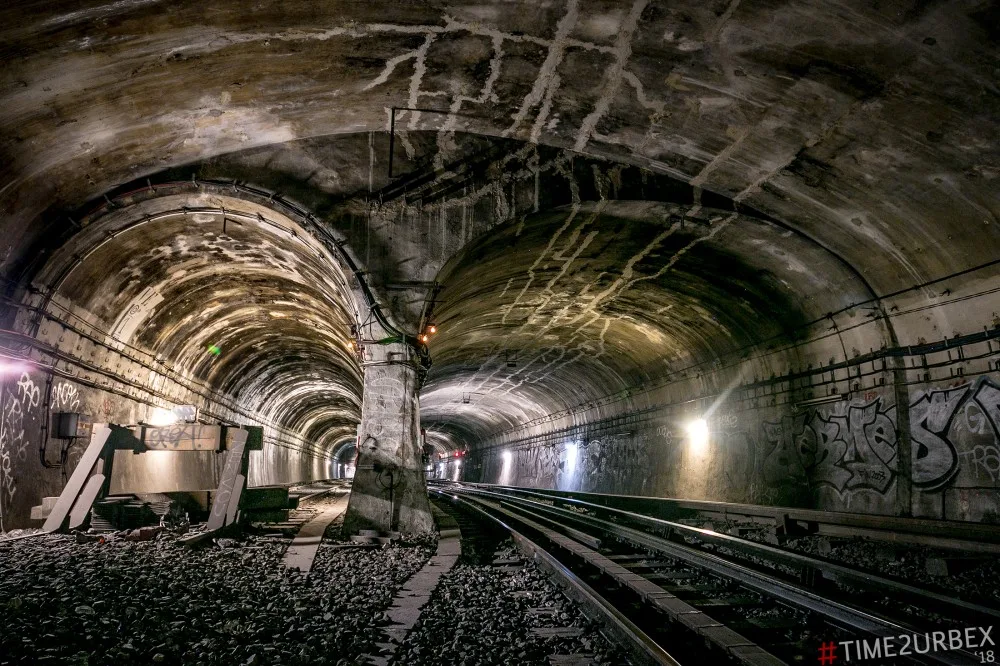
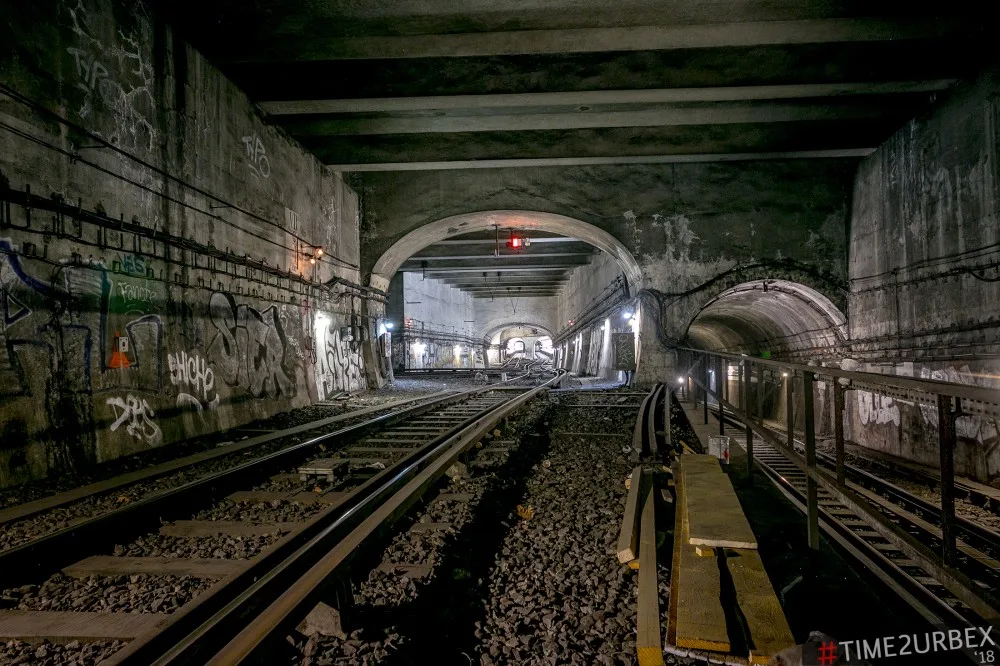
The station has a rather “interesting” track layout.
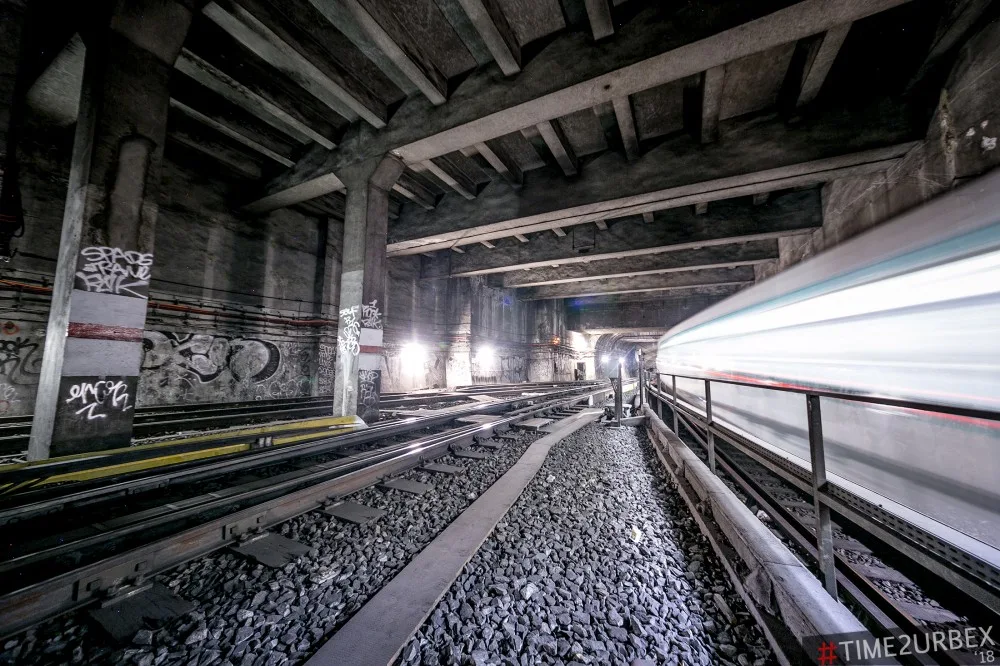
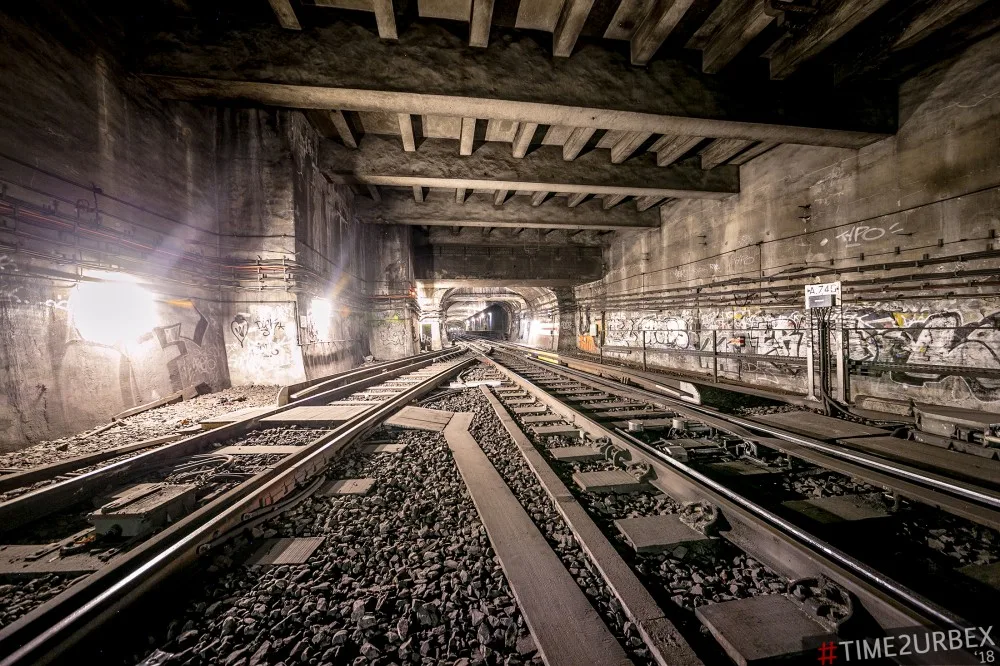
One track simply ends at a dead end.
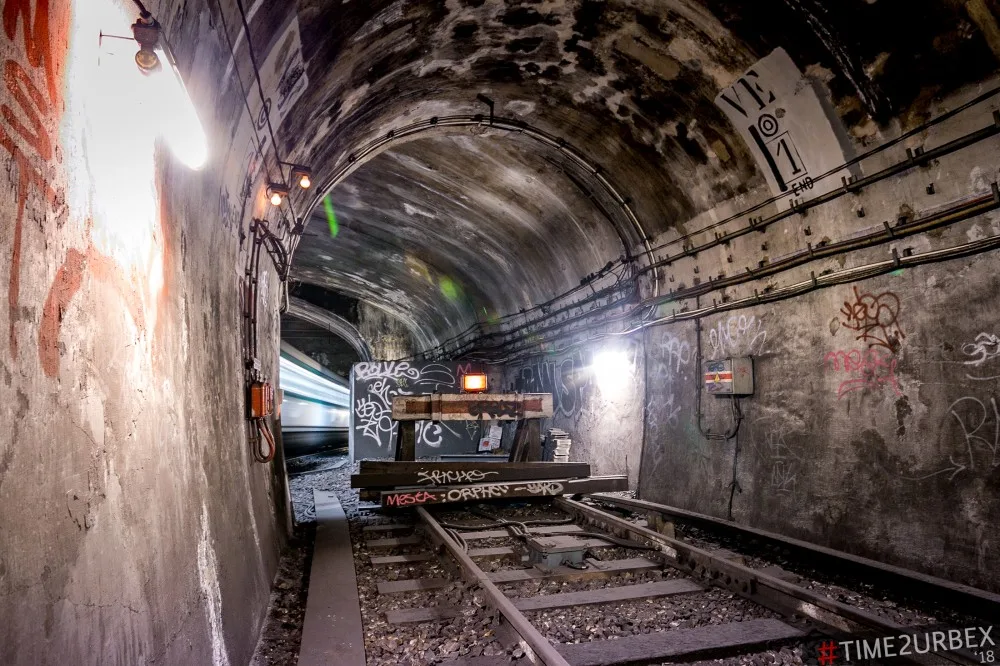
The reason for this is the cross-platform interchange at the La Motte-Picquet Grenelle station (see the diagram above).
Are you interested in Urbex Tours in Kyiv? Contact us!
6. Porte des Lilas – Cinema Station
This station is also closed to passengers, but it is used for stabling trains overnight, as well as for shooting films and commercials. Hence its second name, “Cinema”. Porte des Lilas opened in 1921 and operated as part of Line 3 until 1935, after which it was transferred to Line 11. In the late 1960s, it became necessary to build turnaround sidings and reorganize the 3bis line. To carry out this project, a similar stand-in station was built nearby, and the original Porte des Lilas was closed. Let me even tell a little story about our walk to Porte des Lilas station and the next one, Haxo:
…Midnight was approaching. We set off for Porte des Lilas on the second-to-last train. By that time the platform was almost empty. Parisian homeless people slept peacefully on the benches — they stay here all night, and nobody drives them out of the warm subway. Making sure no one was watching us, we jumped down onto the track and walked quickly toward the fork. Having let the last train pass, we ducked into a single-track tunnel connecting lines 3-bis and 7-bis.
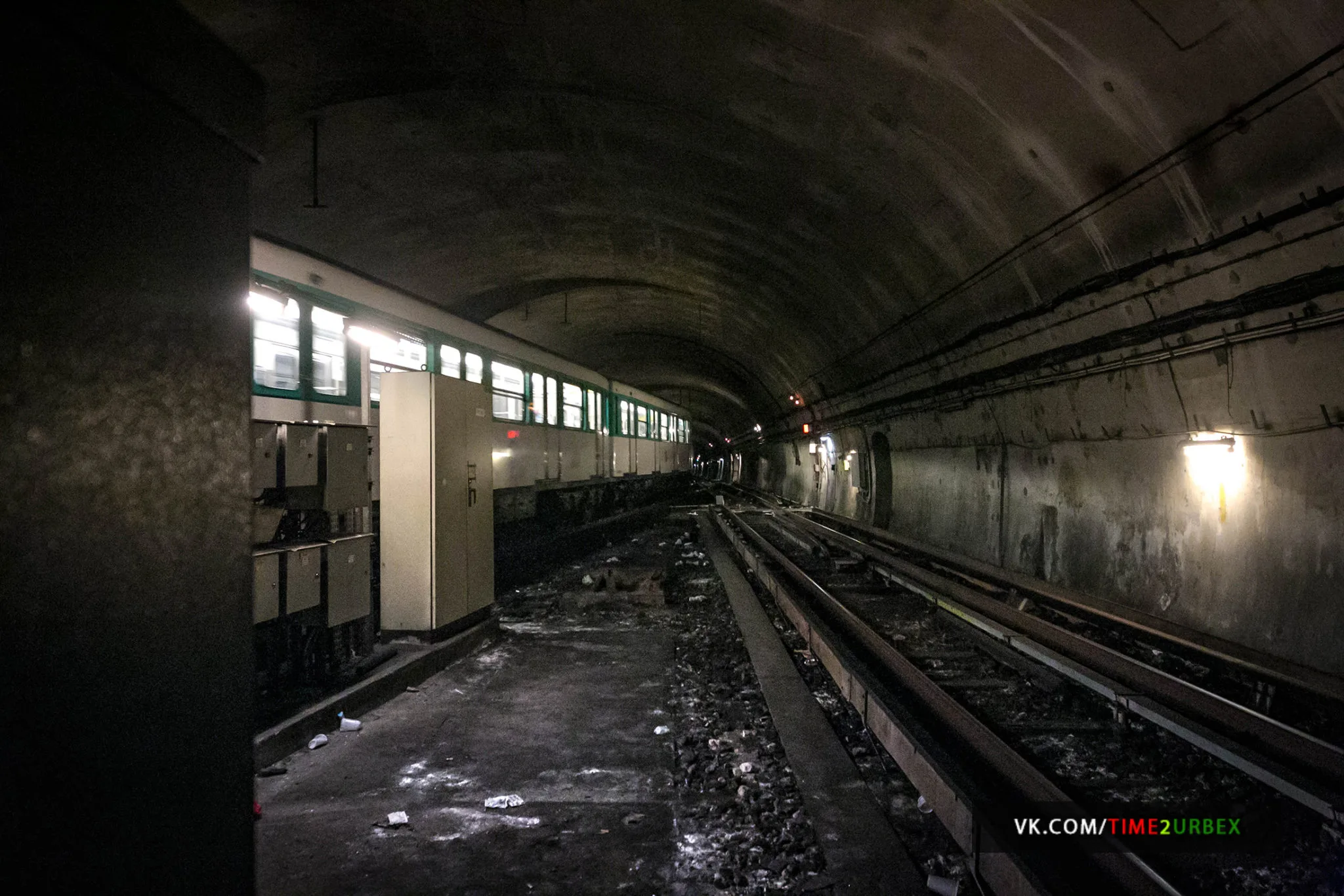
After 200 meters, the “closed” Porte des Lilas station came into view, with a train standing on it for the night.
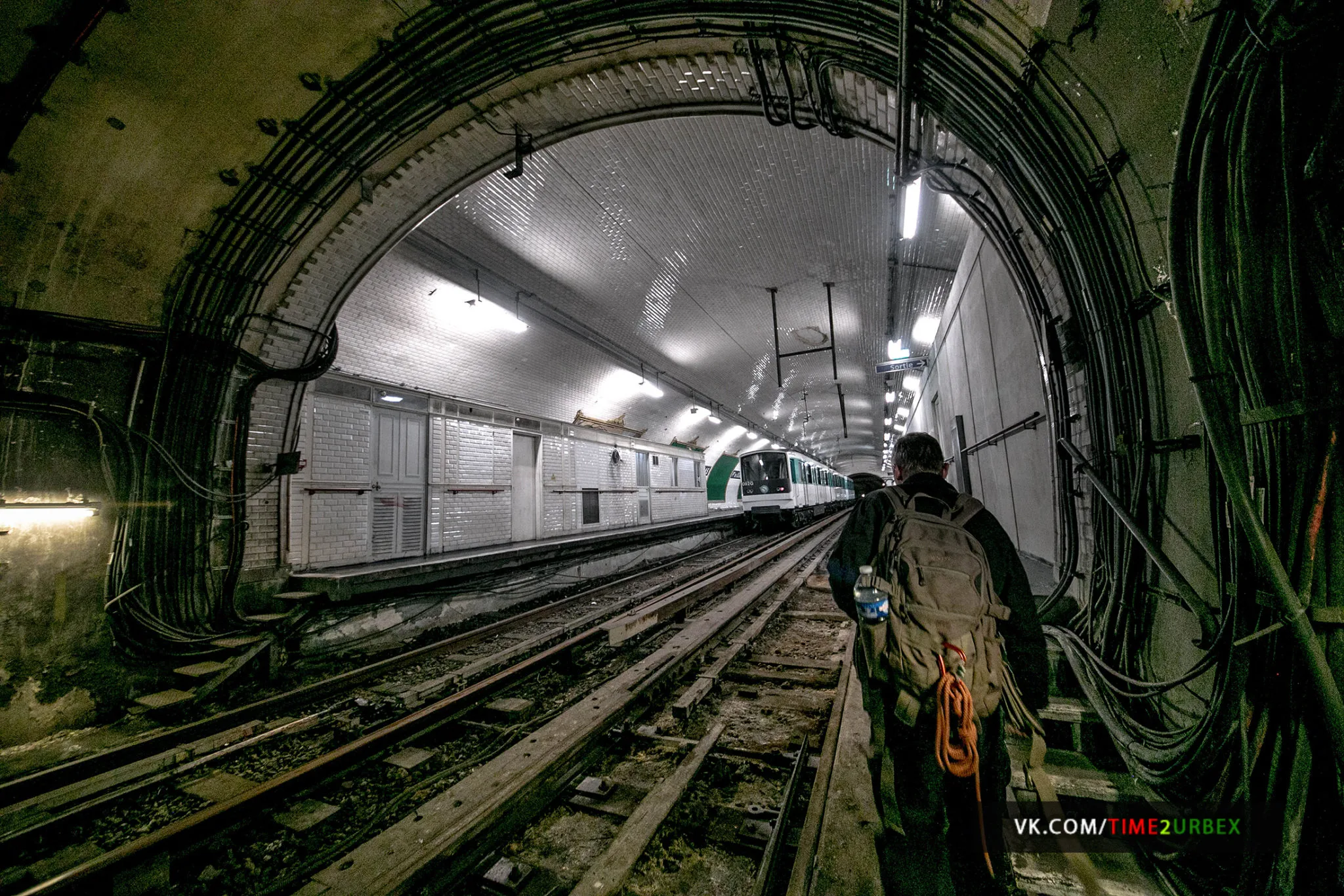
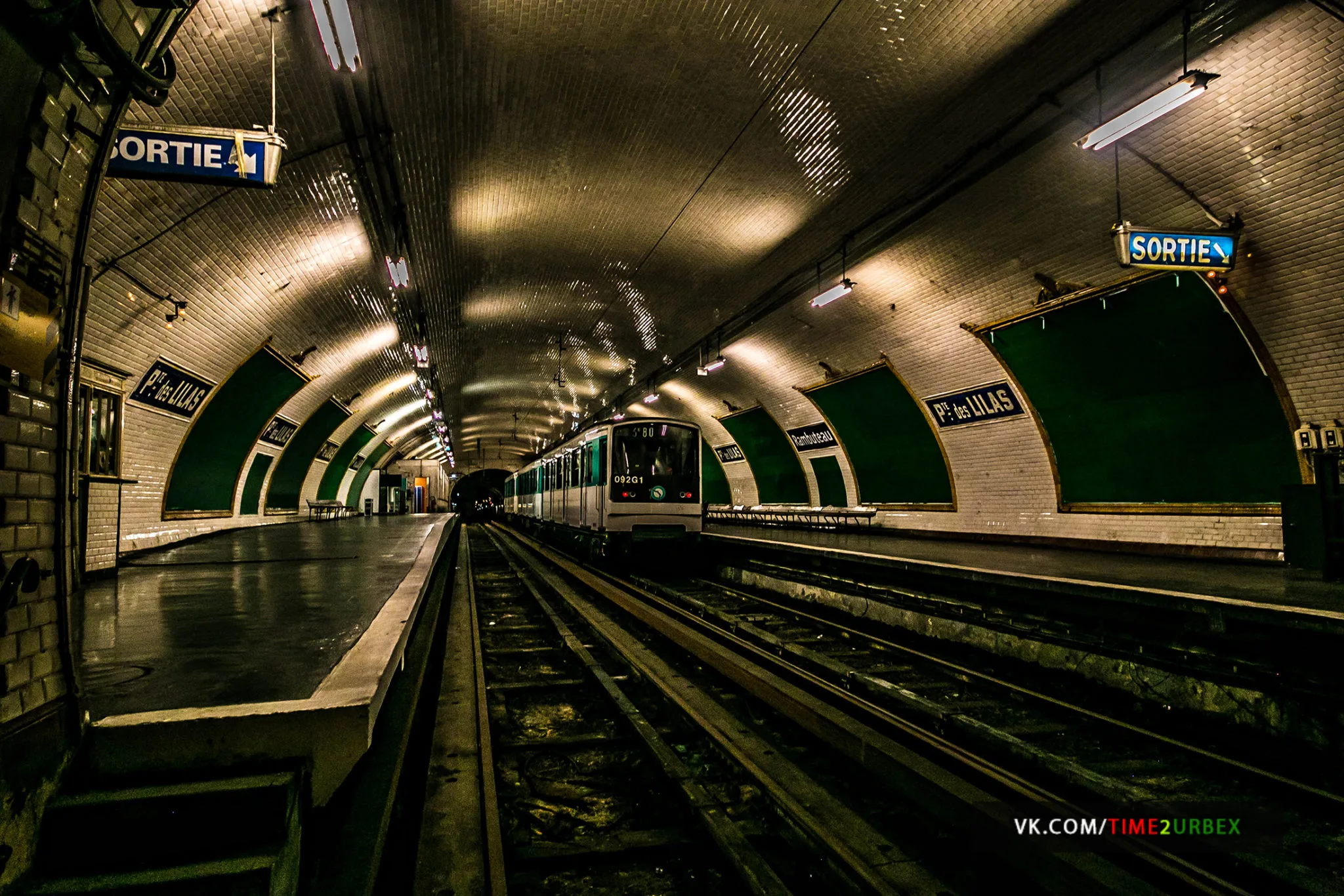
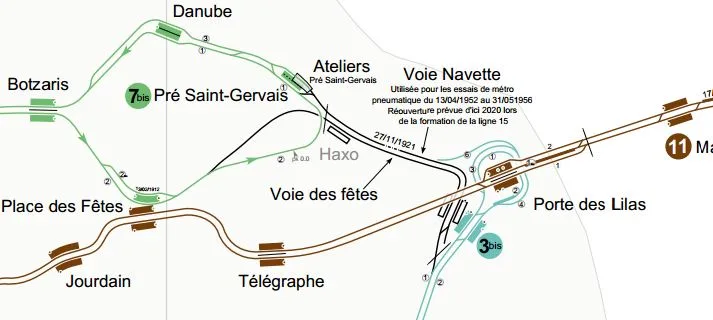
Passing the station and continuing another 300 meters, we found ourselves in a spacious junction area for trains. The dead end on the right connects this tunnel with the turnaround sidings of the operating Porte des Lilas station on Line 3-bis.
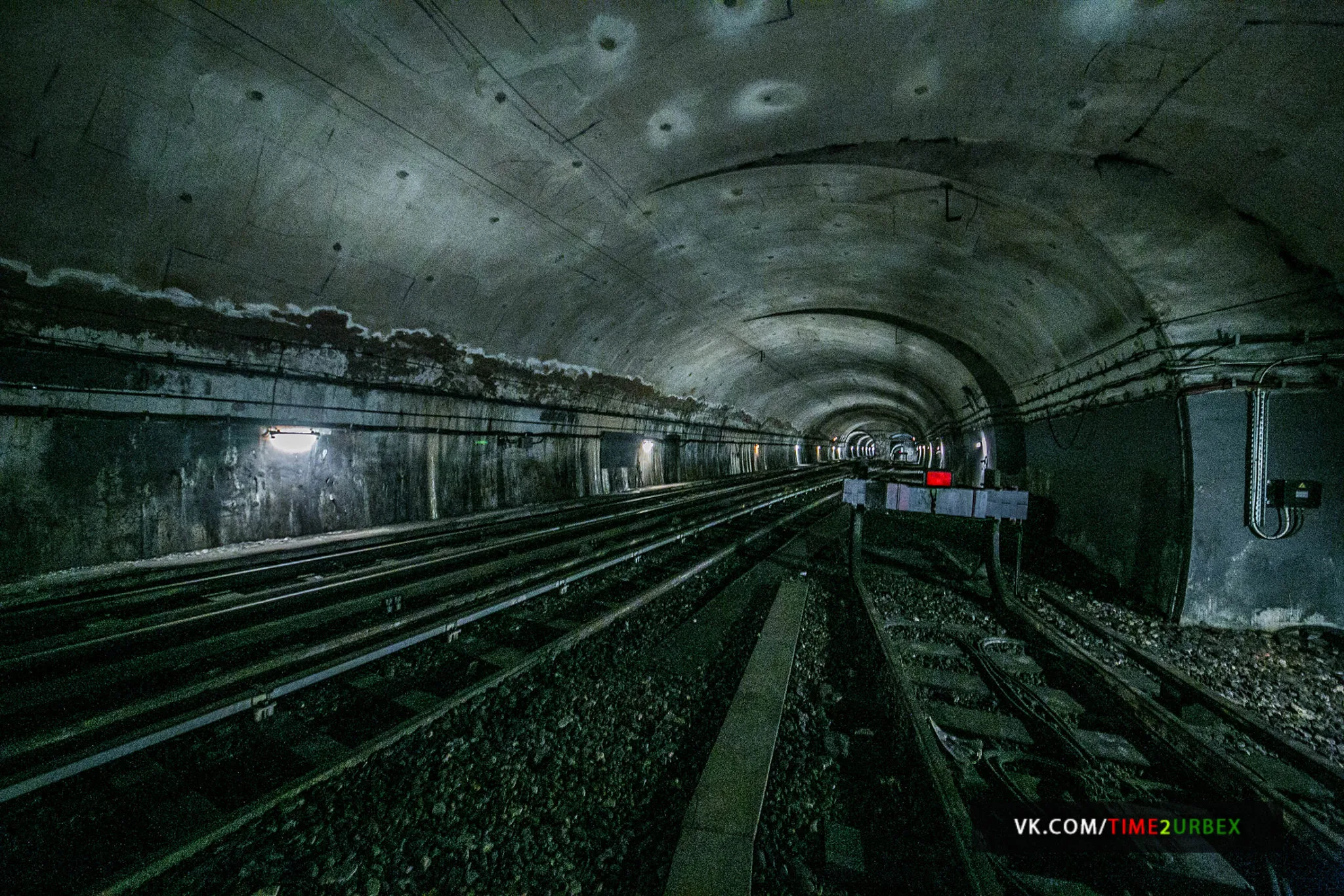
And here is what I described above, shown on the diagram.
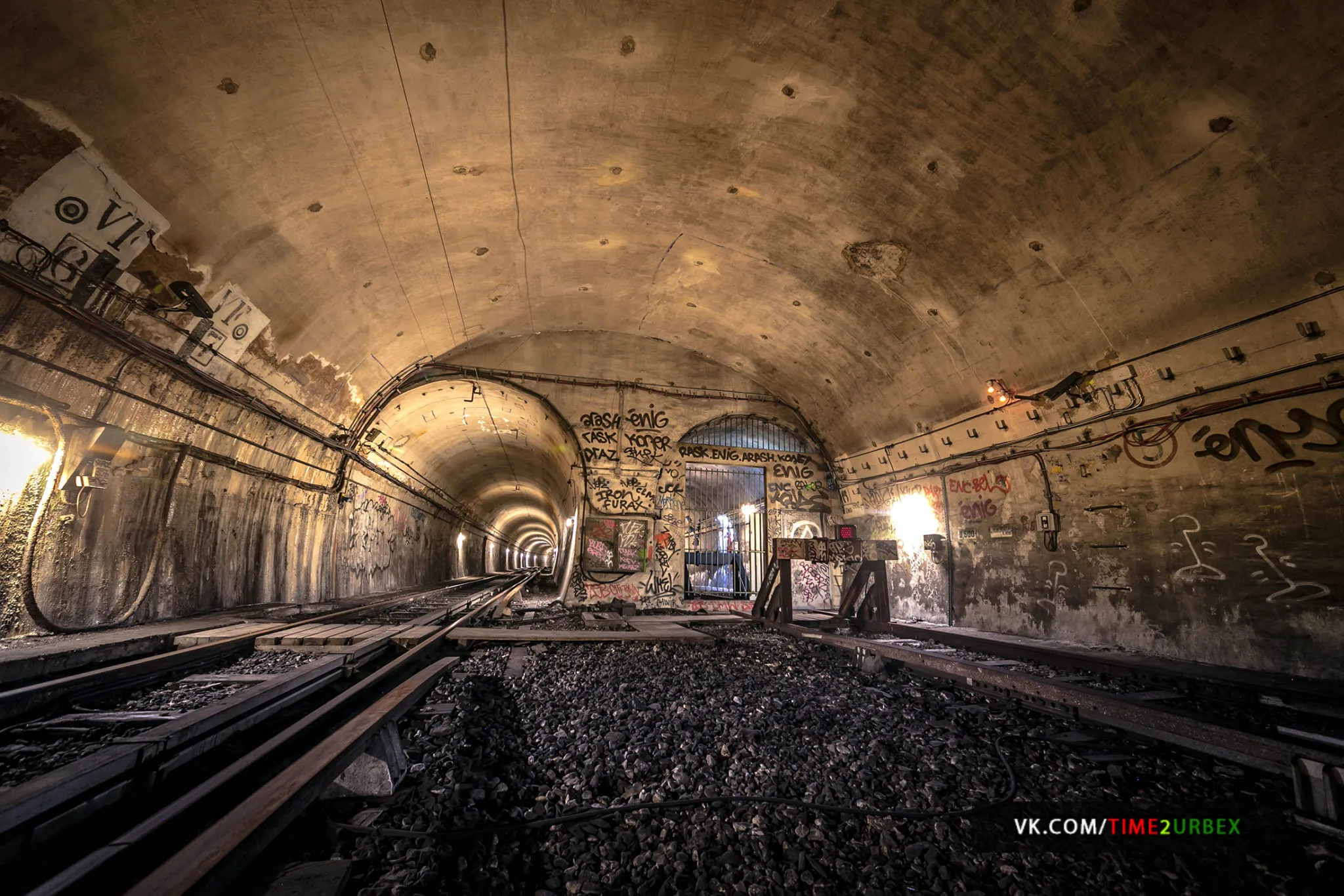
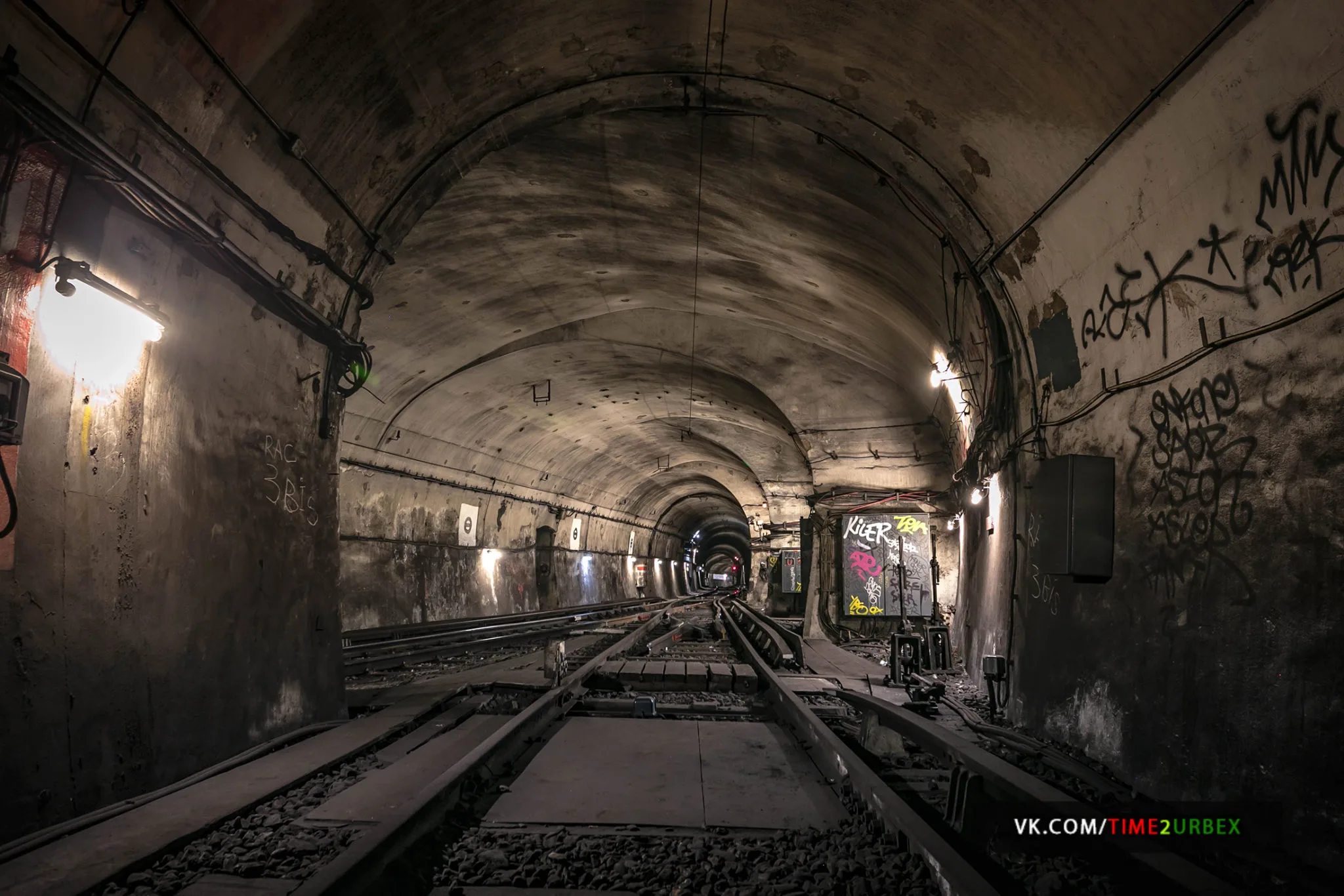
At its end, the junction chamber narrowed, and the double-track tunnel split into two single-track ones: to the right toward Pré Saint-Gervais station, to the left toward Place des Fêtes.
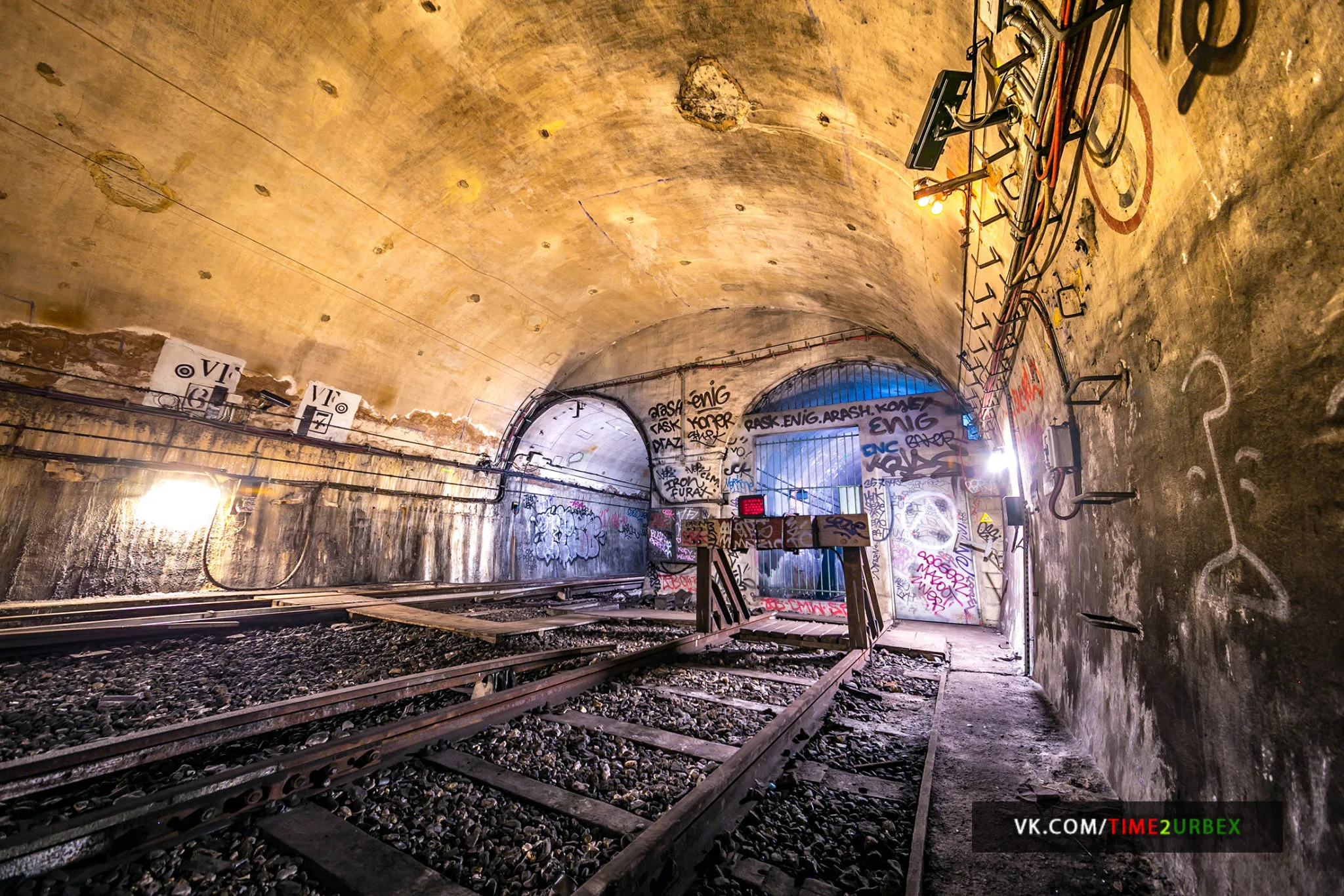
The second track has been unused since 1956. We did not manage to reach it, though — the tunnel was completely blocked by a massive grate. So we went left, toward Place des Fêtes station.
After 300 meters, beyond the bend, the abandoned multi-platform station “Haxo” appeared.
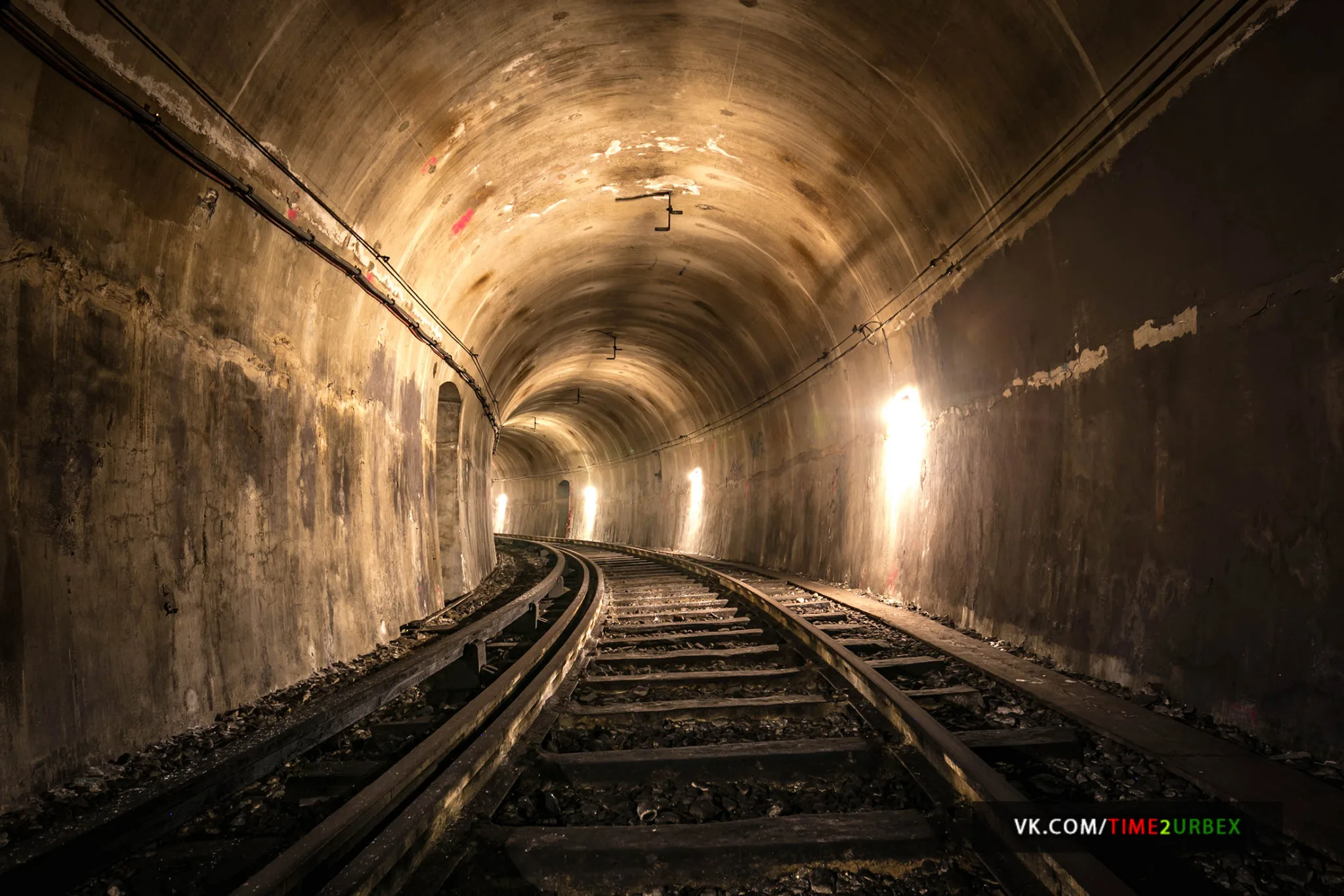
7. Haxo Station
Haxo was built as an intermediate station on the connecting section between lines 3-bis and 7-bis, but it was never used for its intended purpose. The project to connect lines 3 and 7 (they were not yet called 3-bis and 7-bis at the time) between Porte des Lilas and Pré Saint-Gervais was conceived as early as the beginning of the 20th century and was backed by the municipality that owned the railway network. The company that operated the Paris subway railways opposed the project because of its low profitability. Nevertheless, two single-track tunnels were built — the voie des Fêtes track from Place des Fêtes to Porte des Lilas with the intermediate station Haxo, and the “shuttle way” (voie navette) in the opposite direction without an intermediate station. In the end, it was decided to put only the “shuttle way” into service. Trains ran on it from 1921 to 1939, but after the war it was decided not to resume operation, since by then Line 11 already connected Place des Fêtes and Porte des Lilas. In 1952–56, the “shuttle way” was opened to passengers for a while, albeit in a limited mode: it was here that the first pneumatic-tired MP-51 rolling stock and the automatic piloting system were tested. Passengers, especially children, were often even allowed to sit in the driver’s cab and “drive” the train. Even so, the segment never entered regular commercial service. As for Haxo station, it was never put into operation and does not even have any exits.
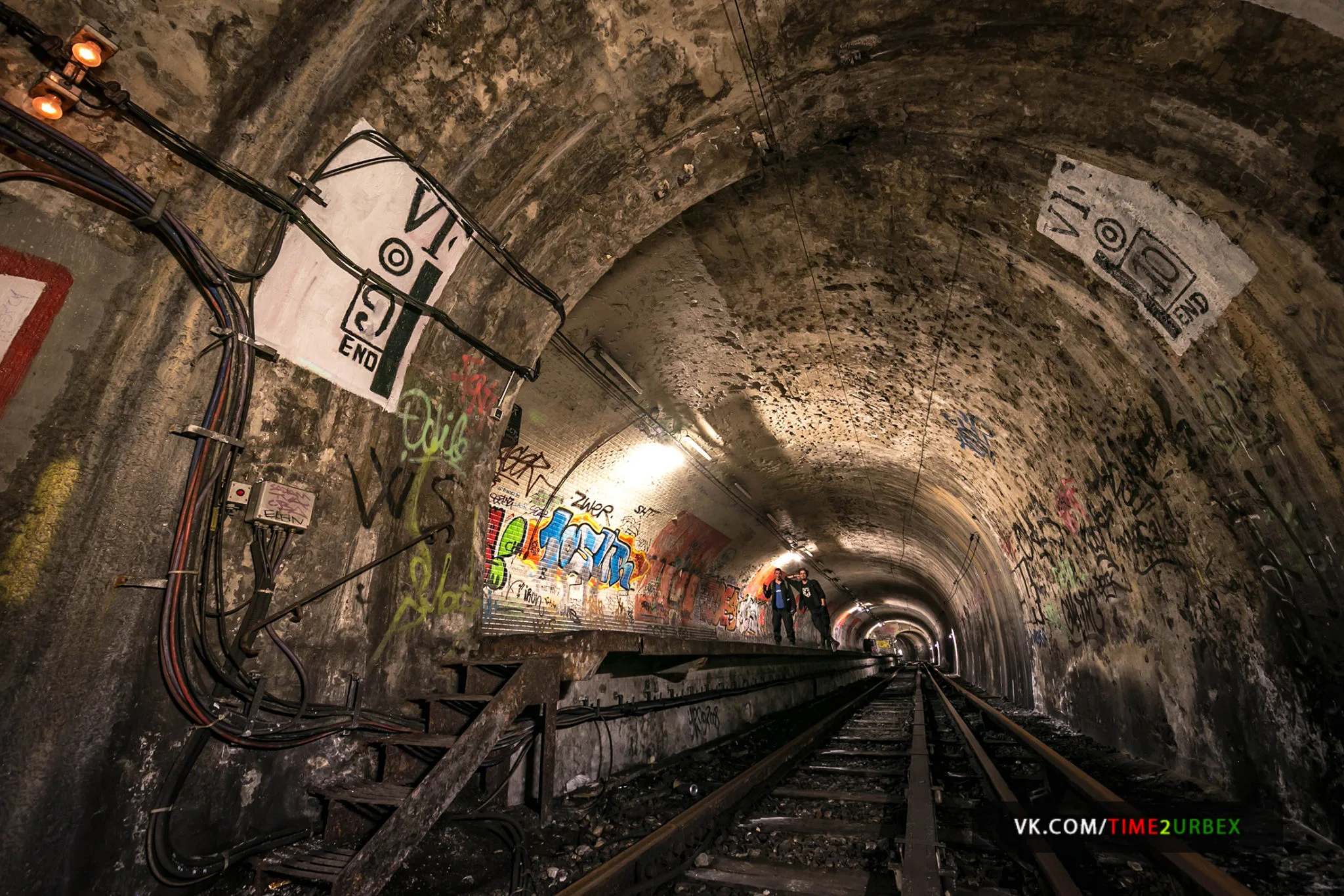
There is currently a project to merge the 3bis line with the 7bis line into a new line that would connect Château-Landon and Gambetta with Château-Landon station. In that case, Haxo station might be completed and opened to passengers.
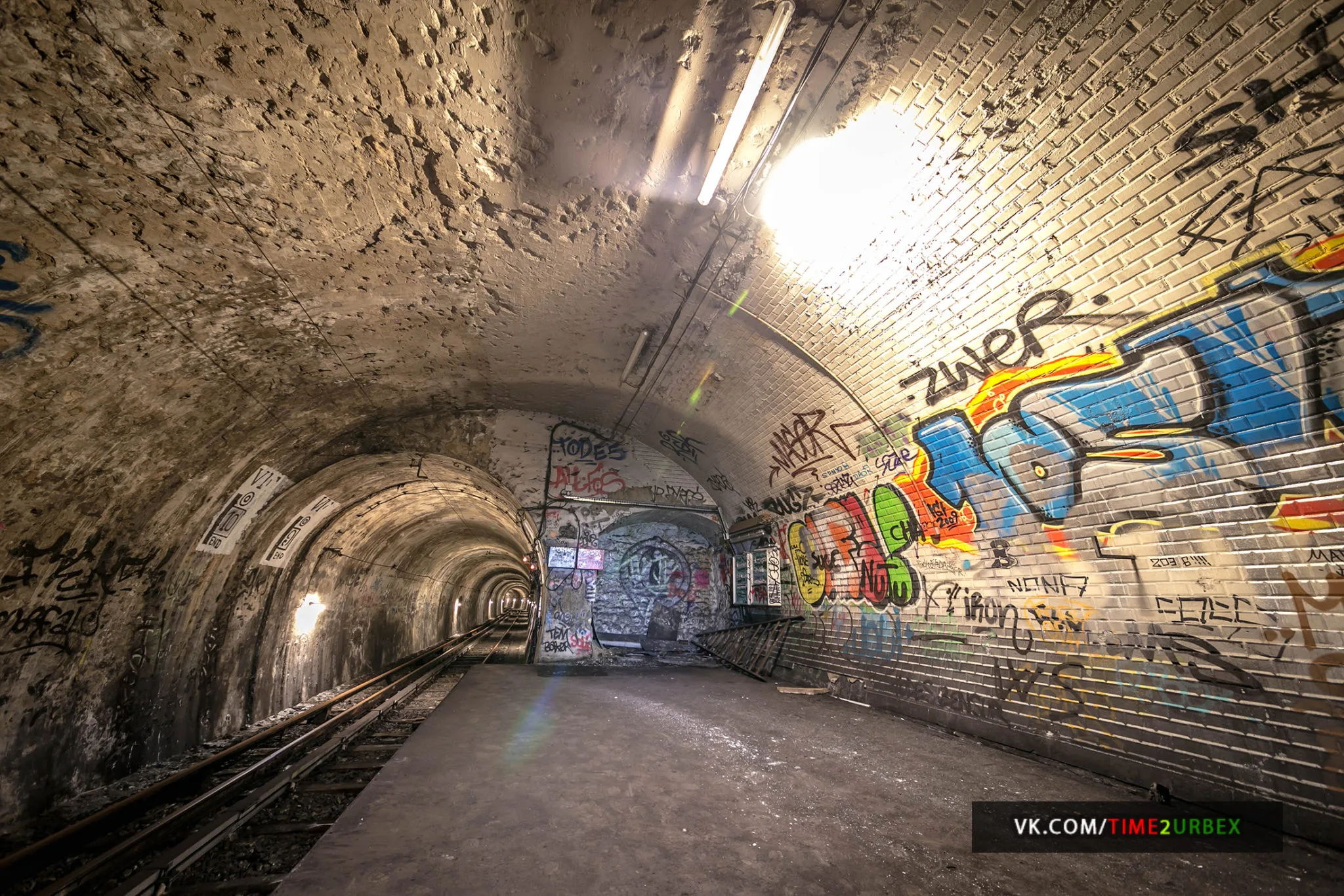
We continue our journey to Place des Fêtes station.
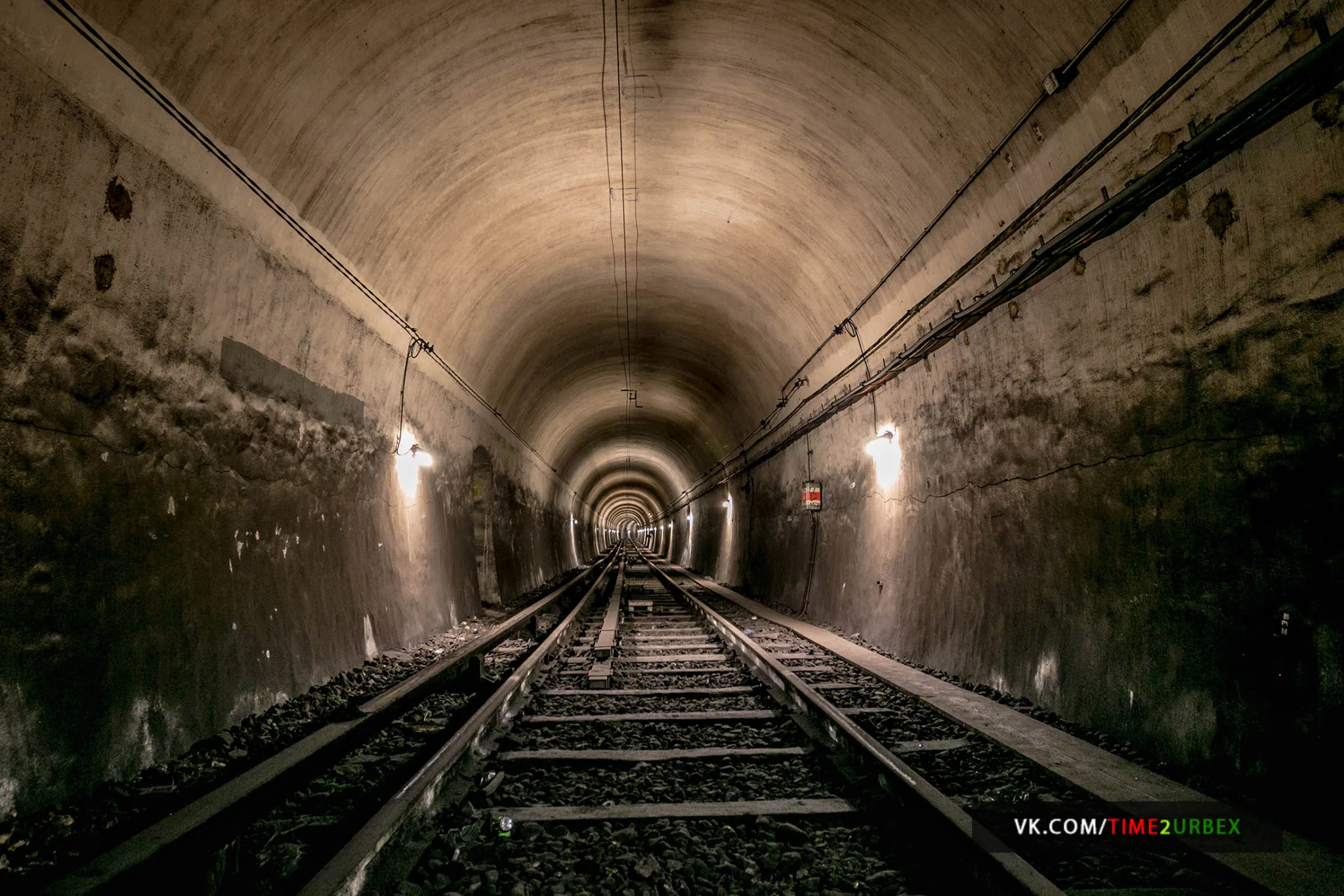
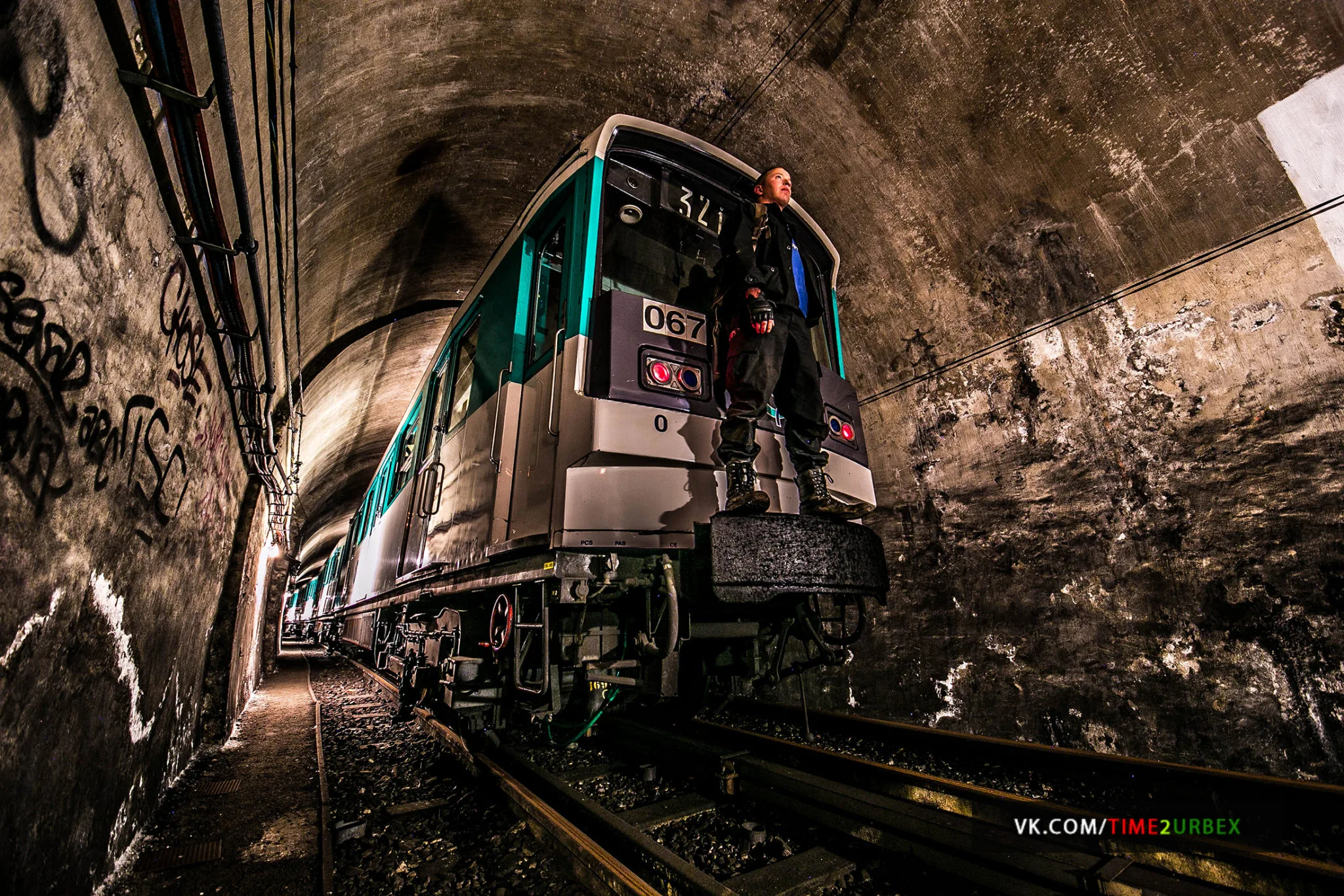
After 200 meters, beyond the next bend, a trainset appeared, standing for its night pause.
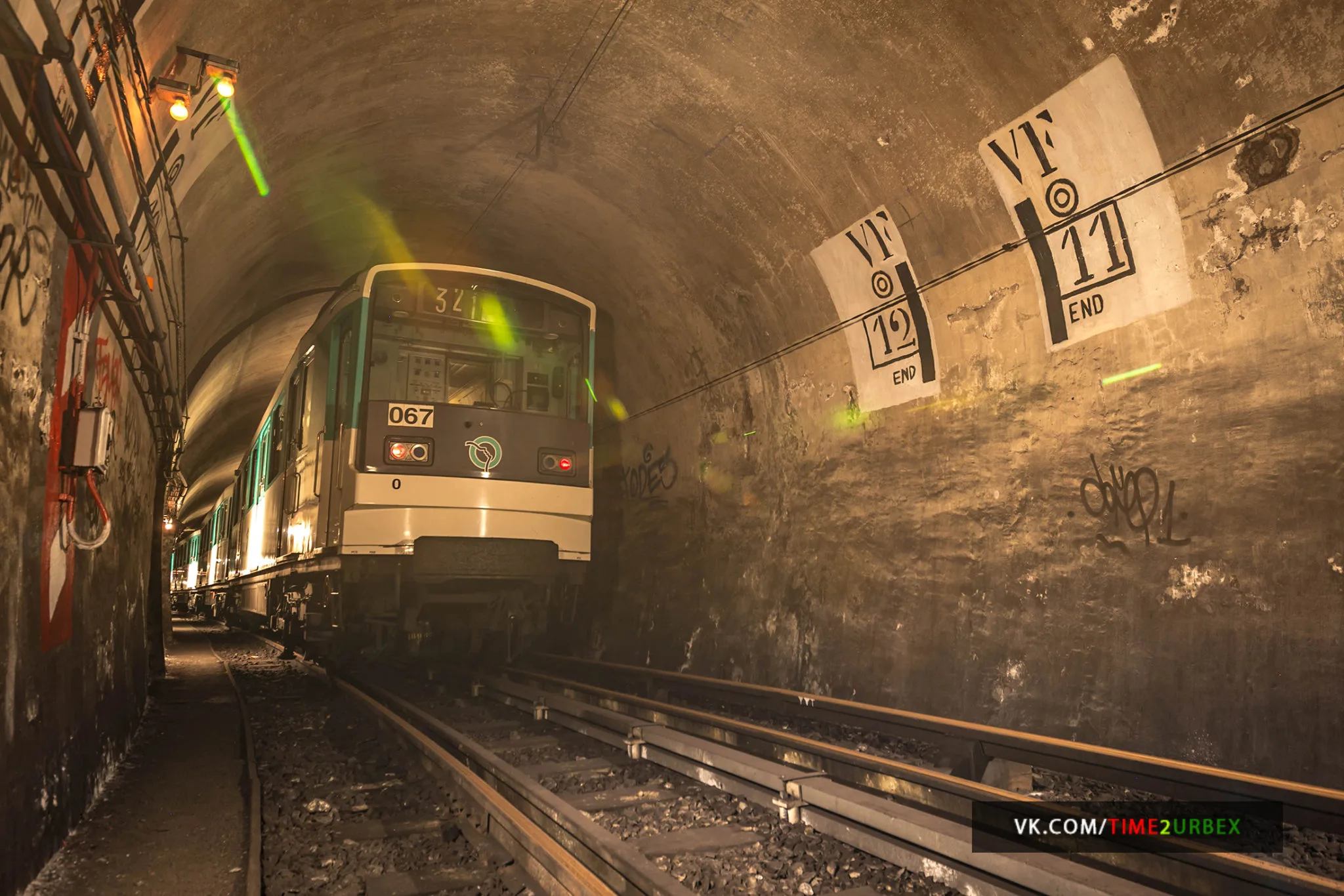
Trains in the Paris subway are narrower than those in the subways of the former USSR. That is my friend in the photo — for a sense of scale.
Having passed the parked train, we reached the next junction. In the distance we could see the platform of Place des Fêtes station… AND TWO SECURITY GUARDS in black vests, hurrying toward us!!!
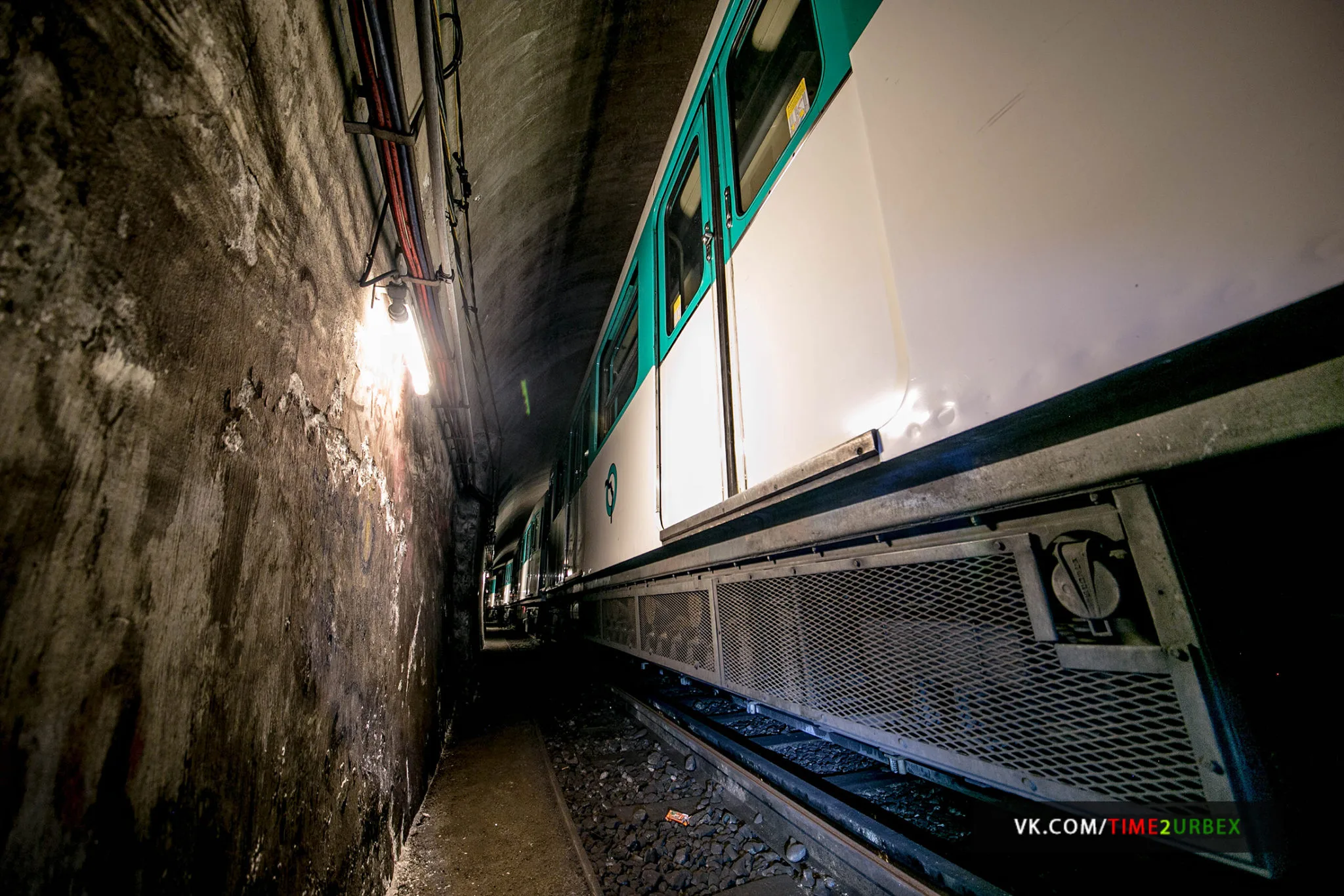
There was no point in running back — the second group was surely already on the Haxo side — so we decided to hide between the roof of the train and the tunnel arch. The gap was narrow, but it was still possible to squeeze in and stay out of sight from below.
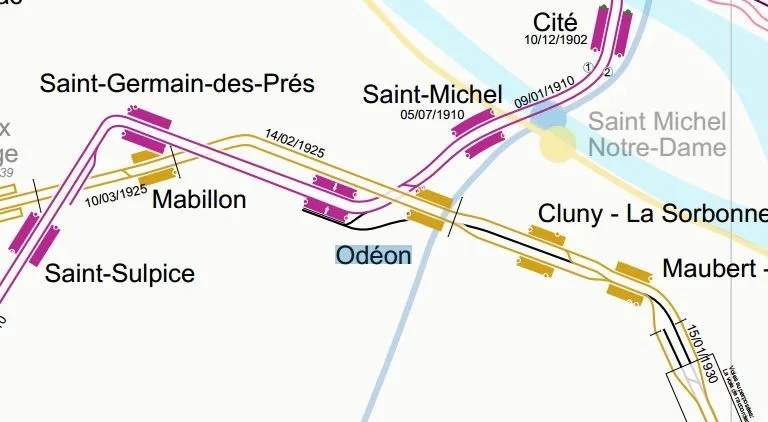
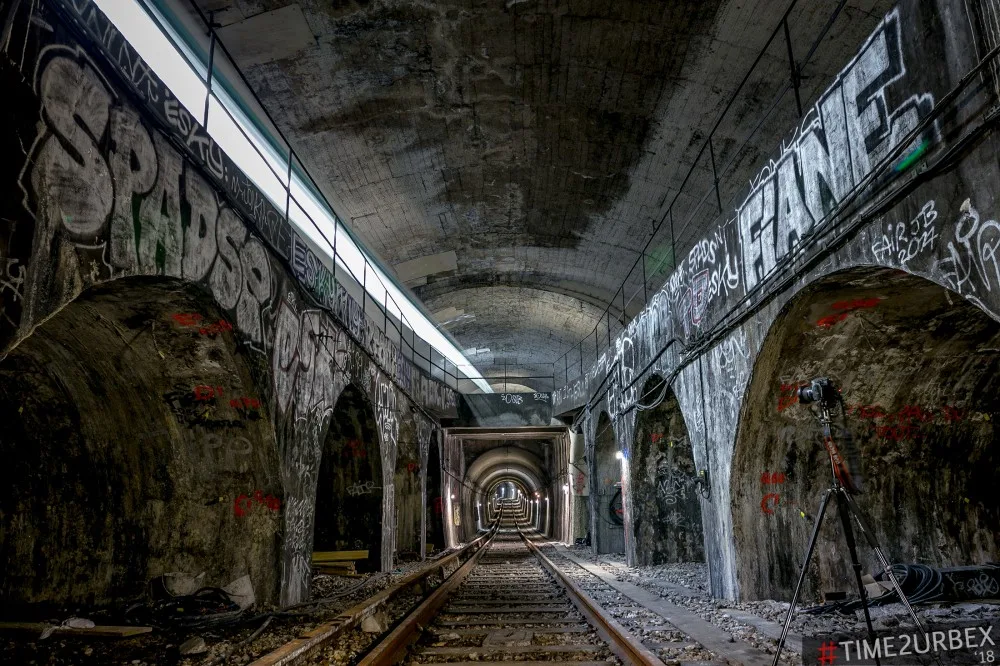
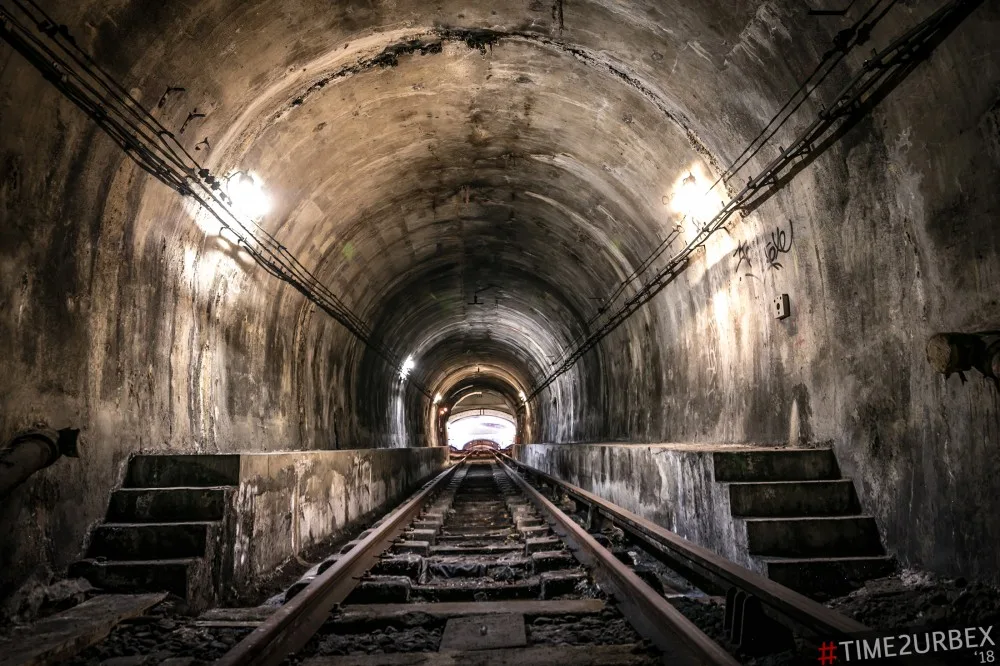
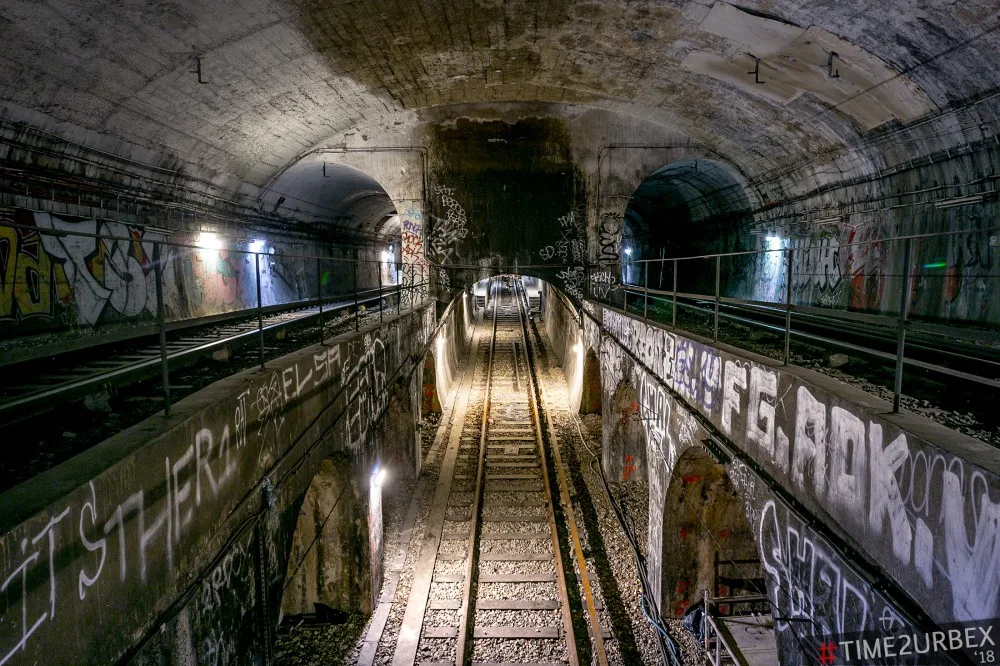
The search went on for a long time, but in the end it succeeded, and three diggers from Russia were escorted to the station. Having made sure that we had no paintballs on us and no intention of painting the train, the RATP staff took down our details and soon let us go. And at the station the homeless people went on sleeping peacefully… Bonus #1: A two-level junction between the Odéon and Cluny-La Sorbonne stations. Besides the abandoned stations, I want to tell you about other unusual places in the Paris subway. One of them is a huge single-vault tunnel with a two-level junction, built in 1925.
The diagram of the track layout.
In the center of the huge tunnel there is a connecting track leading to a dead end at Odéon station.
The first 100 meters of the tunnel are, for some reason, fitted with technical walkways on both sides.
A view of the junction from above.
Bonus #2: An underground train wash.
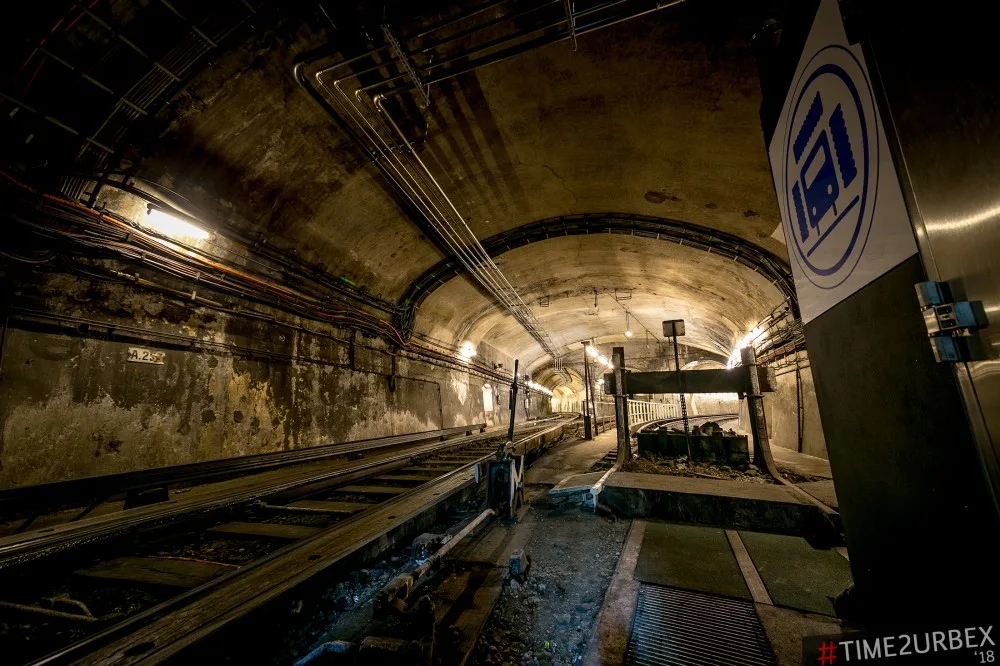
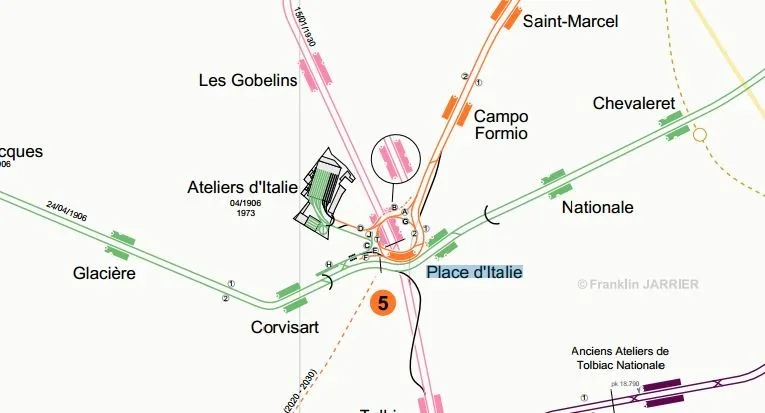
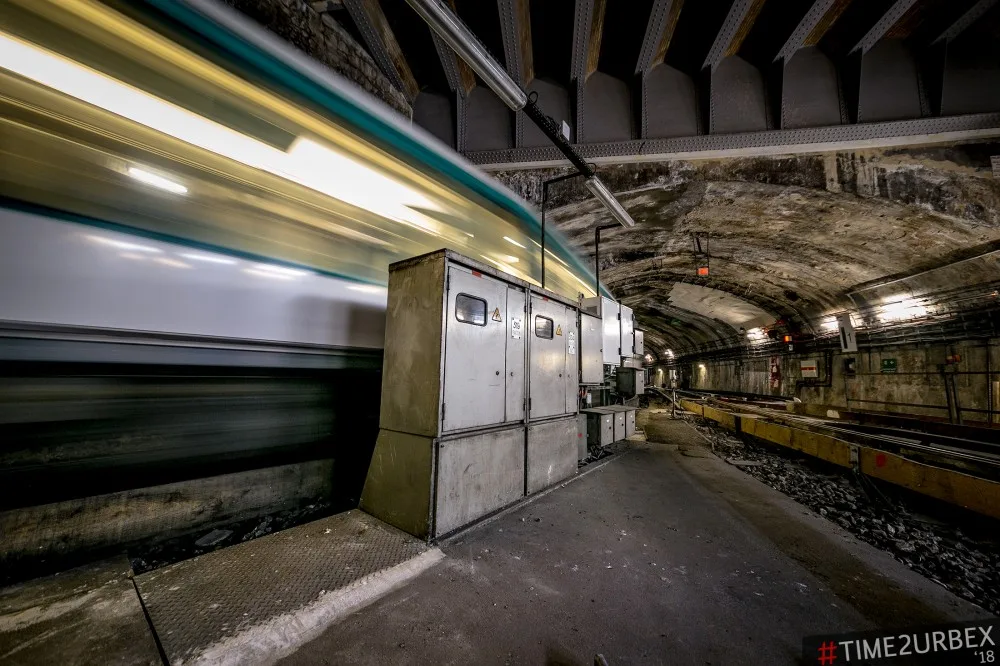
Besides the usual places for stabling and maintaining trains, the Paris subway has actual train-washing facilities, such as this one — next to Place d’Italie station.
A view on the diagram.
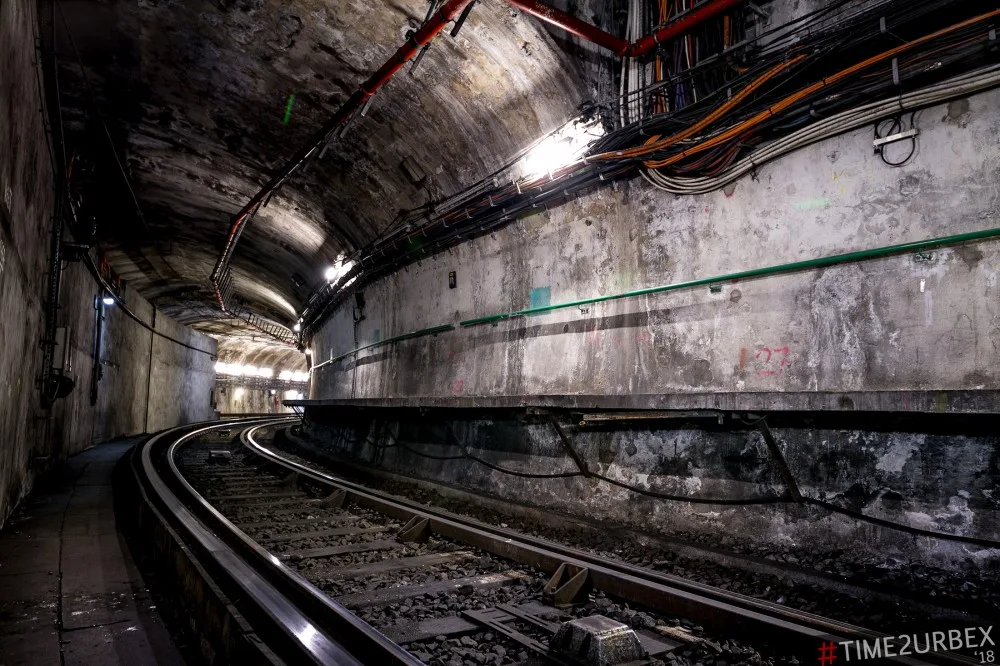
This section of tunnels was built in 1906.
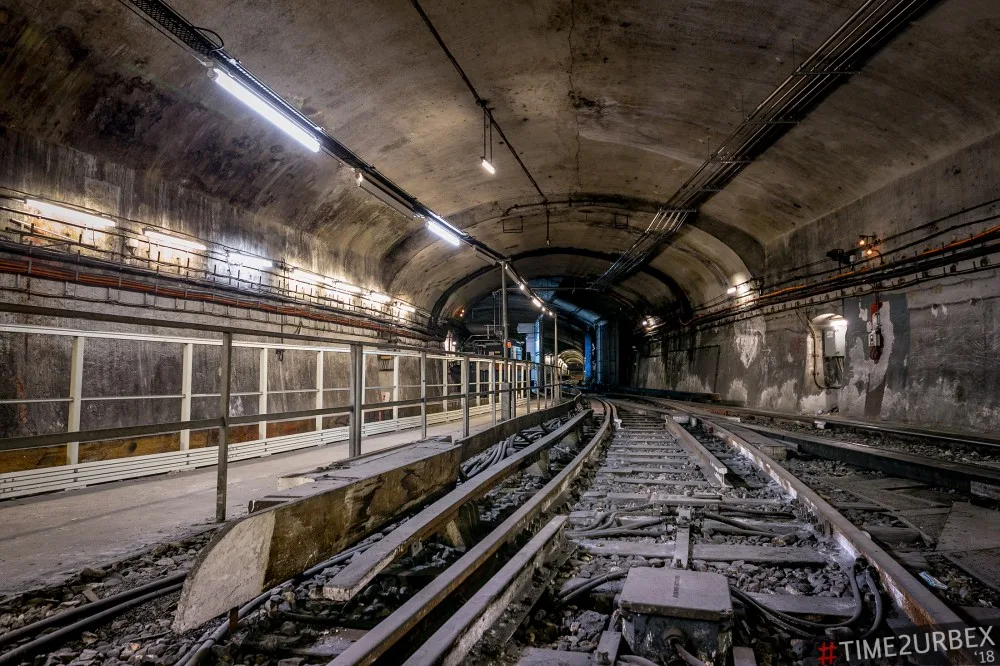
Modern reinforcement of the tunnel arch.
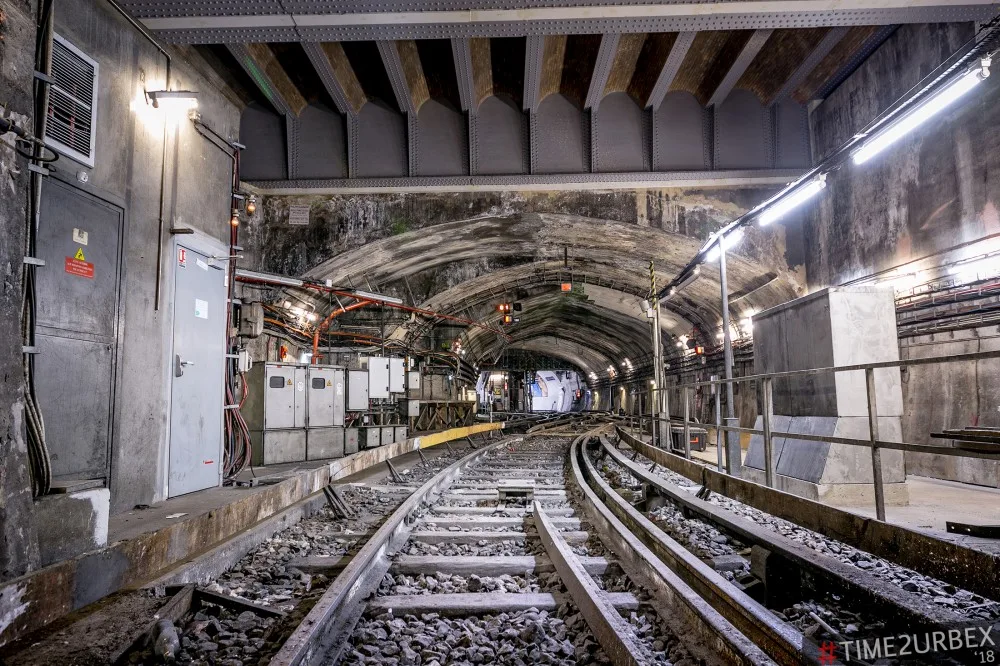
A passing train.
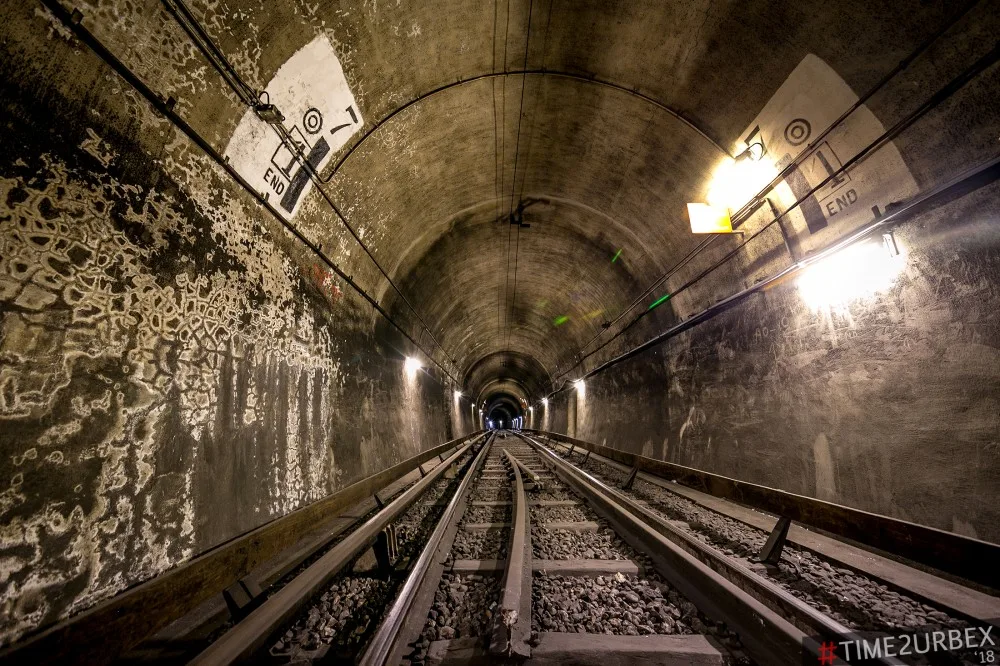
A turnaround dead end.
A connecting tunnel.
The junction of lines 5 and 6.
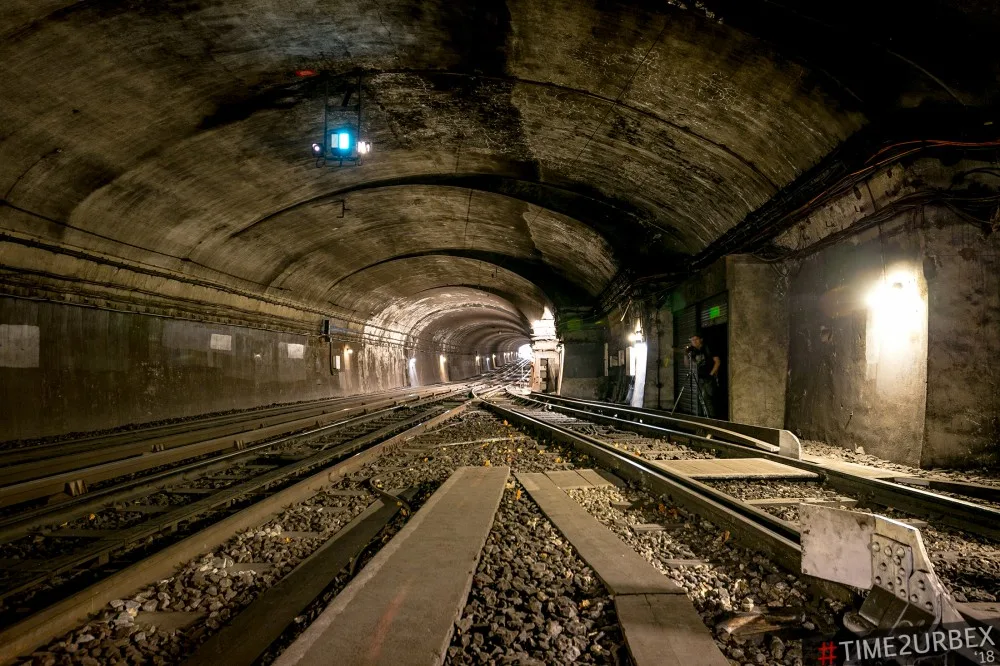
The ordinary rails are paired with tracks for rubber-tired trains.
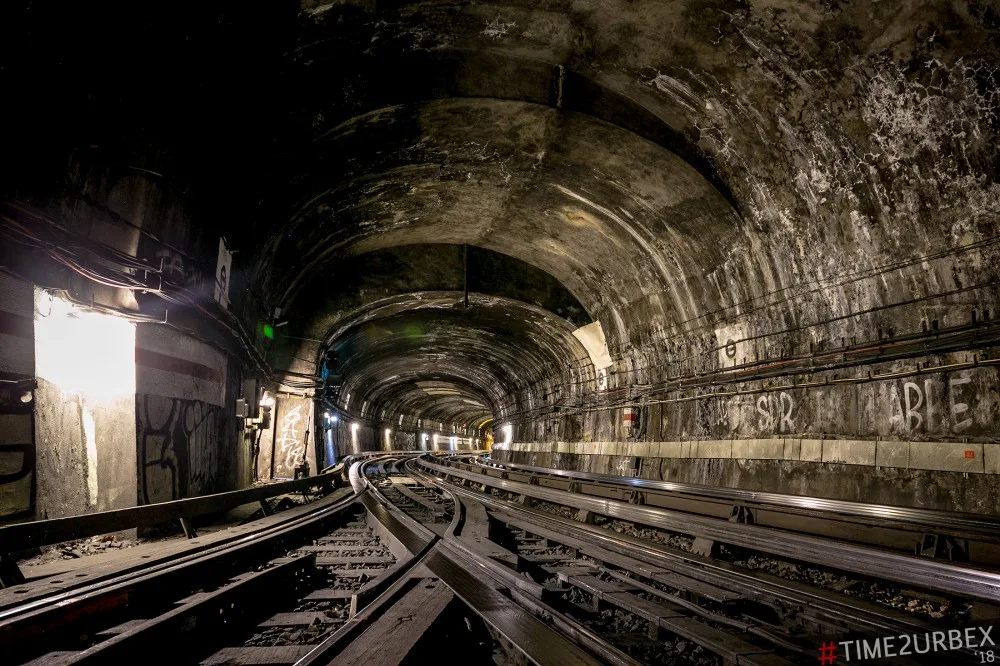
Perhaps the most popular camera angle in the subway tunnels.
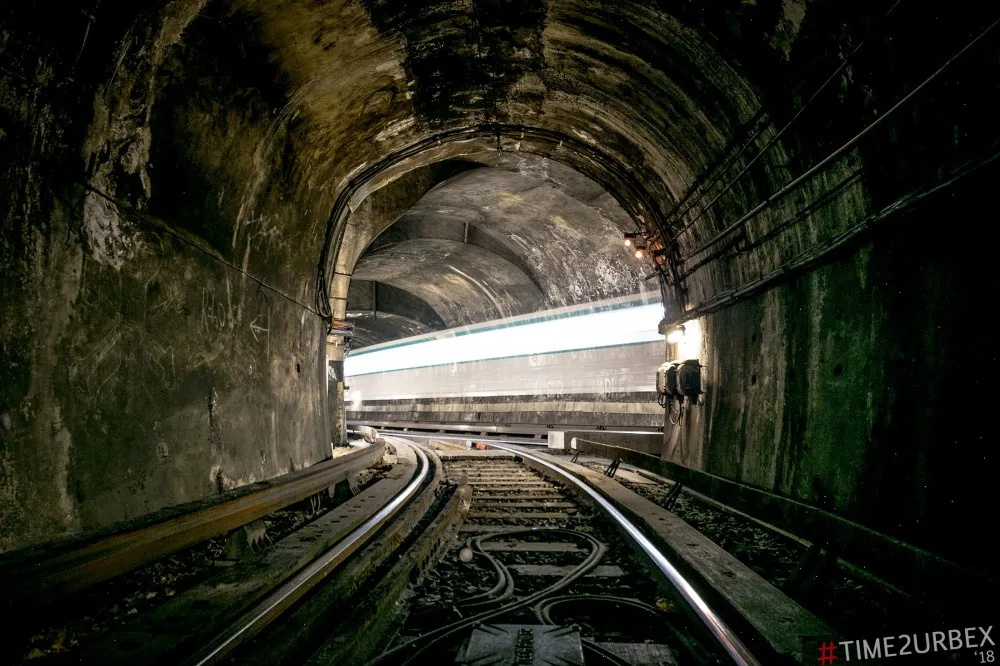
Bonus #3: RER Châtelet les Halles
In the 1960s, public transport in Paris was heavily overloaded, and suburban traffic was handled only through the mainline railway stations. An excellent solution to this problem was to create a suburban network with short transfers to the subway. Huge tunnels for double-decker trains, great depth, high speed, and… an irregular timetable. That last point creates a certain unpredictability for the urban explorer, because the intervals between trains change constantly… Compared with the subway stations, the RER ones are far more spacious; they are called “cathedral stations”, and they are among the largest underground railway stations in the world.
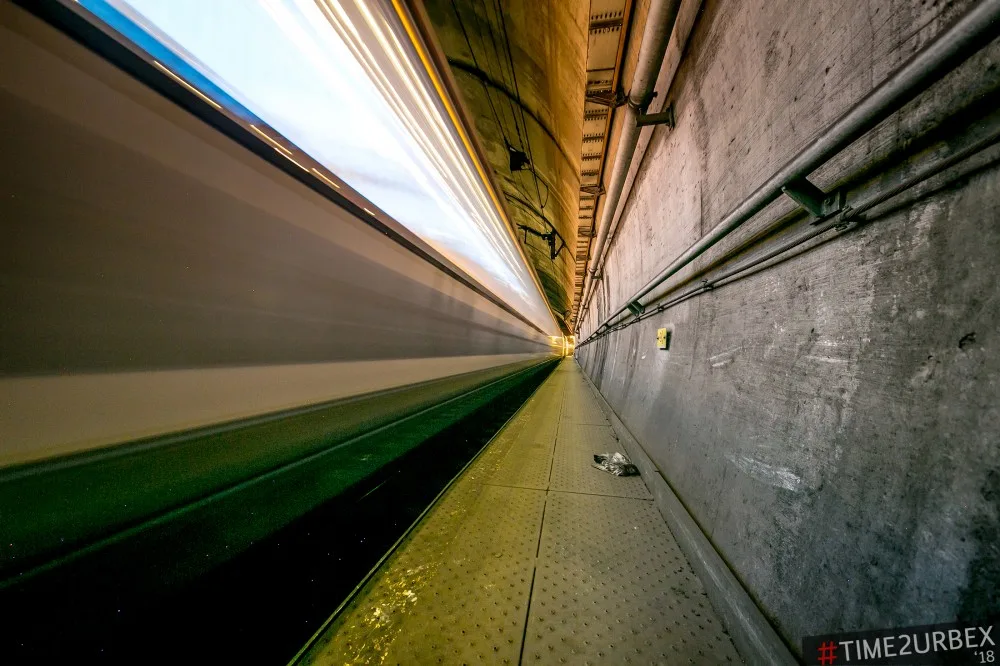
The junction chambers in the RER look enormous. The tunnel can be up to 8 meters high!
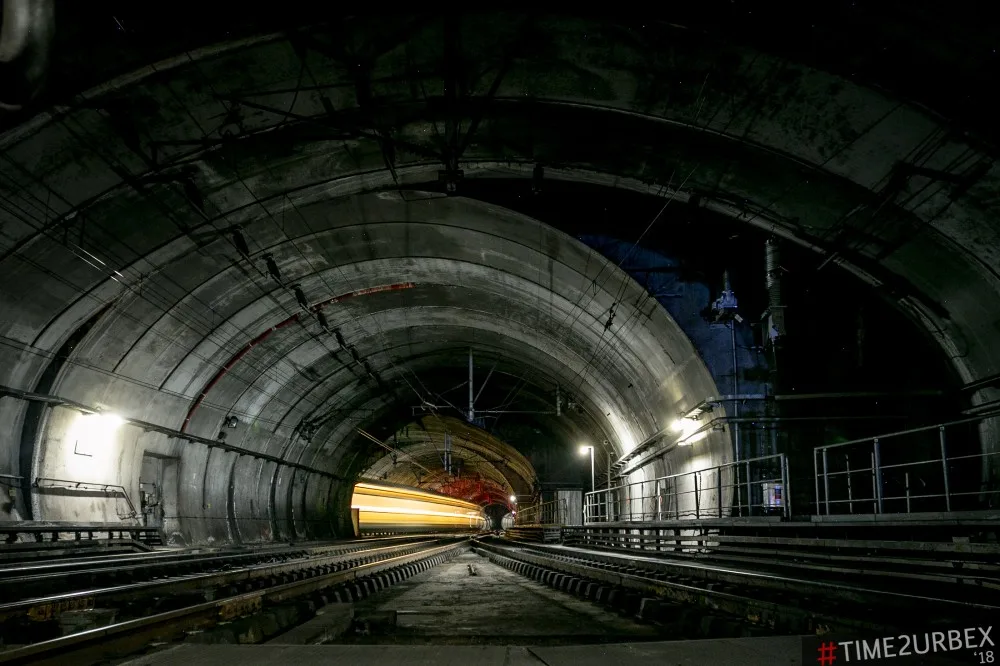
The depth ranges from 0 to 60 meters. It is also one of the deepest underground structures in Paris.
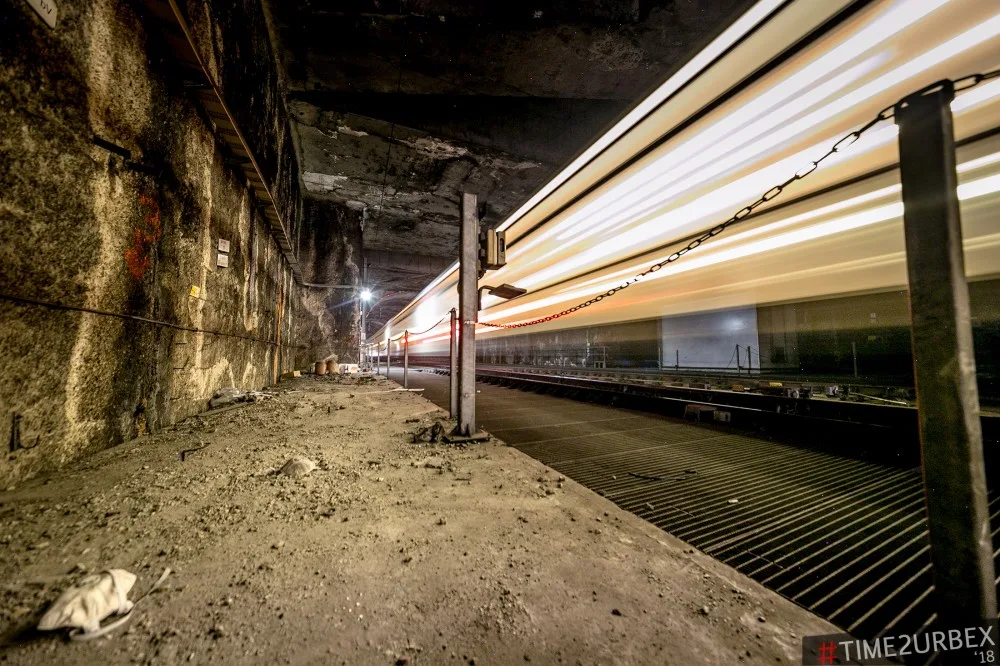
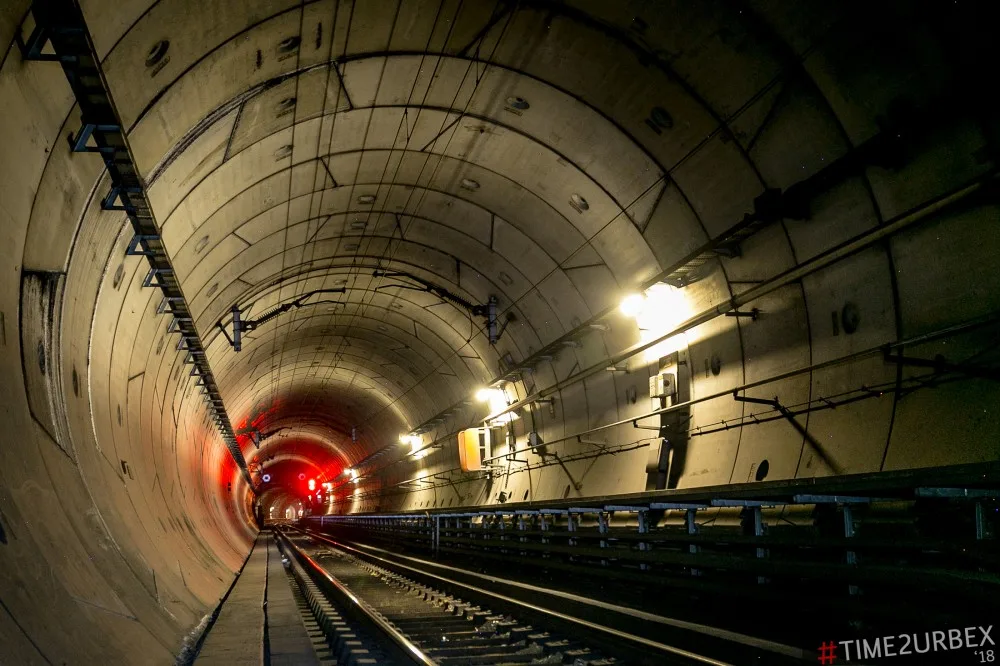
The tunnels are built from concrete segments.
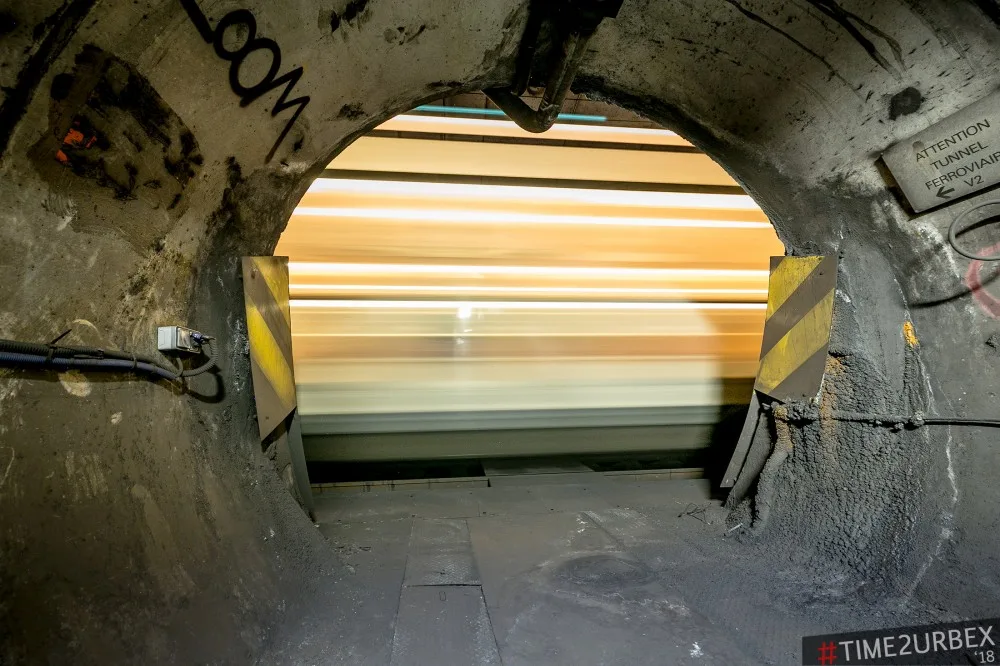
A passage between the two tunnels.
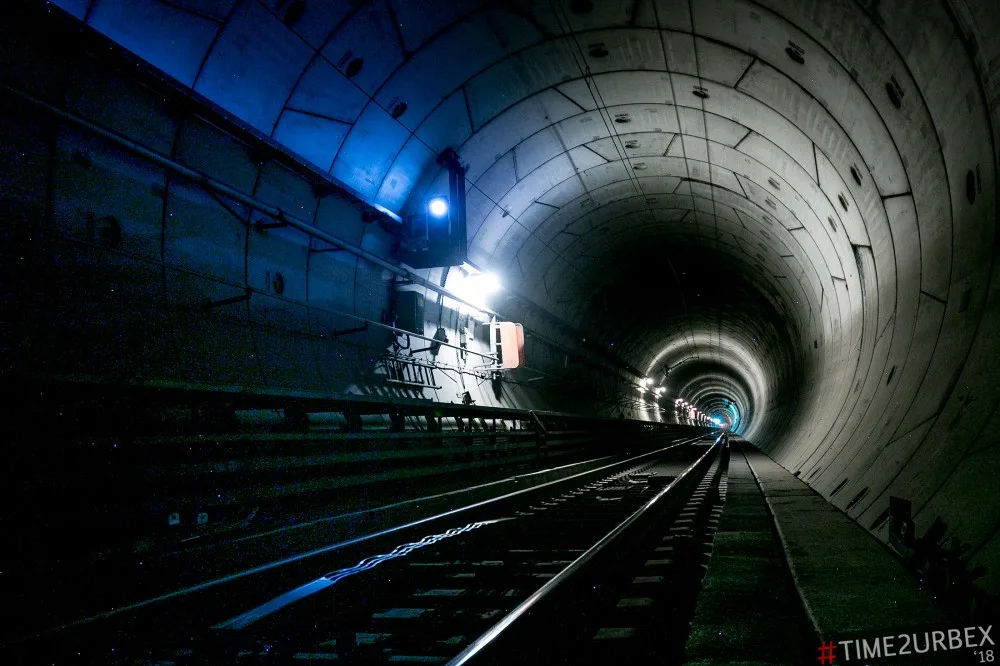
For almost the entire length, there is a technical walkway for evacuating passengers in case of emergency.
Unlike in the subway, in the RER the urban explorer has to run much farther from one shelter (a niche) to the next. On top of that, as I mentioned above, the intervals vary widely. Having misjudged our strength on one of these dashes, we were finally spotted by the driver of a passing train. Some time later the work lights came on in the tunnel, the intervals grew much longer, and the trains crawled very slowly (apparently looking for us). The chance of getting away unnoticed was dropping toward zero… But suddenly the next door gave way, and we found ourselves at the bottom of a deep ventilation shaft. Every door that followed on our way also opened easily, and soon we left the underground, undetected and unharmed 🙂 This is the beauty of France’s fire regulations, which require the exits to be kept open for evacuation (diggers included :D).
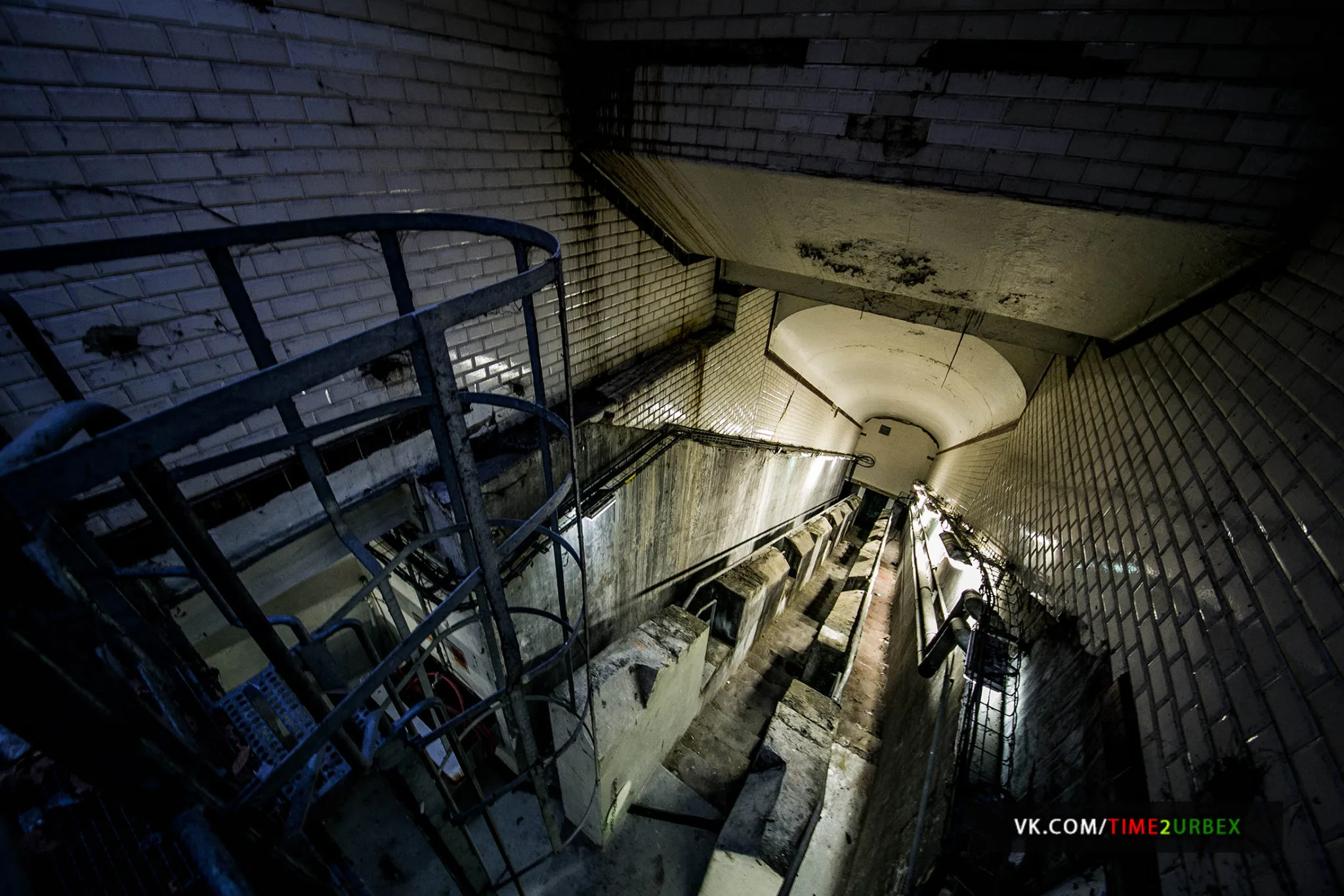
That’s all. As you can see, reaching most places in underground Paris is not very difficult, but always keep safety in mind and take care when crossing the contact rail (it has no protective cover)! I hope this review was interesting and informative. An abandoned inclined entrance to the station from the street.
This material was originally posted by urbexer Samnamos and translated and corrected by our Urbex Tour Team.