
Narrow tunnels and walls lined with bones, shrouded in legend and speculation, instantly capture the imagination. And while tourists and diggers have to cross half the world to see them with their own eyes, Parisians need only take the metro to the Denfert-Rochereau station and spend less than 10 euros to enter the legendary ossuary.
 How the catacombs began
Long ago, in the tenth century, stone was quarried on the left bank of the Seine, and later the quarrying moved to the right bank as well. Once the stone at the surface ran out, it was decided to go underground. The first underground works began on the site of the modern Luxembourg Garden, by royal order of Louis XI.
Over time, the map of underground labyrinths expanded rapidly, taking in streets such as Saint-Germain-des-Prés, Vaugirard, Saint-Jacques and Gobelin, and even extending past the Val-de-Grâce Hospital.
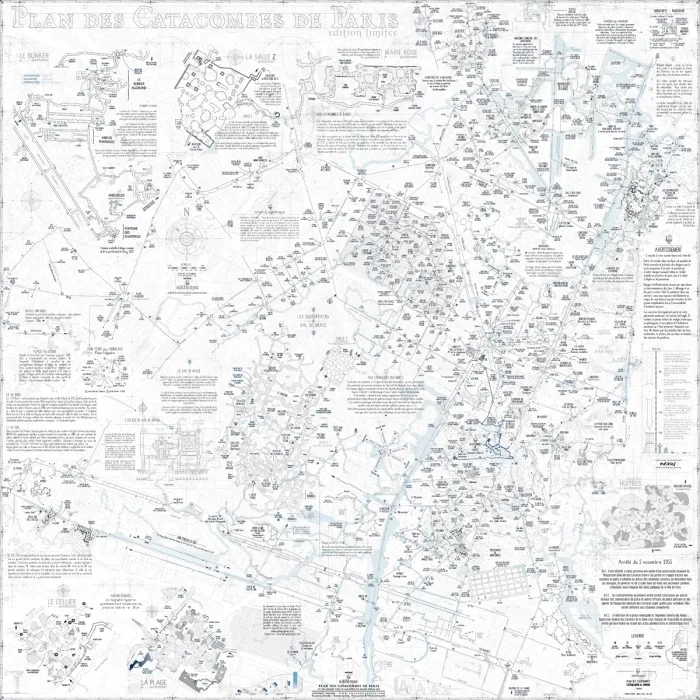
The map of the modern catacombs.
The catacombs grew longer and longer, and the empty underground niches were first put to use by monks. Most of the catacombs lay in the immediate vicinity of their cloister, so in 1259 they began setting up the first wine cellars there.
There are bones here now, but monks once kept their wine in this place.
All was well and safe until the 17th century, when the sprawling city and the quarries first overlapped. There was an obvious danger in placing urban buildings over the unreinforced void. By the spring of 1777, the problem had reached its peak, as confirmed by the General Inspectorate assembled by Louis XVI. This body still exists today, tasked with checking the condition of the dungeons. Unfortunately, time and the obstinate Seine keep up their undermining work, and the most common solution is to fill the problem niches with concrete.
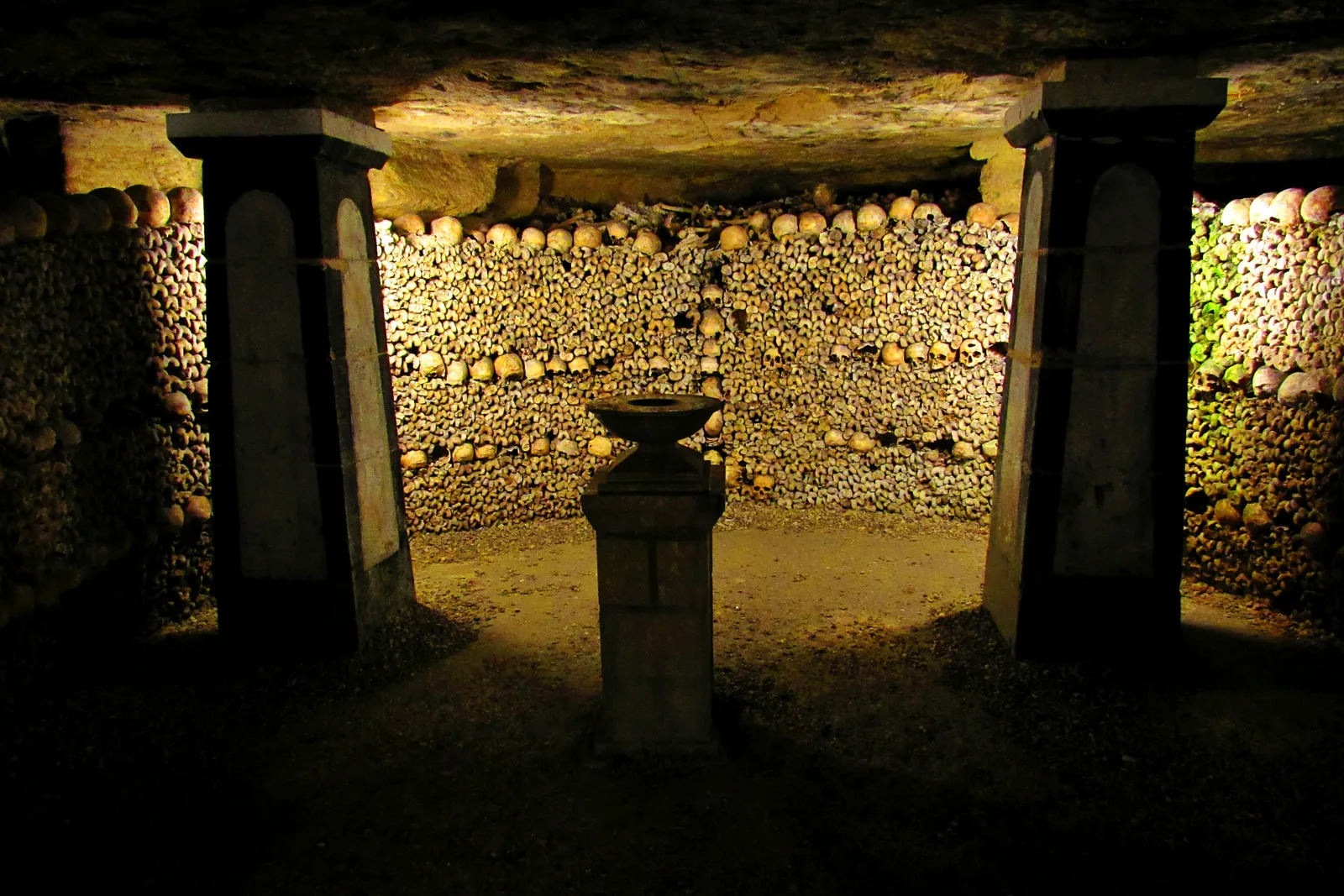
Tales from the crypt
In Paris, it was decided to bury the dead outside the city. Life was hard at the time, the number of dead was considerable, and there was simply not enough space. From the plague epidemic of 1418 alone, about 50,000 people joined the ranks of the dead.
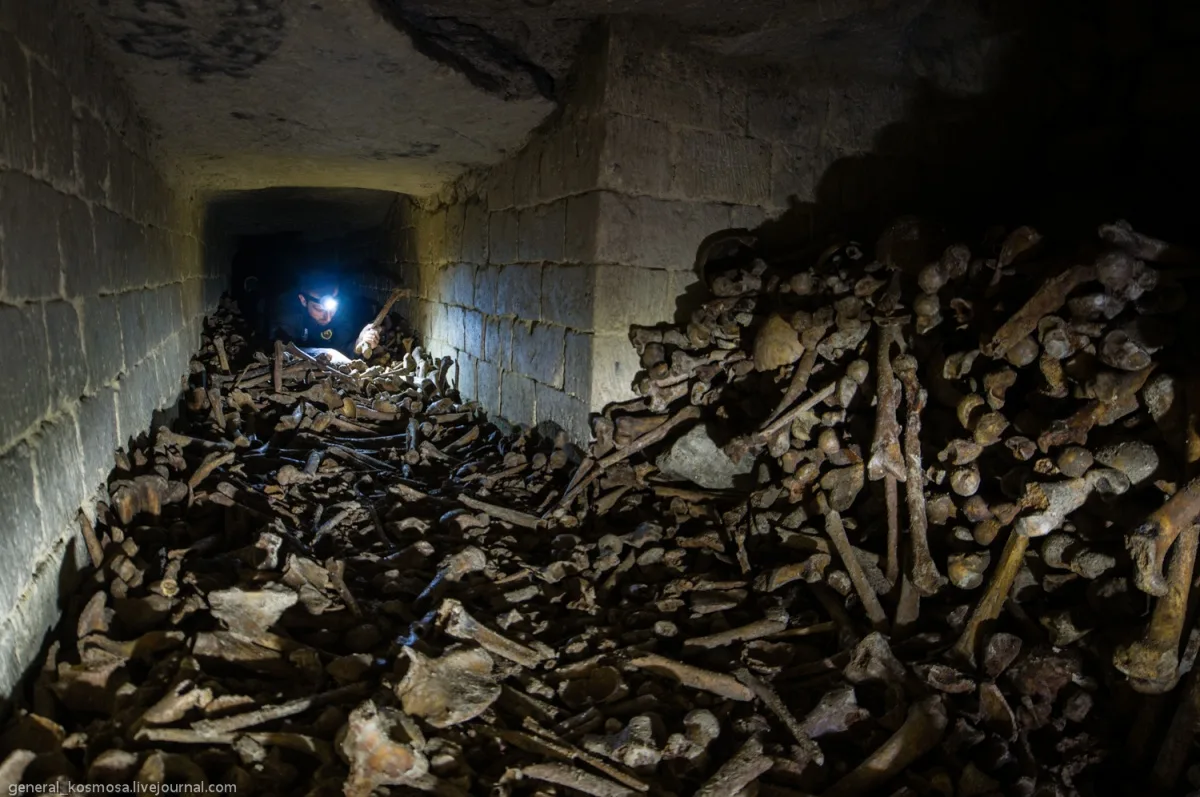
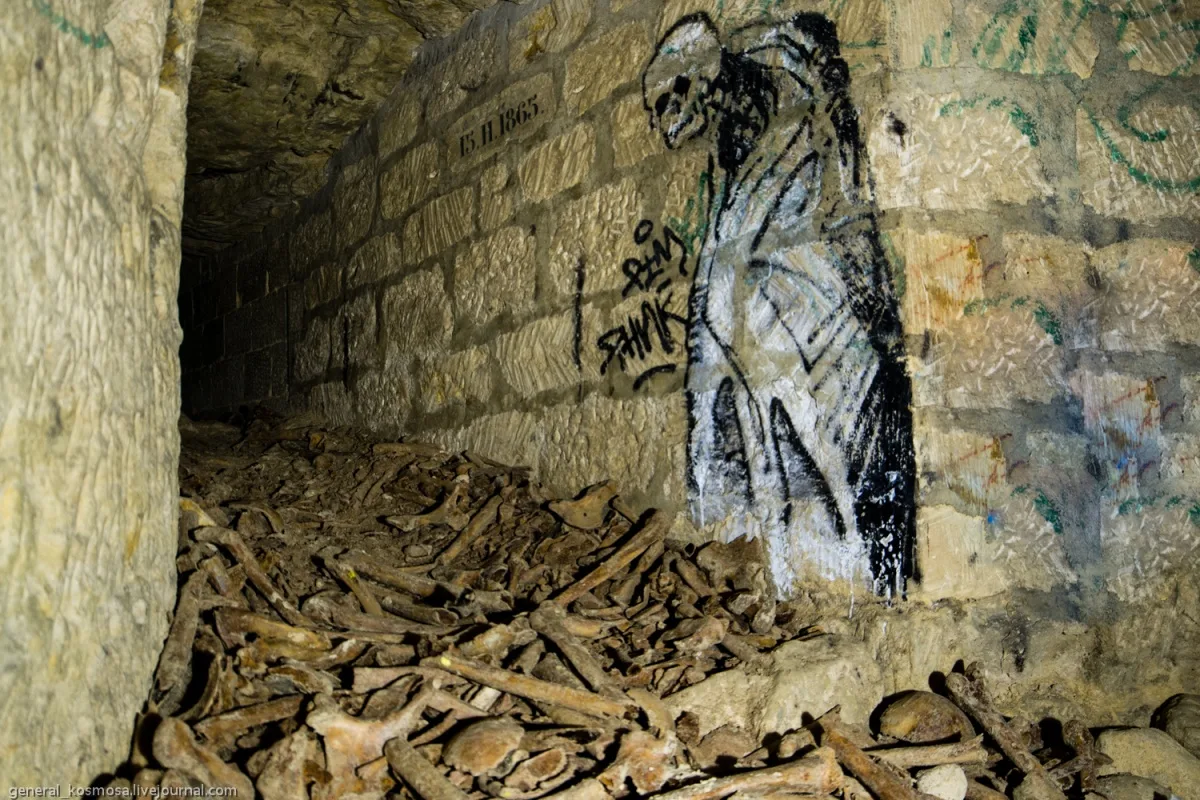
Even today, you have to “swim” over the bones.
The church kept a close watch over all the graves and passages to the other world, as God’s rules demanded — it was the institution that conducted the funerals and sold the plots in the cemetery. Beyond their duty to the higher powers, this was the clergy’s main business. The Cemetery of the Innocents had been in operation since the 11th century and had become the final refuge for dozens of generations.
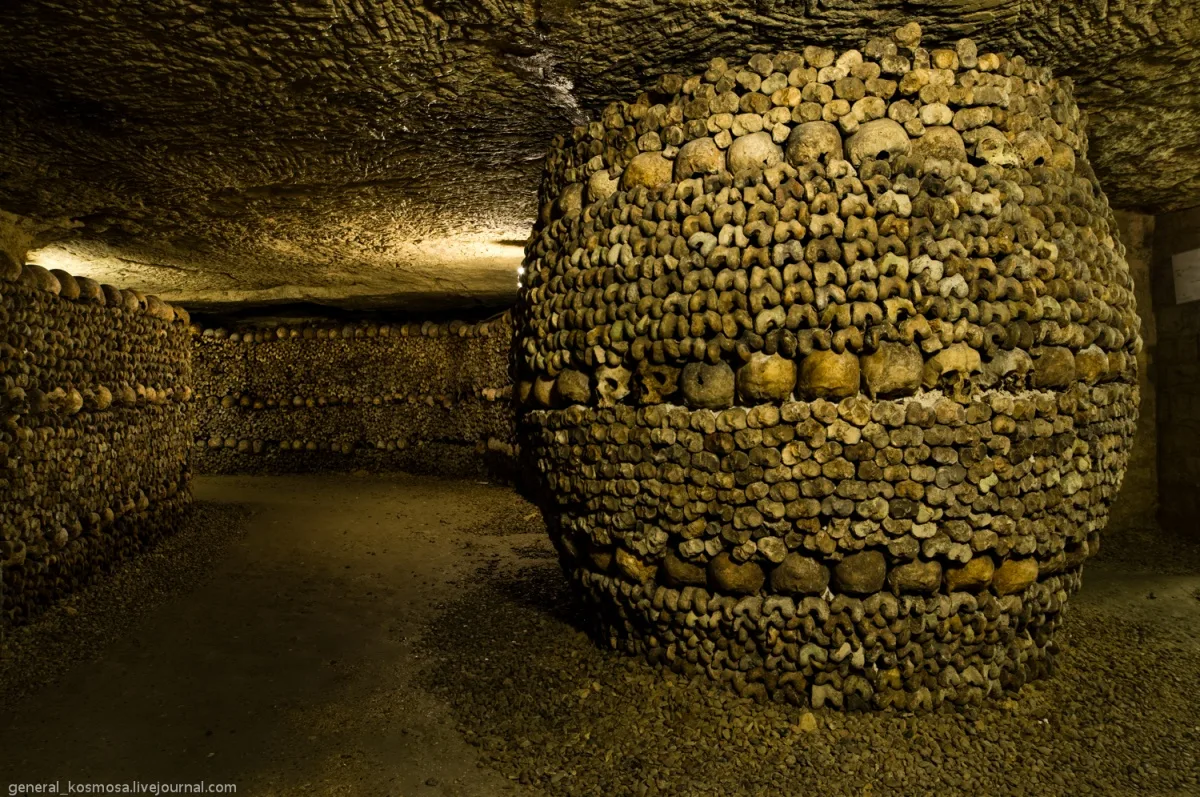
It’s hard to imagine how many stories these bones hold.
After epidemics and other grim events, it was decided to bury the dead in mass graves, sometimes as deep as 10 meters. In just 7,000 square meters there lay more than two million bodies. Amid poor sanitation and a low level of medical knowledge, this triggered waves of infection and fuelled the dubious practices of the latter-day sorcerers and healers.
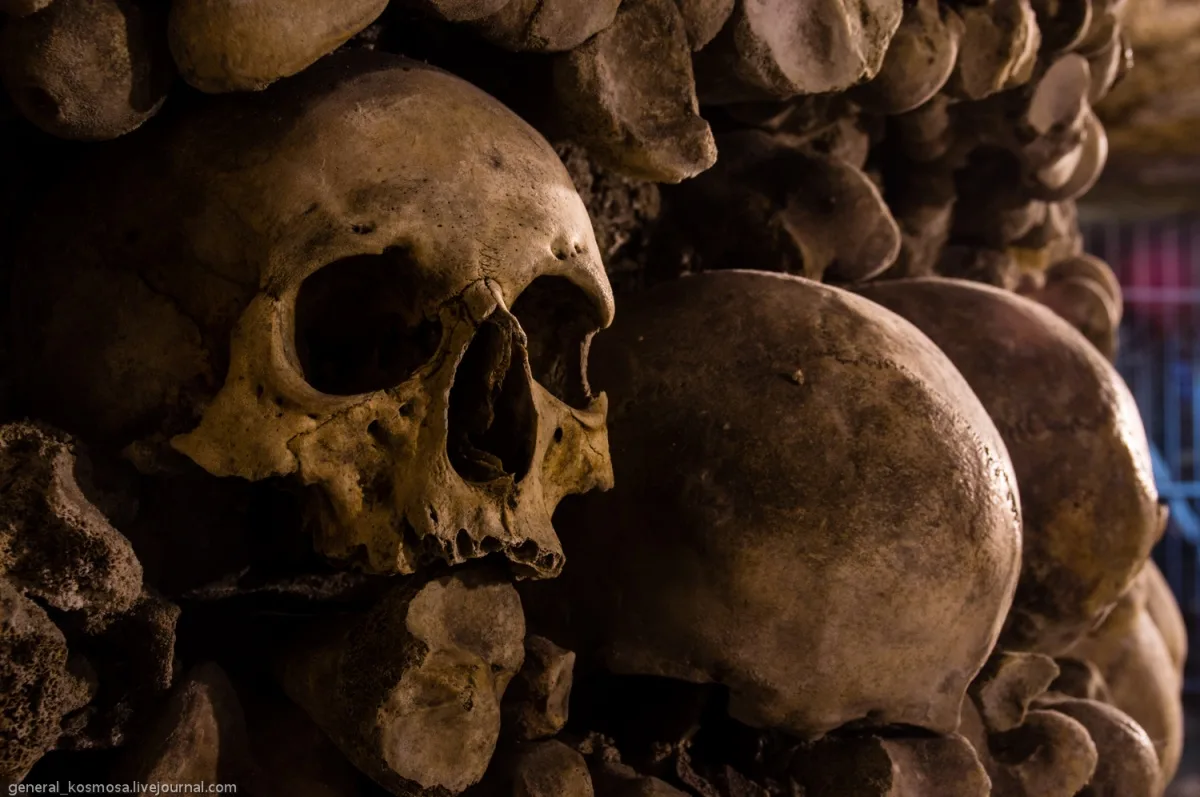
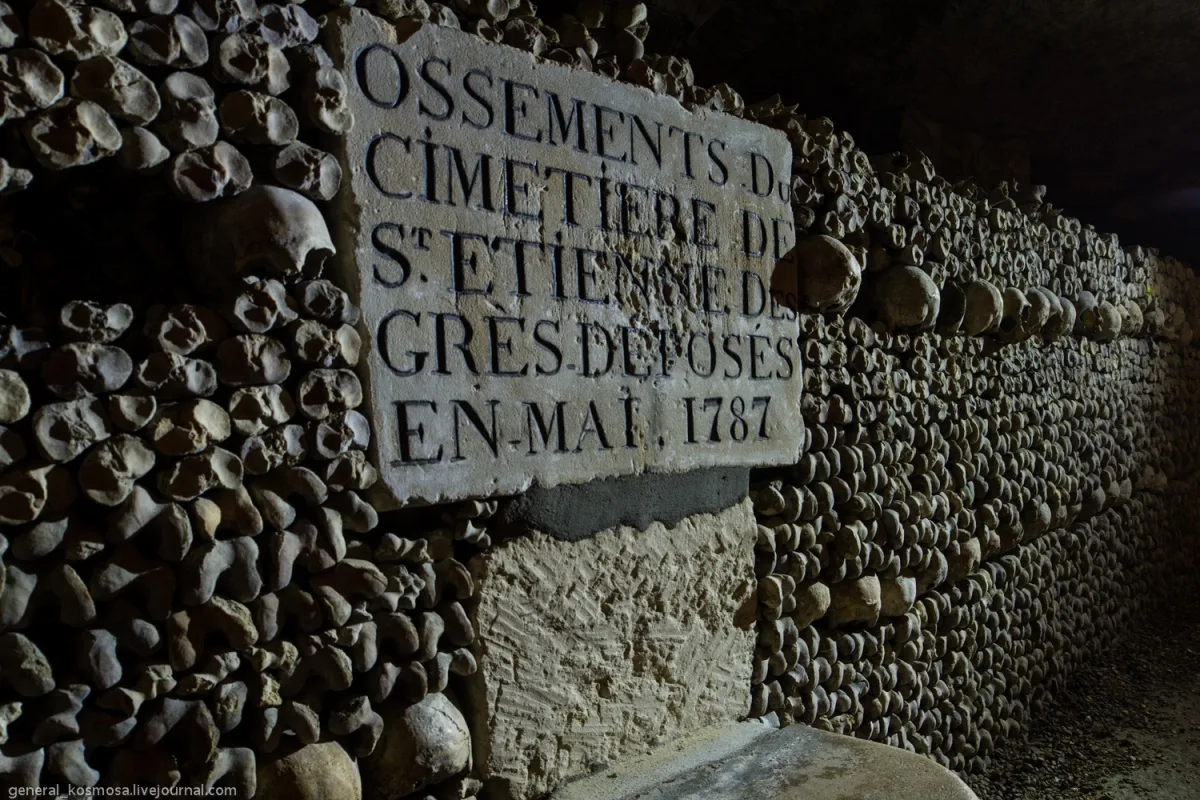
This continued until the wall separating the Cemetery of the Innocents from the catacombs finally collapsed. It was immediately decided to move the remains into the empty quarries — not only from the Cemetery of the Innocents, but also from the other necropolises that surrounded Paris on every side. Collecting and disinfecting the bones took more than a year, and the people who worked through the night soon became the heroes of various legends and rumours. Once the ossuary was established, it became an integral part of the French capital’s underground. Remarkably, it has survived to this day almost in its original form.
Parisian catacombs today
Although the catacombs stretch for about 300 kilometers, burials make up only a small part of them. About two kilometers are now open to tourists, and the ossuary (the part with the bones) has been turned into a museum. You can enter it by buying a ticket at the box office for about 8 euros and descending 20 meters underground. The tunnel leading to the main halls is lined with various sayings about death and elaborate sculptures. It was in these catacombs that Marat, Pascal, Perrot and other famous Parisians found their final resting place.
Explore Kyiv Dungeons with a Guide who knows the most unexpected secrets of the Ukrainian capital!
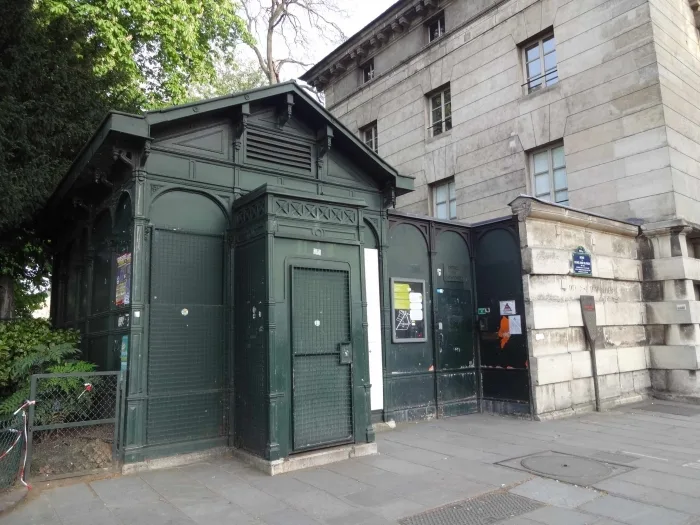
This inconspicuous booth is where the tourist entrance to the catacombs begins.
But some parts of the dungeons are hidden from ordinary visitors, and these have been claimed by diggers, speleologists and, of course, cataphiles. The popularity of the catacombs grows in step with tighter security, so illegal descents quickly lose their appeal. Today it is getting harder and harder to reach the dungeons, but in the 1970s they hosted noisy parties and gatherings. On top of that, because of the constant threat of collapse, some chambers are simply filled with concrete, and access to them is lost forever.
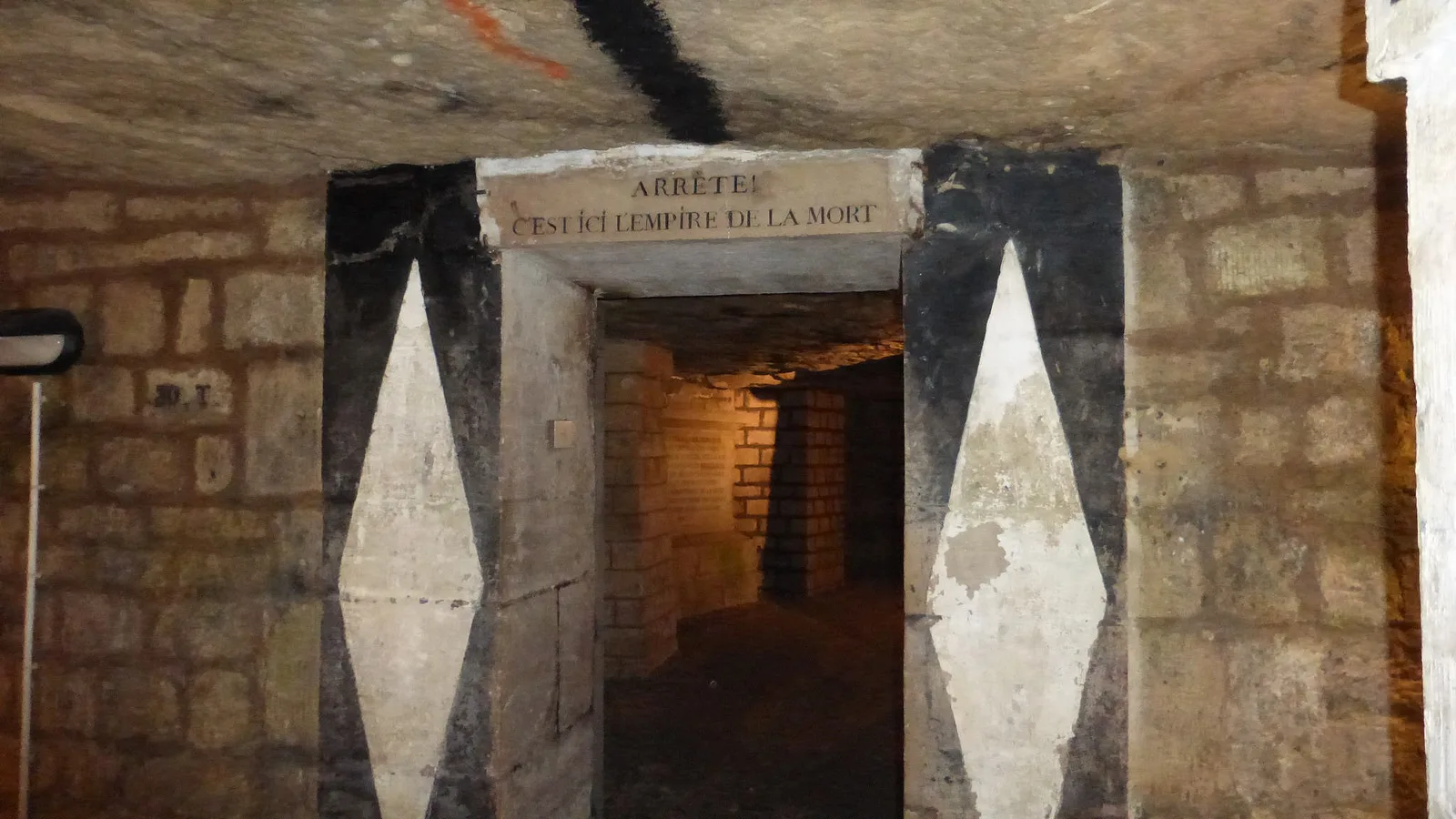
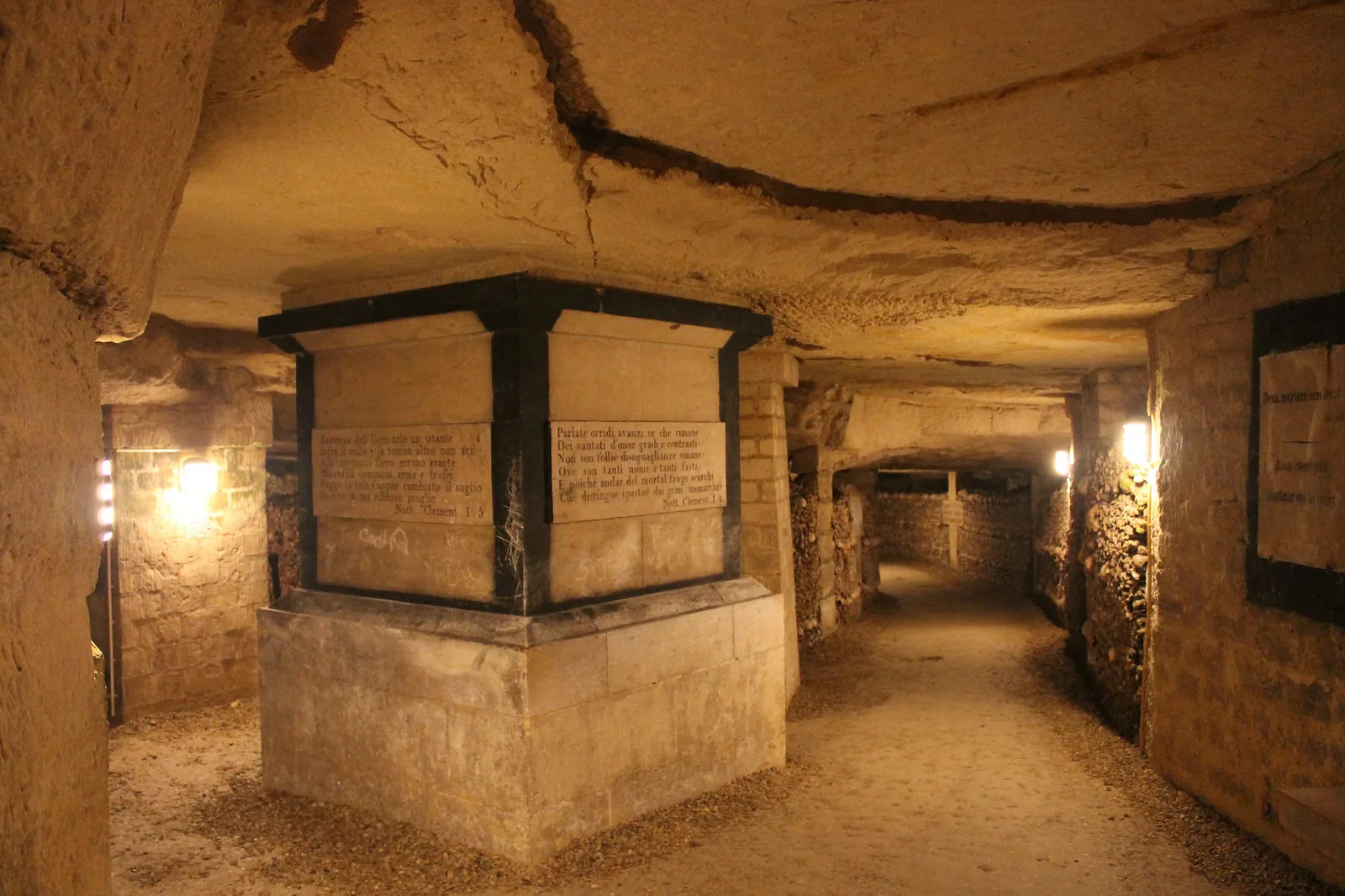
This is what greets tourists in the developed part of the catacombs.
In the grotto with the pleasant name “The Beach”, still a gathering place for the underground party-goers, you are greeted by waves in the spirit of Katsushika Hokusai. On Saturday evenings, crowds of people gather here. This is far from the only display of art in the maze — at many points in the tunnels you can find sculptures and drawings on the walls.
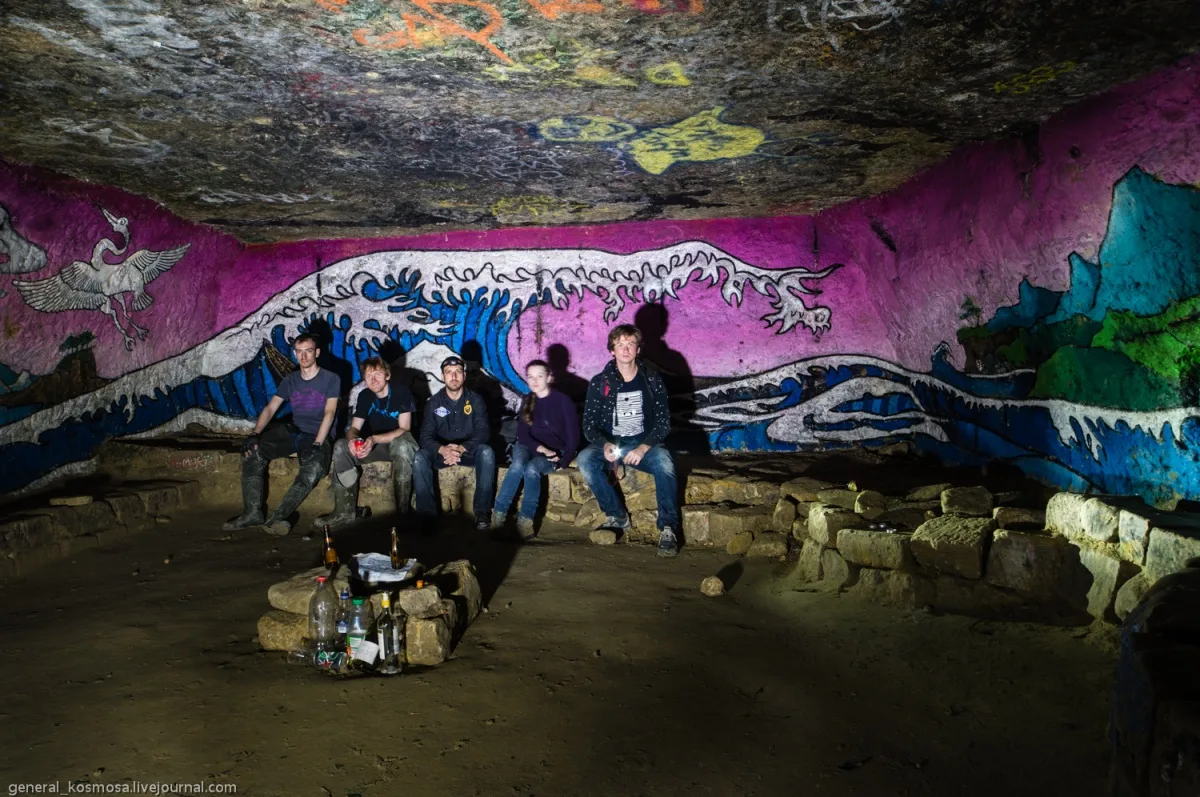
Illegal excursions are not just enthusiasts’ way of introducing people to the history of the French capital — they are a full-fledged business. Plenty of people are eager to see the real catacombs and ossuaries. Fortunately, Parisians try not to forget this layer of their history. They draw homemade maps, hold parties, and keep adding more and more works of art.
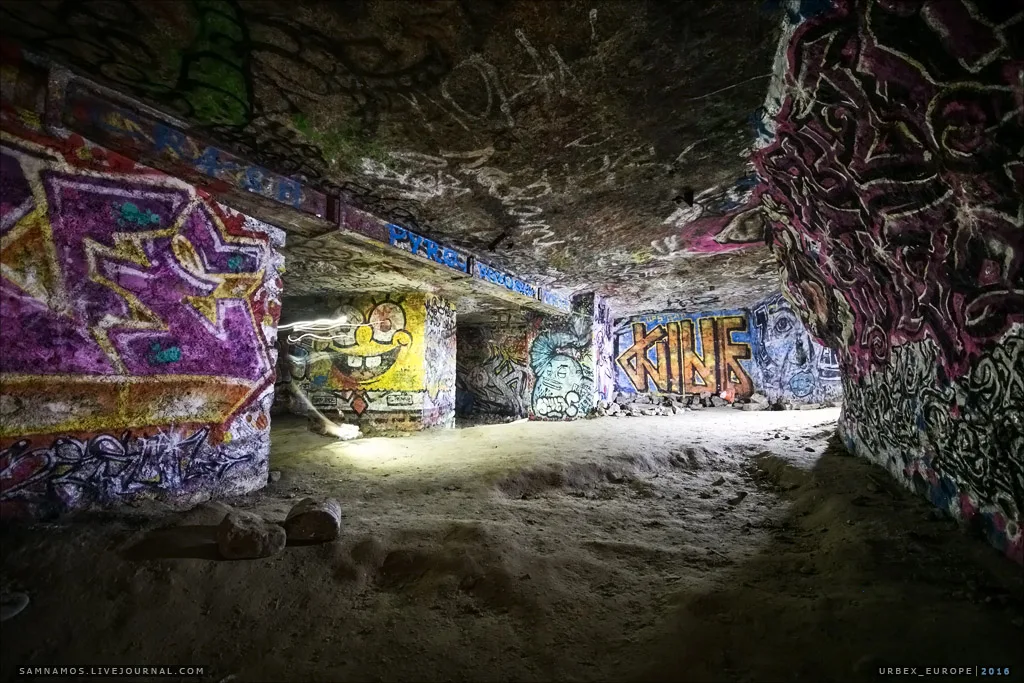
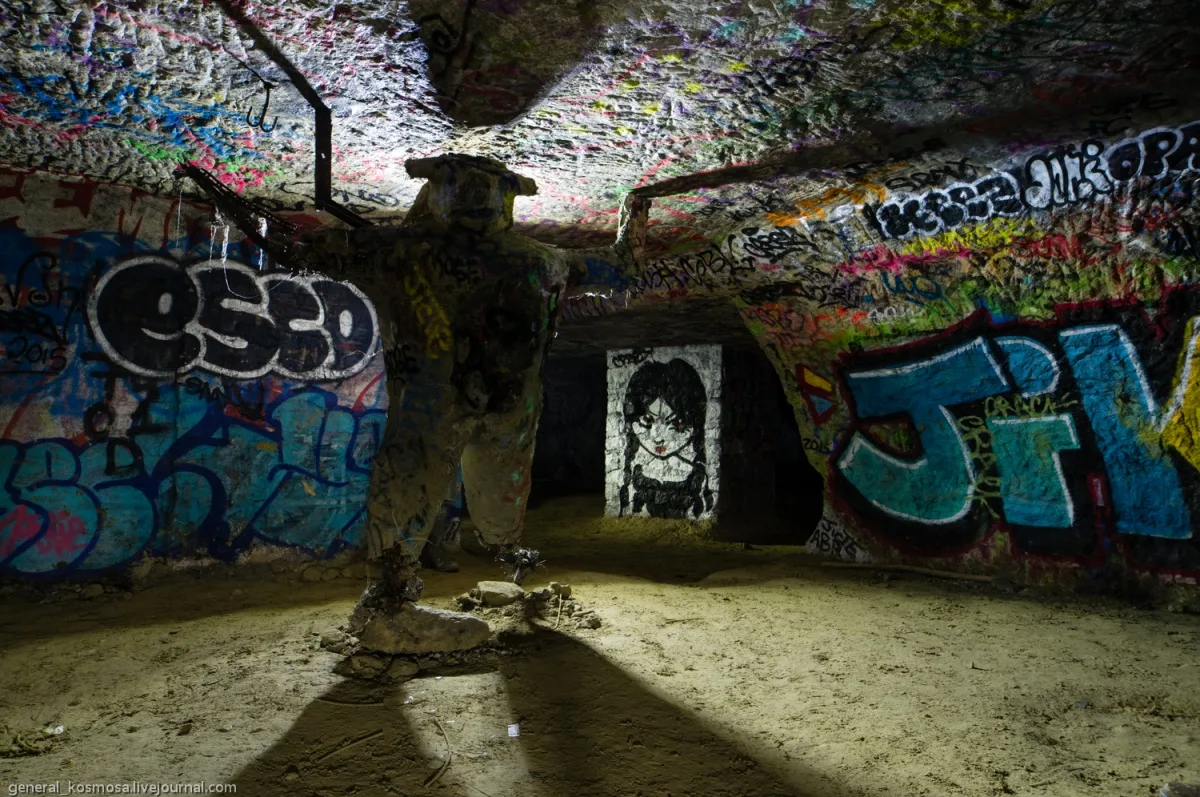
Hardly the gloomy walls of a dungeon.
The generations of bones lying here are not only evidence of past centuries; they are also becoming flecked with modern history. One can only hope that the ossuary and the adjoining catacombs will last more than another hundred years without drowning in a trap of concrete.
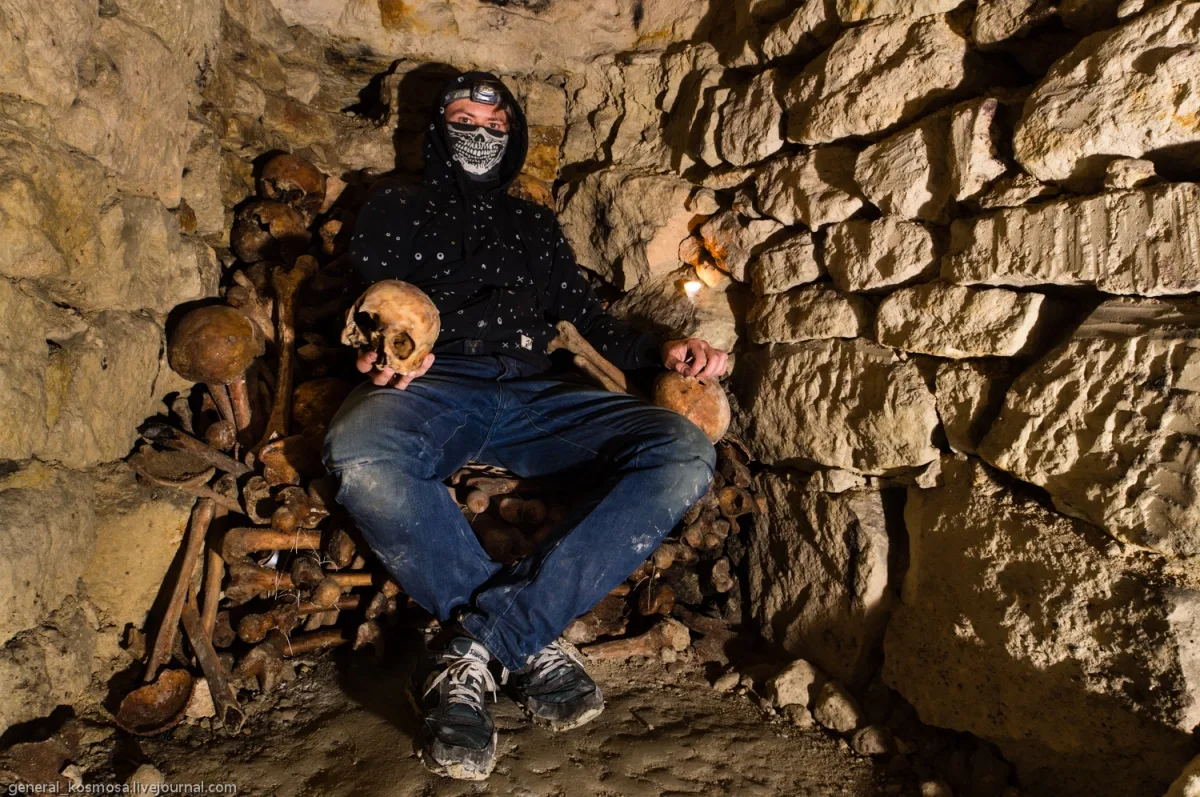
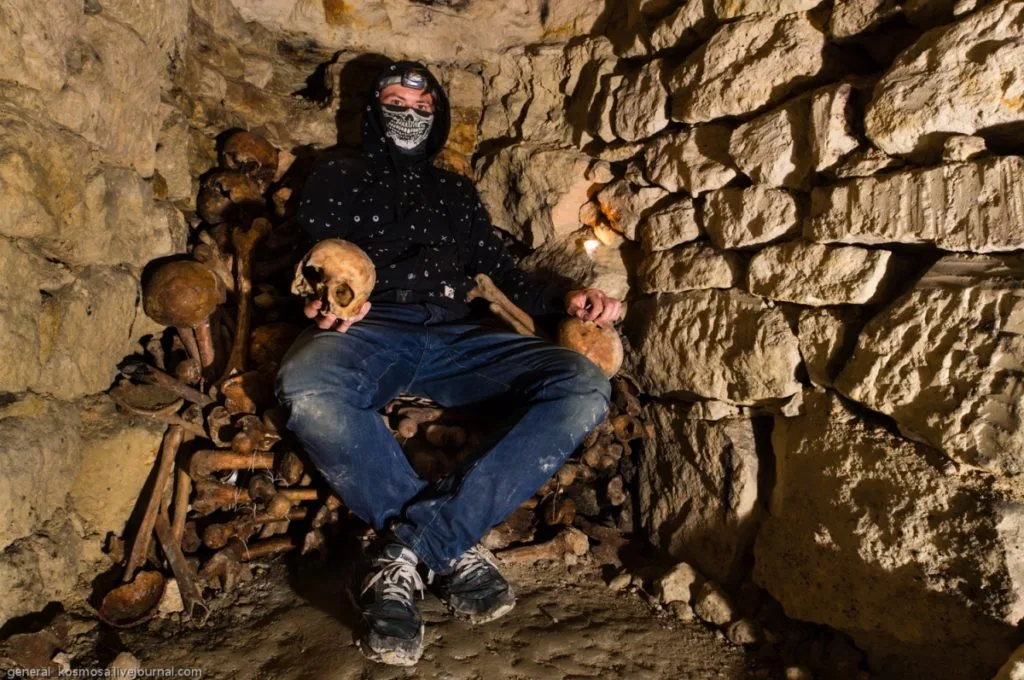
The bravest get a chance to feel like the king of the dungeon.
The photographs in this article come from the following sources: Source1; Source 2; Source 3.