
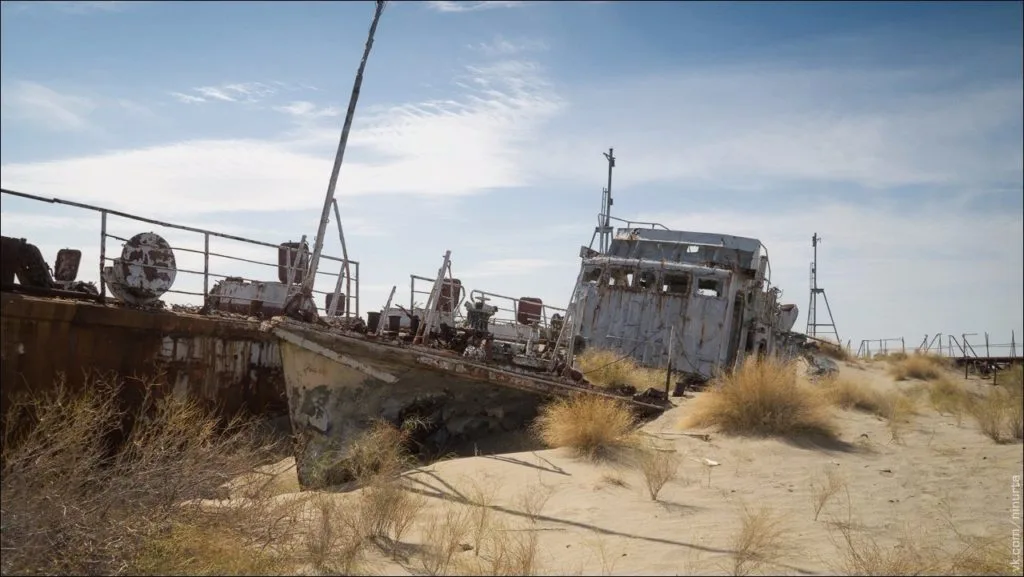
The name of Vozrozhdeniya Island sounds ironic once you know its history. This is the place where biological weapons were tested, the place that became yet another ghost town on the map of the CIS, and even today it gives no hint of an oasis in the middle of the Aral Sea.
Some historical facts
In the 16th and early 17th centuries, an island worthy of the tsar’s special attention appeared on the surface of the Aral Sea: fishing and hunting grounds, cozy bays and a sizeable territory. It was named after Nicholas I and used as a nature reserve for about a hundred years. And it was Nicholas I who proposed renaming it Vozrozhdeniya Island, emphasizing its beauty and its status as a chosen place.
After that came new authorities and the start of a new chapter, because it would be hard to find a better location for a top-secret Soviet facility to test biological weapons. The few people who lived there were evicted as military installations were built and all kinds of equipment and machinery were brought in. Its remoteness from civilization and the difficult access to this archipelago on the border of Uzbekistan and Kazakhstan turned Vozrozhdeniya Island into a paradise for the testers. So the “Barhan” test site began its life.
The military town of Aralsk-7, also known as Kantubek, on Renaissance Island in its heyday.
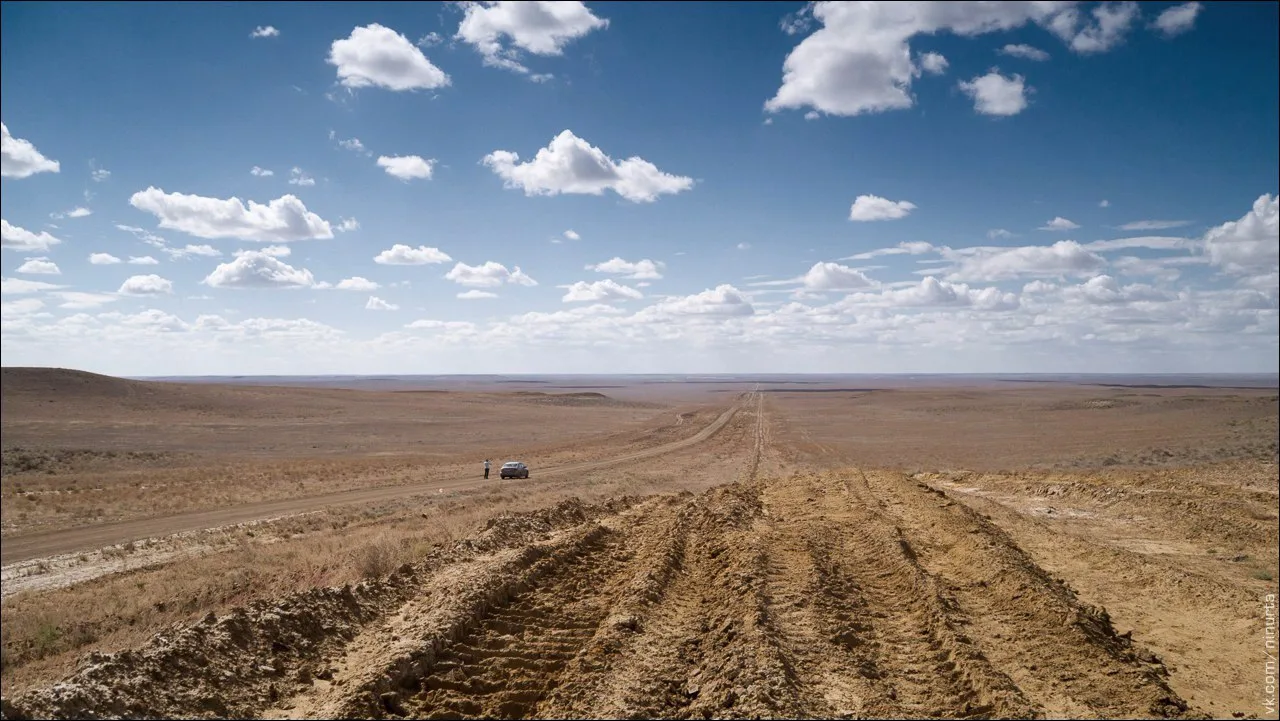
The bottom of the dried-up Aral Sea today.
Join our Kyiv Underground Tour to bring something new to your life!
Tests and experiments
The first expedition arrived there in 1936, led by Ivan Velikanov, who is considered the godfather of the USSR’s bacteriological program. The experiments were based on plague, cholera and tularemia bioagents. Then the Great Patriotic War came, and everything stopped.
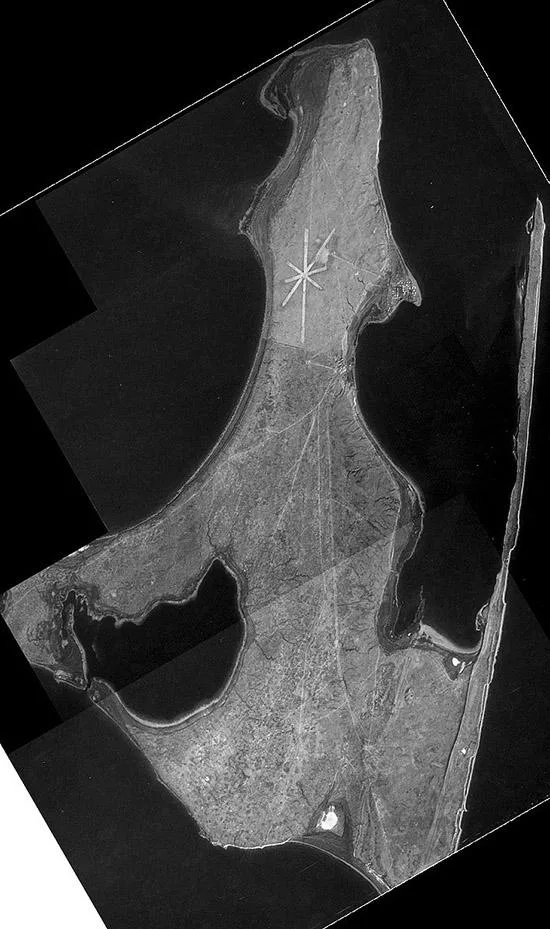
The end of the GPW marked the start of a boom in testing. In the northern part of Vozrozhdeniya, Aralsk-7 (also known as the town of Kantubek) appeared, with housing and amenities for the military. A unique four-runway airfield, “Barhan”, was also built here, laid out on the principle of a wind rose.
Just a couple of kilometers from the military’s houses stood Scientific Research Laboratory-52 — that notorious field research laboratory where experiments were carried out with strains of tularemia and many other viruses. The corpses of the test animals were burned, an inconspicuous funeral held outside the walls of the laboratory. Shells filled with anthrax, plague and other biological agents (including artificial ones) were detonated in the southern part of Vozrozhdeniya. After each test, special measures were taken to clean up the area, and the testers themselves were sent into quarantine.
American intelligence claimed that the banned Anthrax-836 (an anthrax agent) was produced on USSR territory. The burial grounds holding tons of Siberian plague were located right there on Vozrozhdeniya Island.
At first, no one noticed the full consequences of those tests, but then came the accelerating retreat of the Aral Sea, which turned Vozrozhdeniya into a peninsula as early as 2009 and gradually turned the surrounding land into desert.
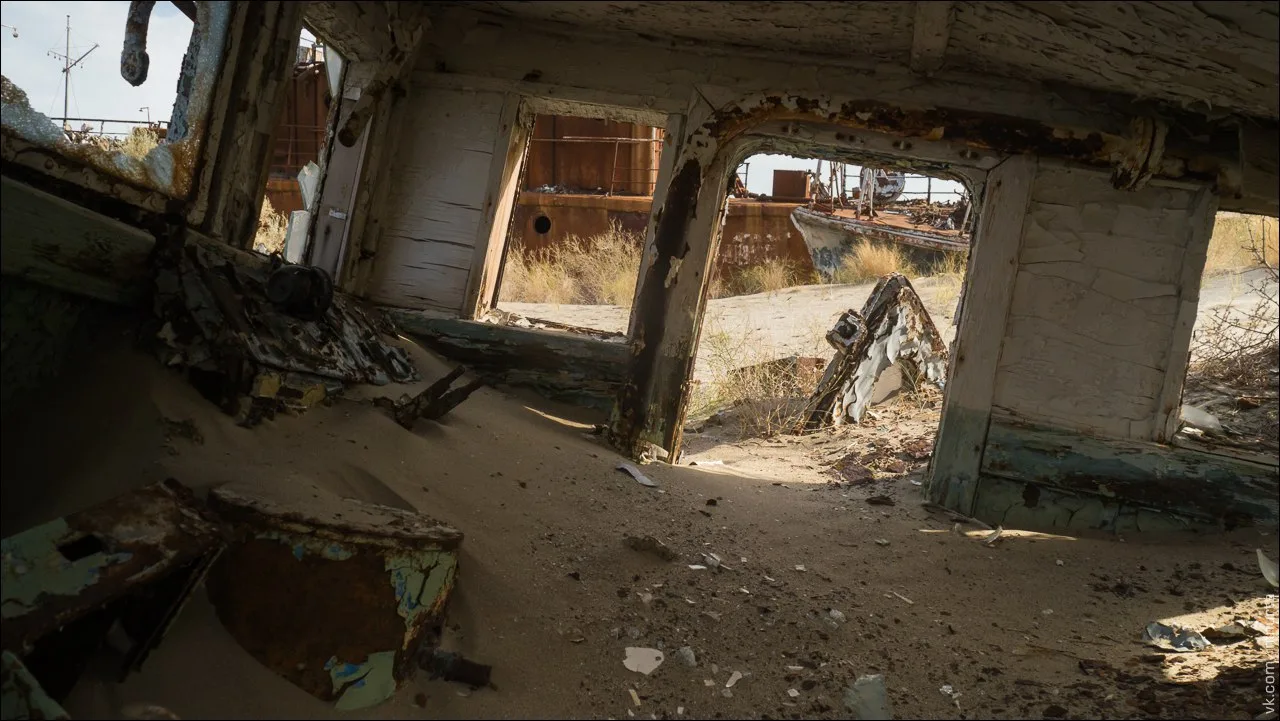
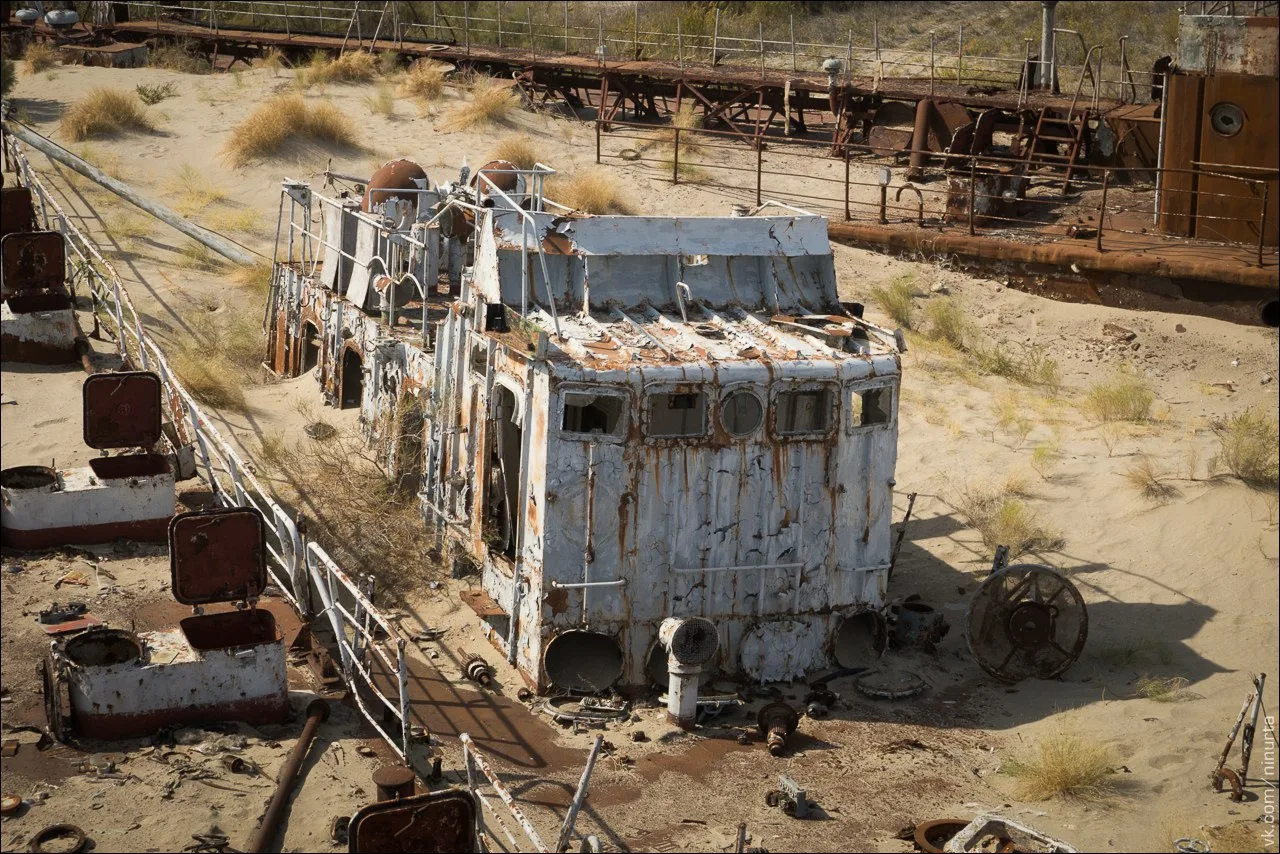
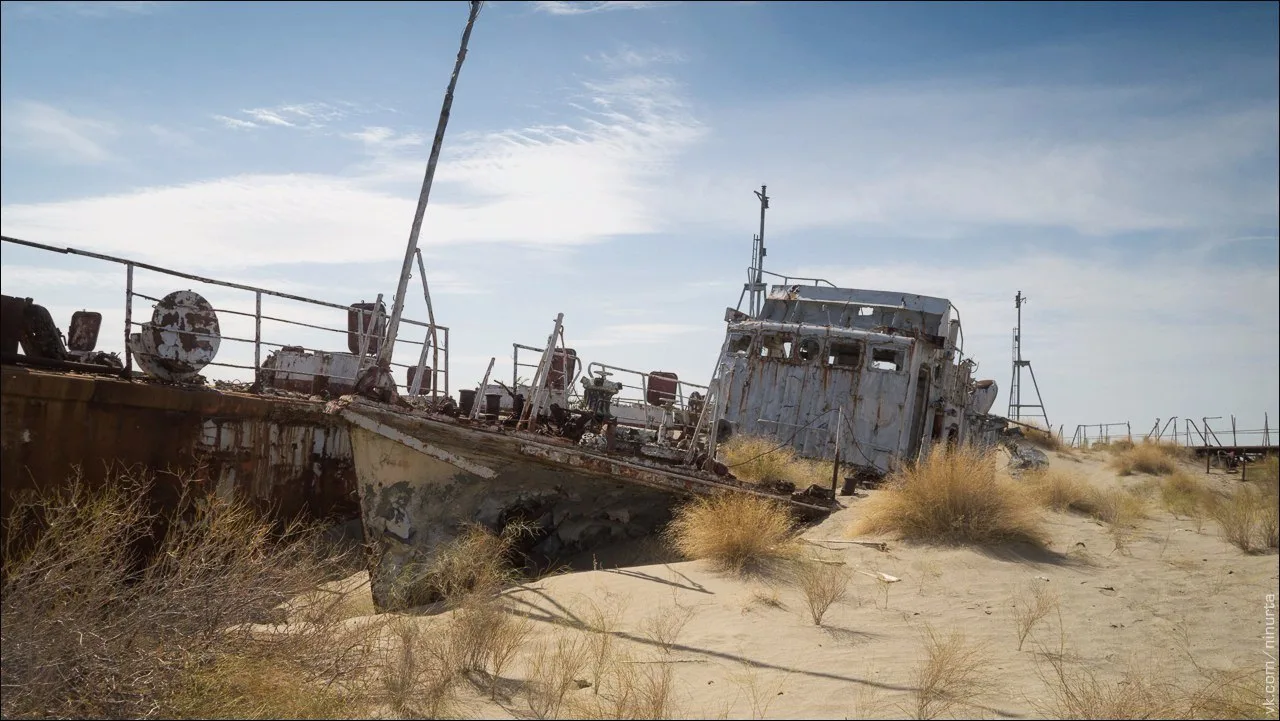
The abandoned jetty of Renaissance Island — the ships are still here, even though the sea has retreated hundreds of kilometers.
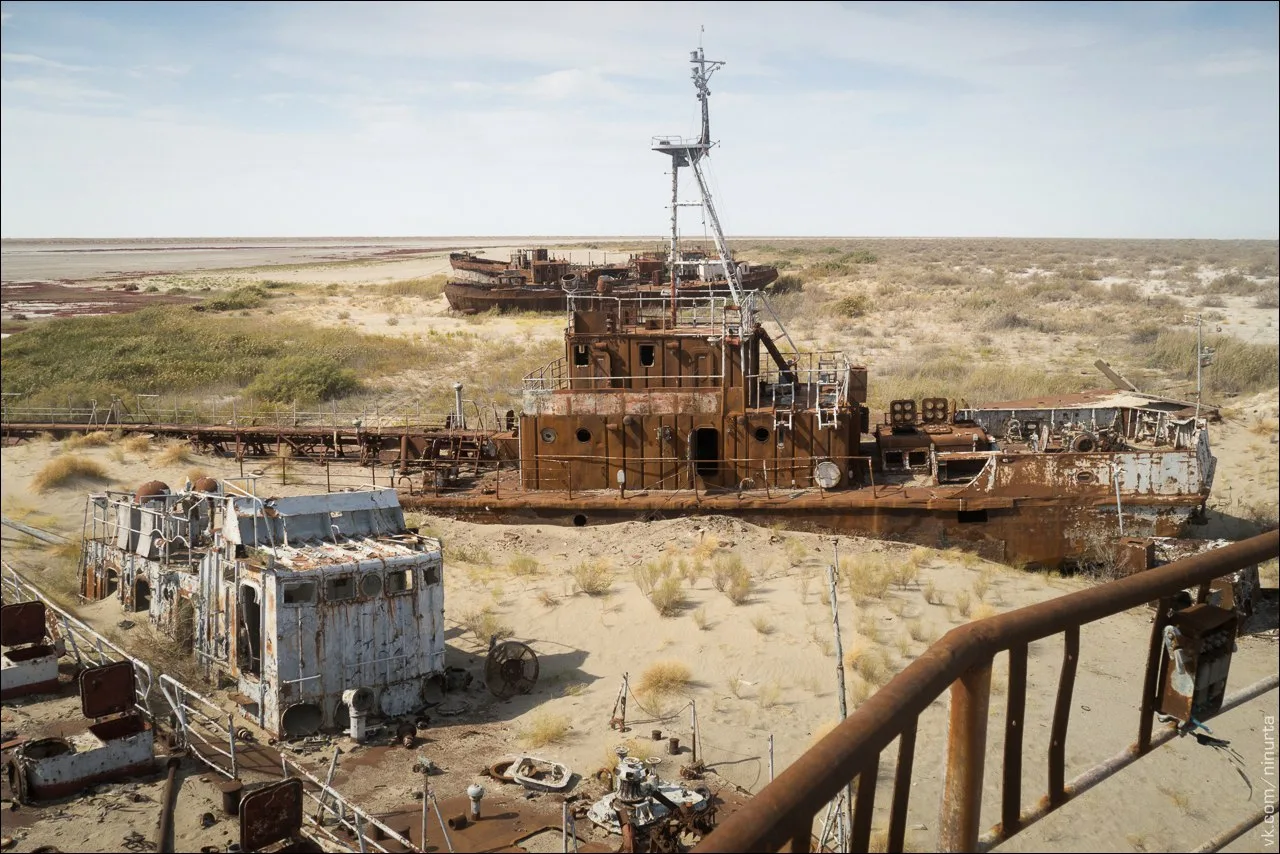
There is only sand inside the cabin now.
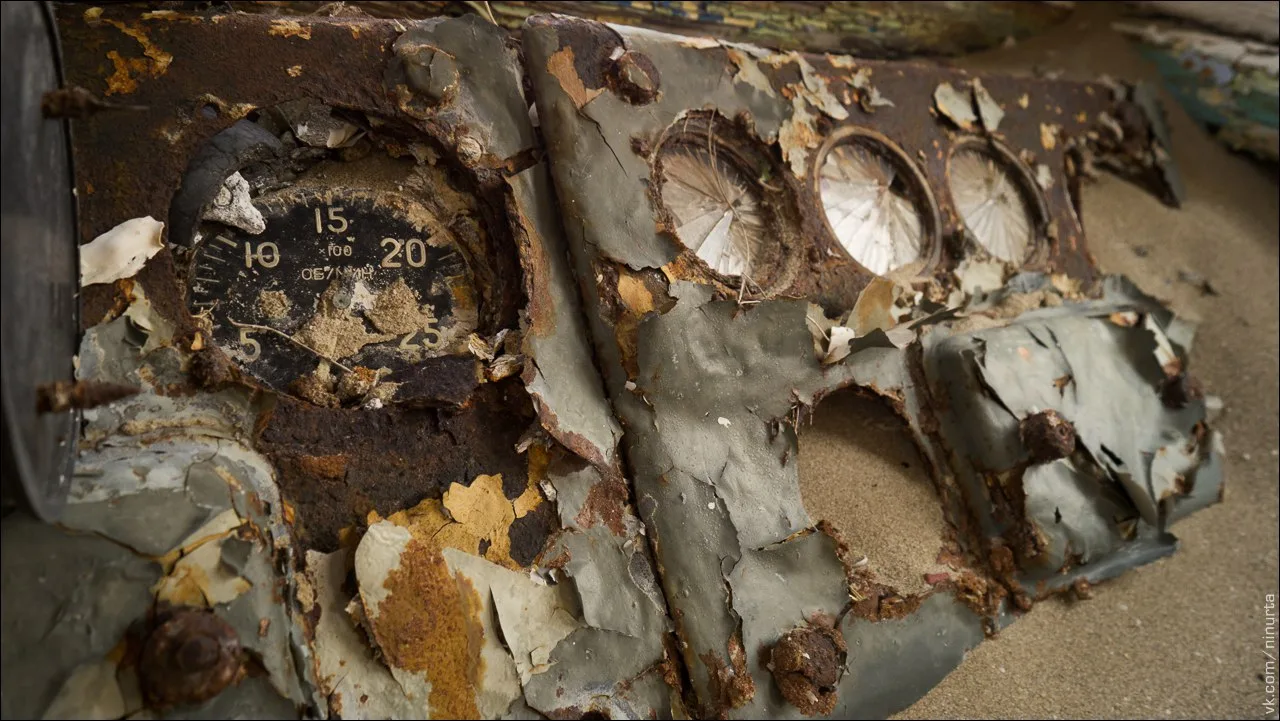
The ship’s dashboard.
The collapse of the USSR and the transformation into a ghost town
Officially, Aralsk-7 held on until November 1991. That was when biological weapons lost their relevance and the USSR, which oversaw all the research, collapsed. People were evacuated within a few weeks, and the laboratories and equipment were simply left behind. American military bacteriologists came here repeatedly, claiming in 1995 that there was a threat of infection, although a refutation followed in 1999.
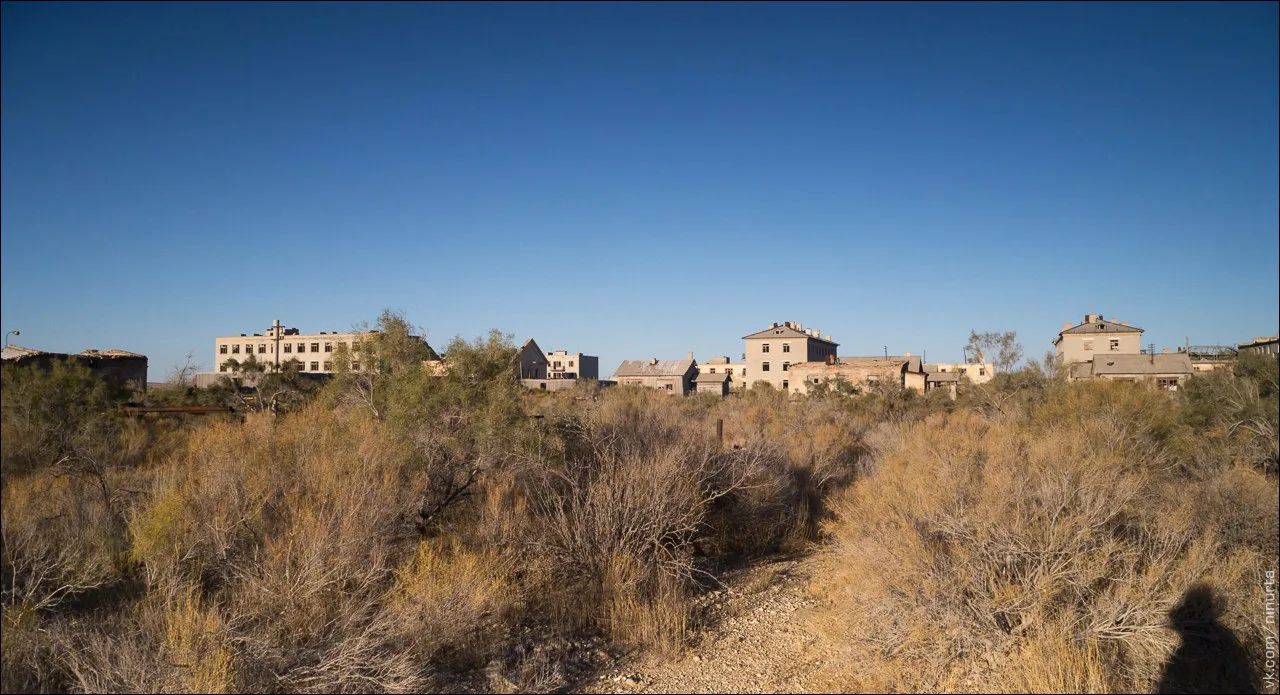
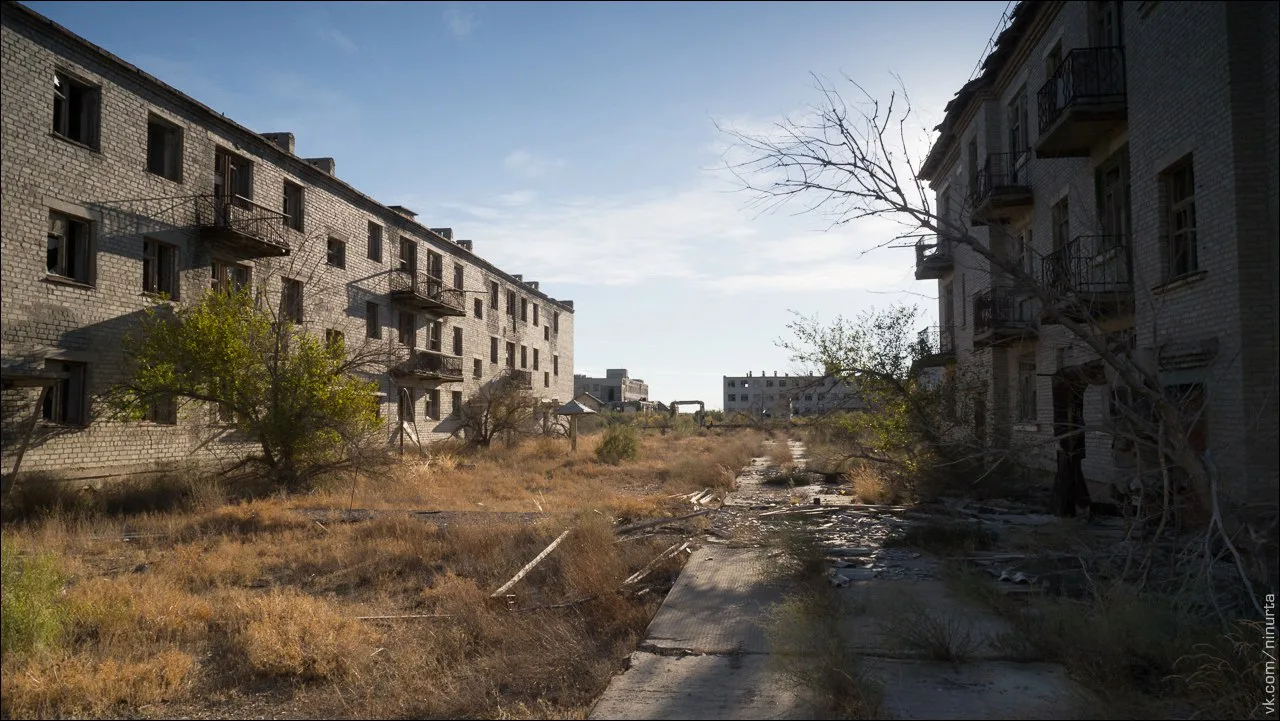
The ghost town of Kantubek today.
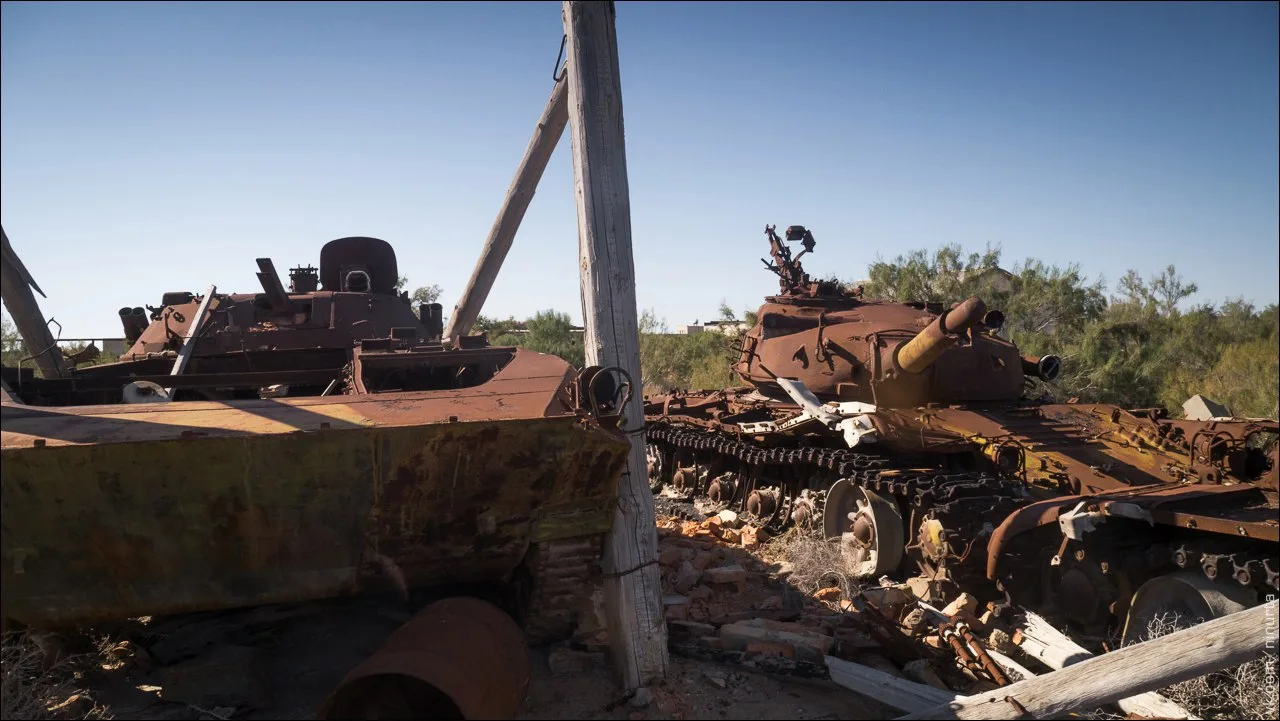
Armored vehicles bearing traces of fire.
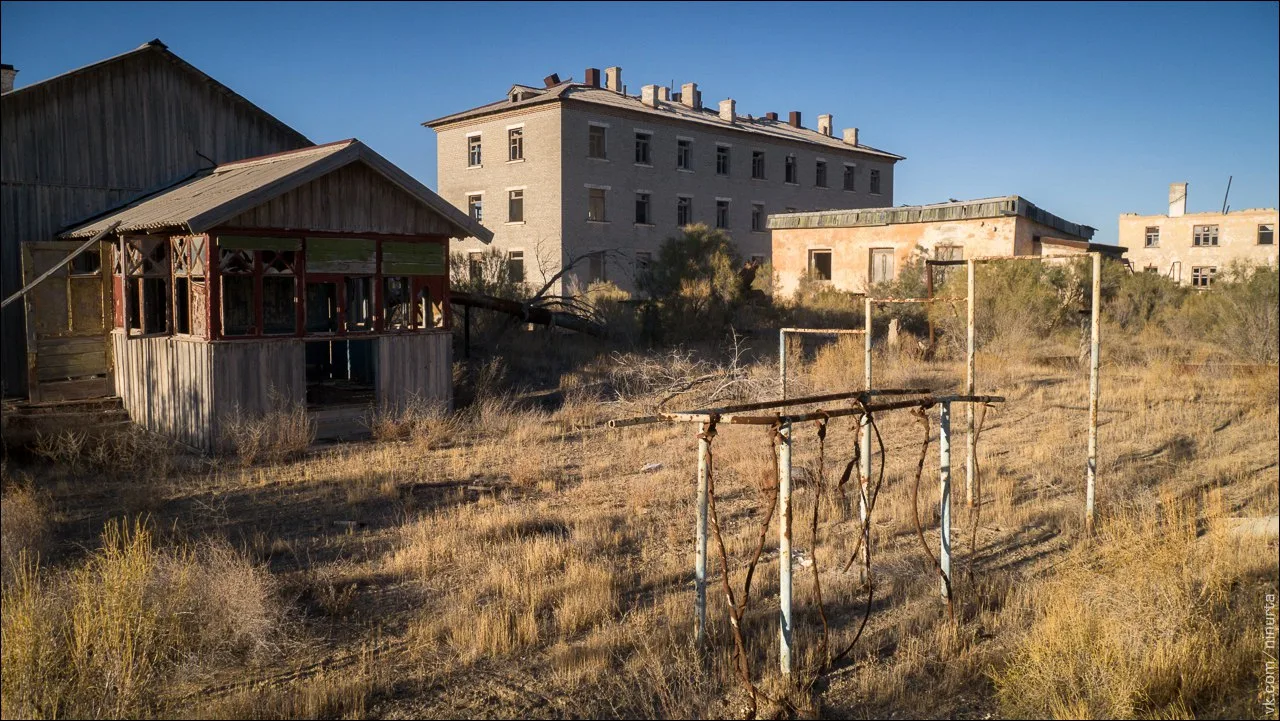
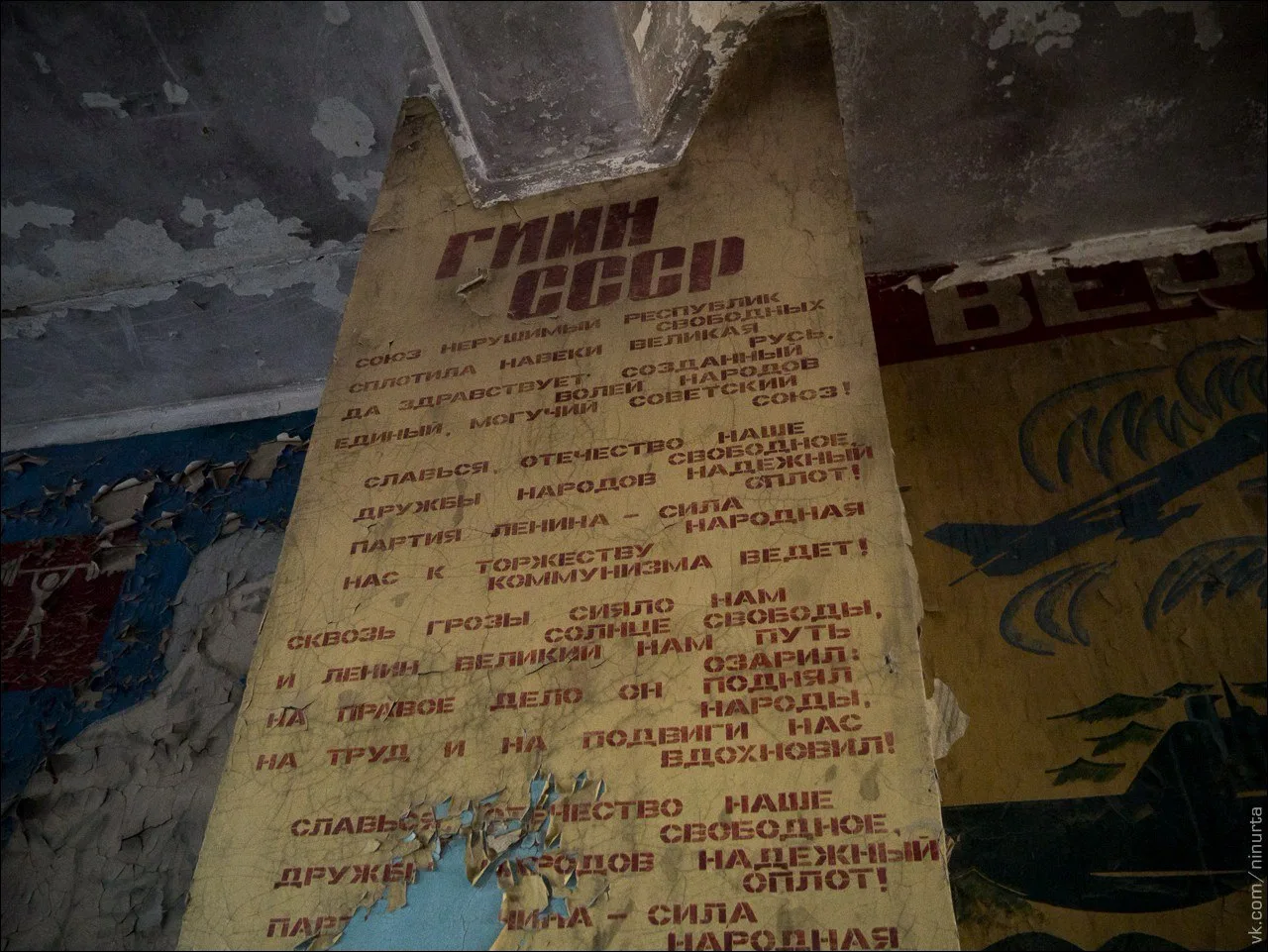
Kantubek was left to the looters, marauders who carried off and sold everything that could be removed from the territory of the former test site. Stalkers prize this location too, their only difficulty being how hard the place is to reach.
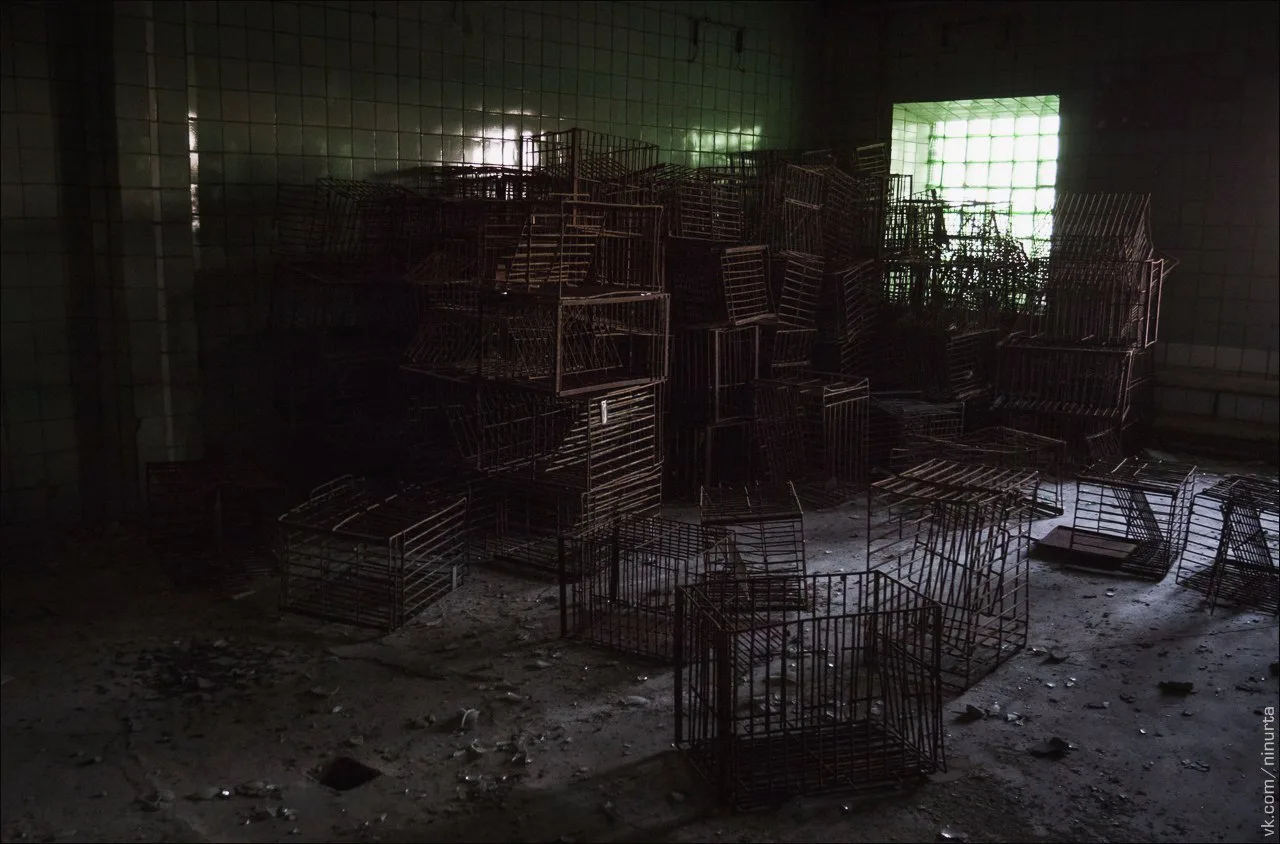
Cages where the animals for the biological weapons tests were kept.
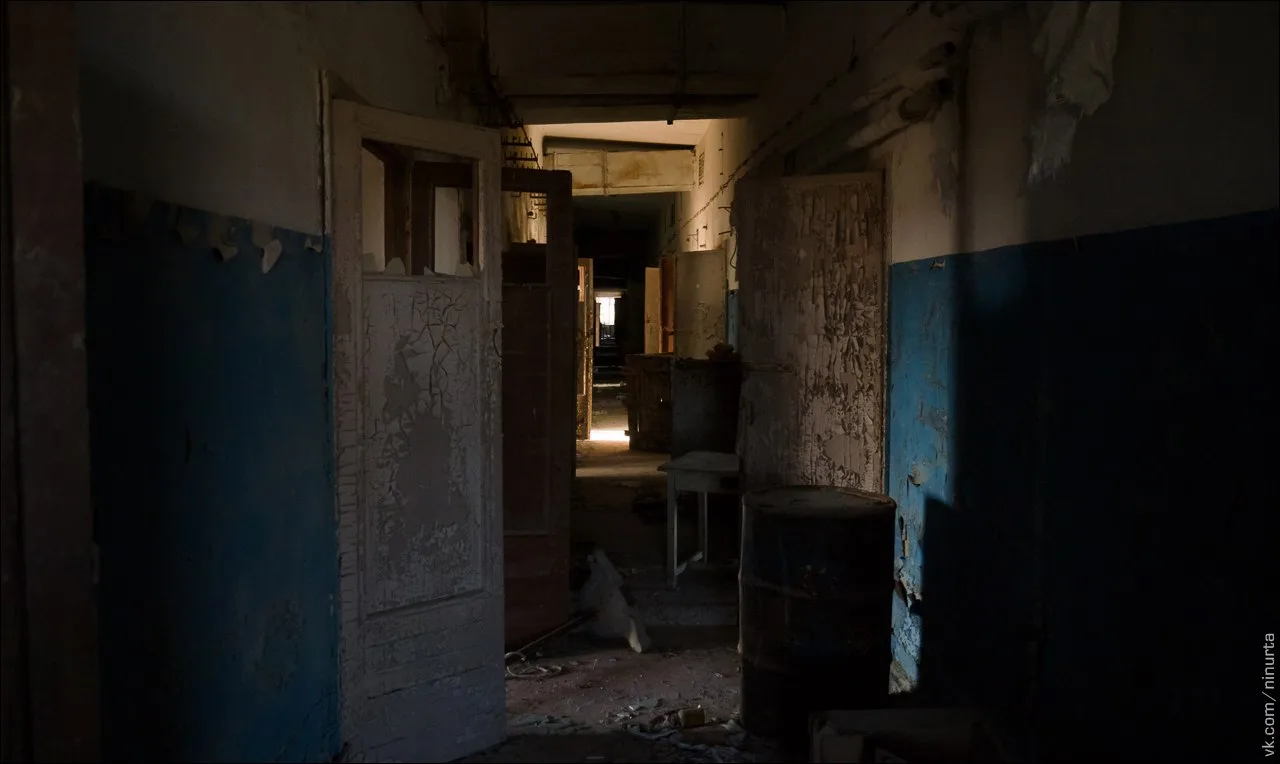
The entrance to the laboratory where chemical weapons tests were conducted.
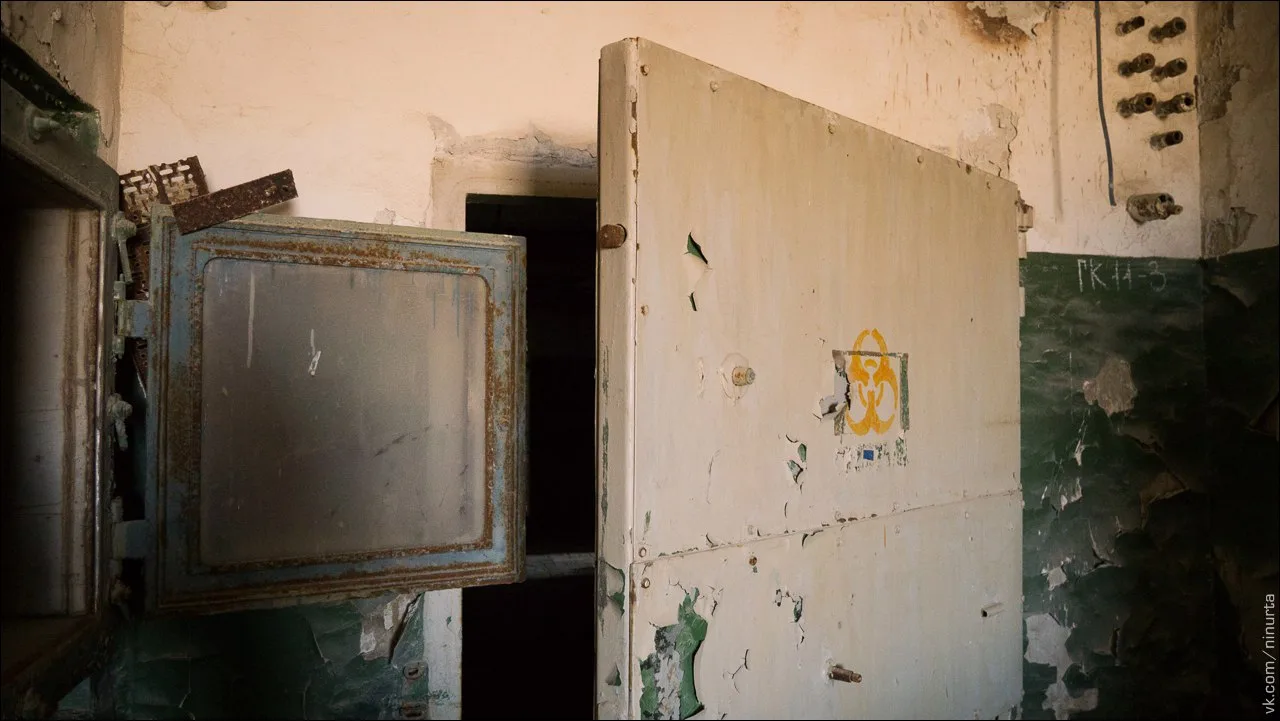
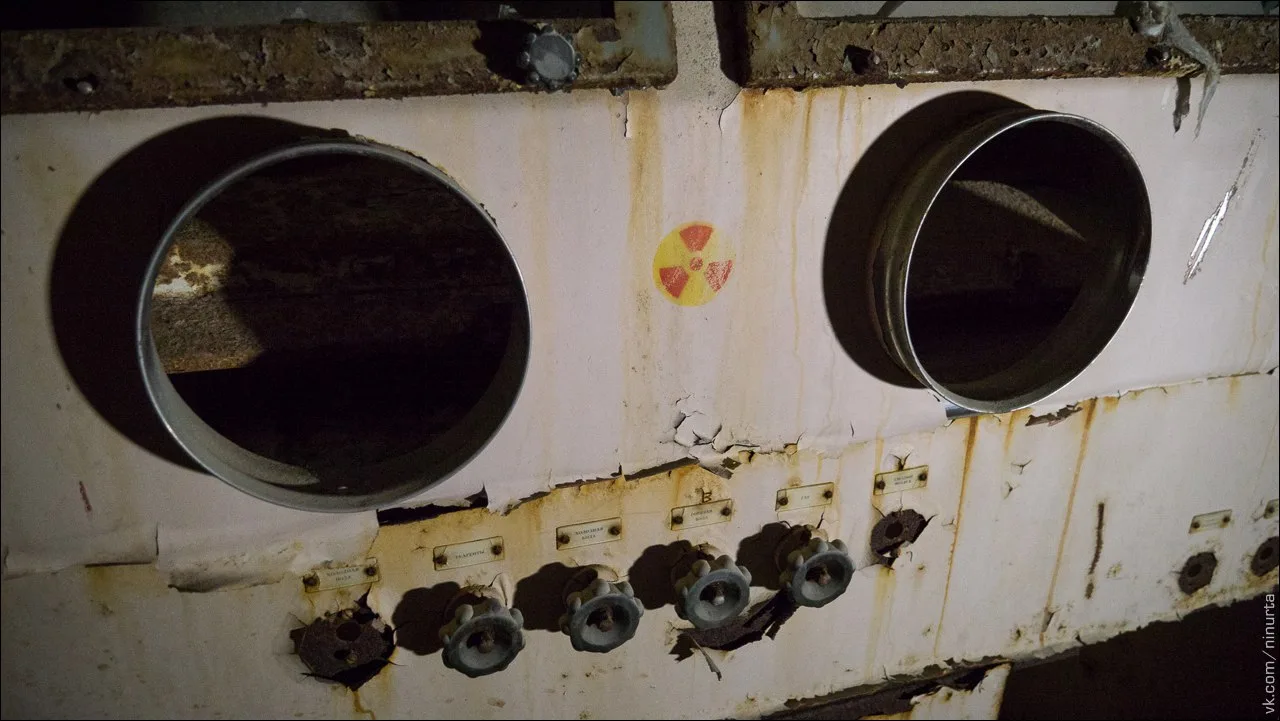
The past tests did not pass without a trace. In 1992, Boris Yeltsin closed off the territory, but even after 10 years and all the measures taken to disinfect the area, the burial grounds still radiate danger. Viruses do not tolerate high temperatures, and the climate of those regions is famous for them, yet the concentration of the virus was so enormous that the danger has not spent itself. Given the transformation of Renaissance Island into a peninsula, the viruses could easily migrate to the mainland over time. It is simply another time bomb.
Today, the extraction of various metals, gas and oil has begun in this region. In other words, the territory is gradually being closed off to outsiders once again.
Photos were taken from Kest Vladimirovich‘s album on VK. We also recommend watching a video about this place on his YouTube channel.